Cash-in-transit robberies drop in 2025, but violent tactics on the rise
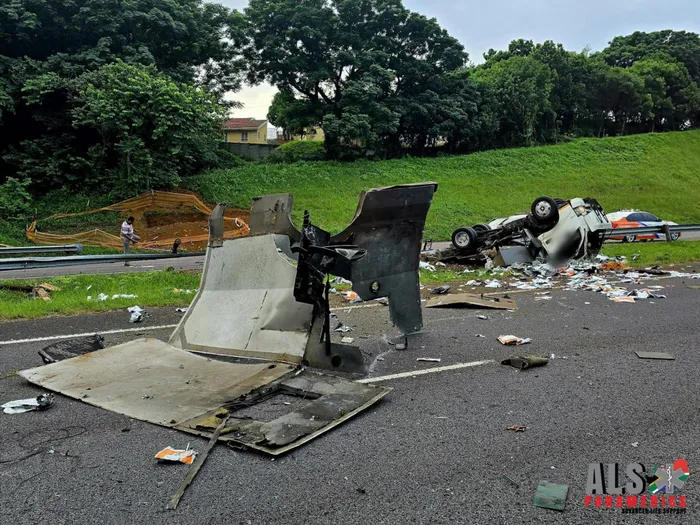
One person was killed and multiple injured in a cash-in-transit robbery at multiple locations in February in Durban.
Image: ALS Paramedics
Cash-in-transit (CIT) robbery statistics reveal a significant decline overall, yet the rise in violent tactics employed by criminals has raised alarm bells.
According to the latest figures from the Cash-in-Transit Association of South Africa (Citasa), a total of 180 CIT robberies were recorded from January to December 21, 2025.
Citasa head Grant Clark said: “The number of CIT robberies decreased by 13% when comparing January to December 21, 2025, with the same period in 2024.”
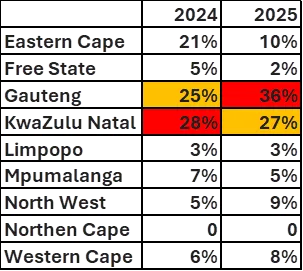
A table showing the provincial breakdown for 2025 in comparison with 2024.
Image: Cash-in-Transit Association of South Africa
The provincial landscape of CIT robberies
“In 2024, KwaZulu-Natal was the highest risk province, and Gauteng was in the second position. In 2025, the picture changed, with Gauteng in the highest position, followed by KwaZulu-Natal. Eastern Cape shows a decrease,” Clark said.
He explained that from January to March and during May 2025, Gauteng and KZN reported the same number of CIT robberies. Gauteng was the location for the majority of CIT robberies in the latter part of 2025, with KZN experiencing the next highest number. However, CIT robbers conducted CIT robberies across provinces.
“The change in CIT robbery patterns can be attributed to successful police operations as well as convictions. Including the successful collaborative effort between law enforcement and the CIT industry role players,” noted Clark.
The festive season surge
Clark highlighted that CIT robberies increased in all provinces in December. And yes, the increase is linked with the festive season.
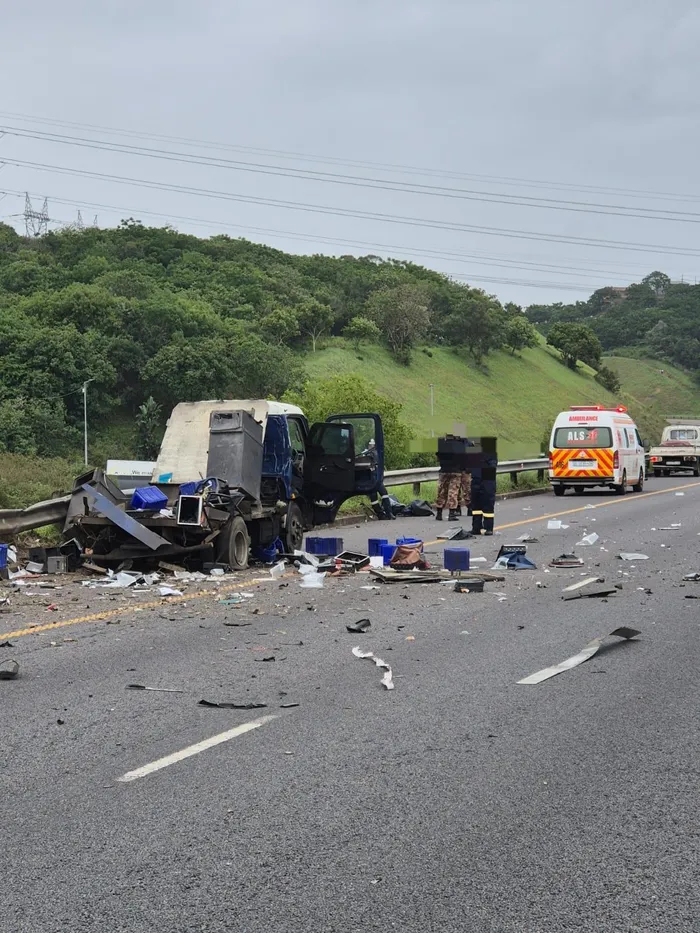
A scene from a recent CIT robbery, illustrating the dangerous tactics employed by criminals.
Image: ALS Paramedics
What is the modus operandi?
Looking at the modus operandi, Clark explained that the CIT robbers exhibited increasingly violent behaviour. They hijack vehicles from bystanders at the crime scene. They use these vehicles either as getaway cars or to block the road and impede traffic. Furthermore, CIT robbers pose a serious threat to bystanders and will shoot without hesitation.
“CIT robbers combined ramming and shooting at armoured vehicles, and this remains a dominant modus operandi,” Clark said.
He also said that the public's tendency to loot at crime scenes poses serious risks of injury and potential death.
“Most civilian casualties (58%) occurred in KwaZulu-Natal,” Clark said.
He added that in 2025, some CIT robberies resulted in injuries and fatalities among perpetrators due to explosions.
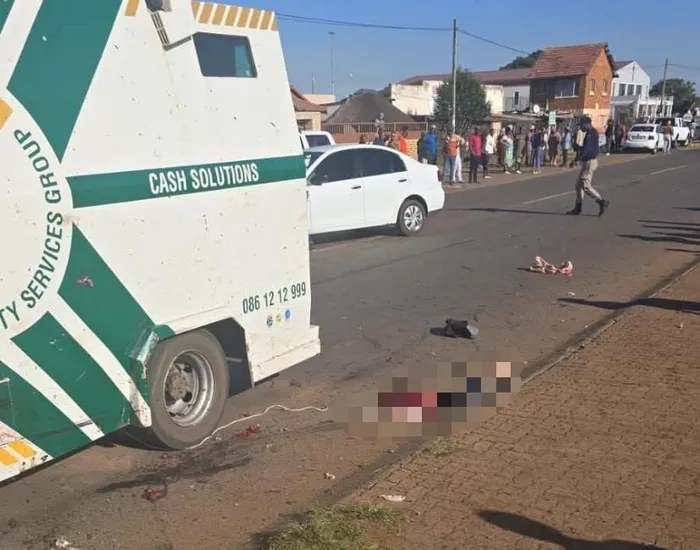
A man died in a failed cash-in-transit heist in Thokoza, Ekurhuleni, , after being blown up by explosives which were used in an attempted robbery.
Image: Facebook
Meanwhile, KZN Police Commissioner Lieutenant-General Nhlanhla Mkhwanazi recently addressed the issue of CIT robberies in the province.
He said police management in KZN is working through their head office colleagues to engage with the South African Banking Risk Information Centre (Sabric) and the South African Reserve Bank. This engagement aims to explore alternative methods for safeguarding the money.
“It’s easy for them to bomb a vehicle, and the money is scattered all over, and they take the money, and they go, but if they were to attempt to bomb that vehicle and you literally destroy the money, I’m sure they’re going to be discouraged, that is one of the interventions that we are trying for,” Mkhwanazi said.
“But we’ve been pleading, and we are still pleading with society, businesses in the main, the more we move to a cashless society, the better for us, because these cash-in-transits are happening because there are different companies that are collecting cash payments.”
Mkhwanazi said some shops have gone cashless, eliminating the movement of cash. They are looking for these types of interventions.
He also highlighted that it is necessary to acknowledge the need for cash in rural areas, but there are fewer opportunities there. While there are tuck shops, these do not require cash vehicles to facilitate banking.
Consequently, the aggregation of cash is concentrated at larger, more affluent shops located in shopping centres and similar commercial hubs, he added.
thobeka.ngema@inl.co.za