
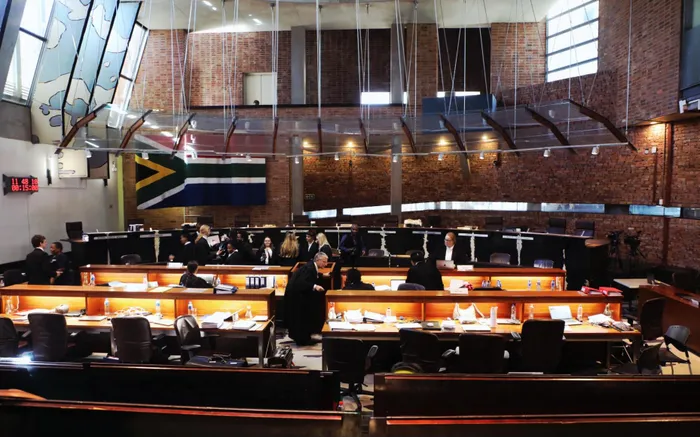
The Constitutional Court in Johannesburg was this year once again at the forefront of changing laws and issuing groundbreaking judgments.
Image: Timothy Bernard / Independent Newspapers
South Africa’s 2025 saw numerous groundbreaking judgments being delivered - from paving the way for new legislation to making life a bit easier for some.
The High Courts in Gauteng - said to be the busiest division in the country - were as usual buzzing, while the Constitutional Court, although behind with some judgments, saw numerous headlines made.
Probably one of the most significant changes for South Africans came from the apex court, which not only established universal shared parental leave, a major win for gender equality, but also paved the way for husbands to take on their wife’s surnames, if they so wish.
The ConCourt in September declared part of the Births and Deaths Registration Act unconstitutional, granting people freedom in choosing surnames. The ruling allows husbands to adopt their wives’ surname if they so wish. The decision sparked debate, with supporters seeing it as progressive, while some traditionalists voiced concern about African cultural norms and family identity.
Proving that South Africa has one of the best Constitutions, if not the best, the Constitutional Court also revolutionised parental leave by mandating equal leave for all parents, available to be shared, as the parents see fit.
In its landmark ruling in October, the court declared the old maternity/parental leave system invalid, creating a shared entitlement of four months and 10 days leave. This extends to biological, adoptive and commissioning parents.
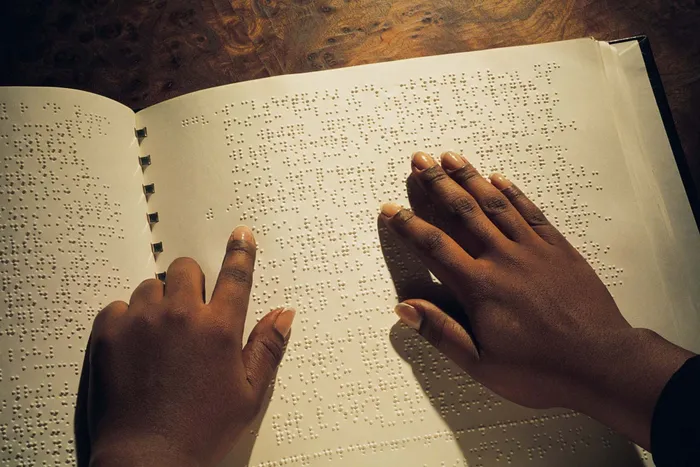
The Constitutional Court has ruled for the creation of accessible format copies like braille for copyright works
Image: File
Earlier this year, in May, the Constitutional Court also significantly changed the lives of those with visual disabilities, when it declared the Copyright Act unconstitutional. This was as the Act previously prevented disabled persons from accessing reading materials in usable formats, such as braille, without the copyright holder’s permission.
Non-profit entities and individuals can now make and distribute accessible format copies of works for the benefit of the visually impaired, under specific conditions. In coming to the aid of the Khoi-San community, the apex court extended the Traditional and Khoi-San Leadership Act for two more years.
The court in 2023 gave the government until May 2025 to fix the Bill, but this was not done due to numerous reasons. They subsequently extended the suspension of the declaration of invalidity of the Act until May 2027. But it was not done without criticising the government. In this regard, the court said: “It is clear that the national elections of 2024 resulted in the TKL Bill being de-prioritised. It would appear that there was a lack of political motivation to take the requisite steps to timeously remedy the constitutional deficiencies of the Act”.
While the exact final count for 2025 is not yet available, the Gauteng Division of the high court (Pretoria and Johannesburg) delivered thousands of judgments this year. Sites like SAFLLI showed more than 10,000 decisions just for the Johannesburg High Court by December, while platforms such as the LawLibrary.org.za listed more than 1,200 for the Pretoria High Court alone by mid-year.
One of these include transgender inmate rights, with the Johannesburg High Court ruling that the systematic failure of the Department of Correctional Services to respect the rights of a transgender inmate, constituted unfair discrimination.
The court ordered DCS to allow her to express her gender identity, by wearing women’s clothing when possible and to address her as a woman. The department must also assist her in providing gender-affirming hormonal treatment at state expense. The judgment sets a crucial precedent, affirming that the constitutional rights to dignity, equality and freedom from unfair discrimination extend fully to transgender individuals in custody.
The rights of cancer patients to get treatment was another case which received the spotlight, when the court declared the Gauteng Department of Health’s inaction regarding cancer treatment backlogs, unlawful and unconstitutional.
The judgment directed the department to take all steps necessary to provide timely radiation oncology services to patients awaiting treatment. The department is, however, taking this judgment on appeal, which is due to be heard next year.
This year meanwhile kicked off on a high note when the Pretoria High Court in January declared the SRD Grant (social relief of distress grant) regulations unconstitutional. Judge Leonard Twala found that the online only applications disregarded a lack of access to data and smartphones by applicants.
He also found that the R624 income test and definitions of “income” unfair and criticised the R370 grant as insufficient and not in keeping with the pace of poverty. The grant was initially set up in 2020 in response to the Covid-19 pandemic and was due to last for six months. It has meanwhile been extended and meant for people who earn less than R625 a month.
The regulations were challenged as it excluded millions of potentially eligible South Africans due to the exclusive reliance on online applications and the definition of “income” and “financial support” also came under the spotlight. The SRD grant has meanwhile been extended to at least March 2026.
The major Operation Dudula court case, heard in the Johannesburg High Court in November, resulted in a landmark victory against xenophobia. The court confirmed Operation Dudula’s actions, including blocking clinics and harassing people, as unlawful and unconstitutional. The court also stressed that only police and immigration officials have the legal right to demand identification and documents.
This was also a rollercoaster year for Please Call Me inventor Nkosana Makate, who has been embroiled in legal proceedings with Vodacom for more than 18 years. In November Makate and Vodacom agreed to a confidential out-of-court settlement for his invention, believed to be hundreds of millions. But this was not the end of his woes, as Makate is currently in legal dispute with his former funders, Black Rock Mining, who is demanding a 40% cut of his settlement. This dispute is still ongoing.
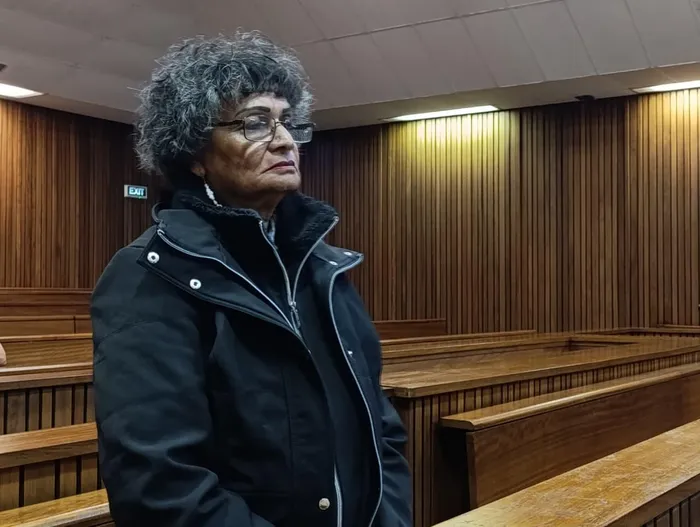
Double murderer Zaheera Boomgaard will spend her first Christmas in jail as a convicted killer serving a life sentence.
Image: Zelda Venter
It will meanwhile be a particularly bleak Christmas for double killer Zaheera Boomgaard. This will be her first of many more Christmases to come behind bars, as she is due to serve two life terms. This followed the death of two elderly people - both in their 70s.
They are Harkant Nathvani, a British national and her friend Lynette Mustapha. Both bodies were burnt and found dumped near Walkerville. It turned out that Boomgaard used Nathvani’s bank cards after his death and she altered her friend’s last will to enable herself to be the beneficiary.
Boomgaard was acquitted of a third murder - that of John Naisby, who went missing in 2012 after visiting Boomgaard. He was never seen again, but there was insufficient evidence to link her to this murder. While she maintained her innocence, Boomgaard on at least two occasions told the court that she “heard voices in her head”. After she was sent for observation, a panel of psychiatrists declared her mentally fit.
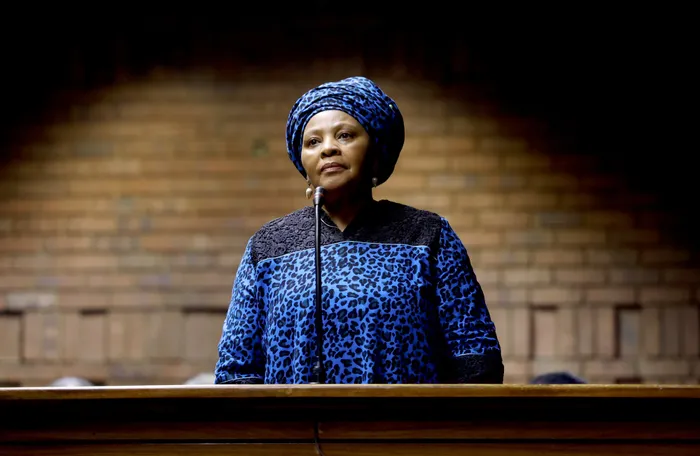
Former Minister of Defence Nosiviwe Mapisa-Nqakula will be back in court in 2026.
Image: Oupa Mokoena / Independent Newspapers
All eyes will once again be on the Gauteng Courts in 2026, when former Speaker of Parliament, Nosisivwe Mapisa-Nqakula will be back in court on July 26 to face her corruption trial. She has not yet pleaded to the 12 counts of corruption and money laundering she is facing, as the matter was this year marked by interlocutory applications and issues regarding the State’s docket against her. The case involves allegations that she received and solicited bribes running into millions during her tenure as defence minister.
Judge Portia Phahlane and her co-accused will be back in the Pretoria Specialised Commercial Crimes Court in March to also face corruption and money laundering charges. She is out on R50,000 bail following allegations that she took bribes of more than R2 million during a church succession battle she is presiding over in the high court.
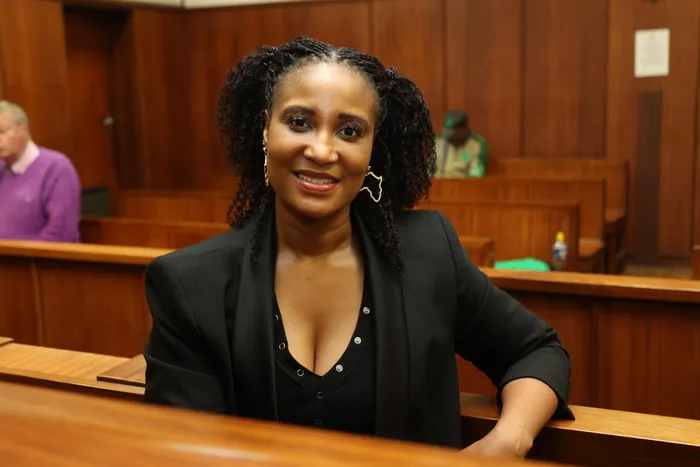
Duduzile Sambudla- Zuma will be back in court next year.
Image: Tumi Pakkies / Indepedent Media
Meanwhile in KwaZulu Natal, Duduzile Zuma-Sambudla, daughter of former president Jacob Zuma, will also be back in court next year as she faces two charges of public violence and another of incitement to commit terrorism.
She is being accused of using her social media platform to incite violence, which is said to led to the death of hundreds of people. She pleaded not guilty in the Durban High Court, while the State claimed that her social media posts encouraged the looting of businesses during the July 2021 unrest.
Her father's arms deal corruption trial, which began in 2021 is also no closer to starting, with Jacob Zuma's legal team still launching a series of pre-trial court applications in a bid for a stay of prosecution.
In the latest development, Zuma and the French arms manufacturer Thales in December asked the Pietermaritzburg High Court for leave to appeal a ruling in June that the corruption trial had to proceed. The court is due to deliver its ruling on this point in January.
zelda.venter@inl.co.za