Inside Cape-Town's Gang Wars | Children as young as nine pulled into rising gang violence
Children as young as nine are being pulled into gang activity in Delft. They raid delivery vans, use abandoned buildings as bases and face deadly risks. The area struggles with soaring violence, drug use and failing social structures. Community leaders say unemployment, addiction and weak policing fuel the crisis.
Image: IOL Graphics
Children barely tall enough to see over a car bonnet are being pulled into gang life in Delft — some as young as nine, sent to steal and surrender their loot to underworld leaders.
And now, in a fast-spreading new trend, the kids who call themselves the Terrible Hooker Boys are swarming delivery vans, ripping open doors and making off with packages in seconds.
They are so brazen that they are even stripping the Centre for Community Development in The Hague and using it as their “gang den”.
This comes as the Mother City reels from a wave of gang violence that has left at least six children shot in the past week. Four have died.
IOL visited Delft this week to see what this Cape Flats suburb is up against.
Driving down Delft Main Road, the neglect is impossible to miss.
The Centre for Community Development is in a sorry state — no windows, graffiti and gang names sprayed across the walls, and the roof, or what is left of it, pocked with holes and falling apart.
Delft has long been one of the most dangerous areas on the Cape Flats, battling high gang activity, drug markets, violent crime and overcrowded informal settlements.
In recent years, Delft has consistently appeared in police statistics as one of the top stations for murders and attempted murders.
Between July and September this year, the Delft police station was one of four police stations in Cape Town that recorded the highest number of contact crimes in SA, according to acting police minister Firoz Cachalia.
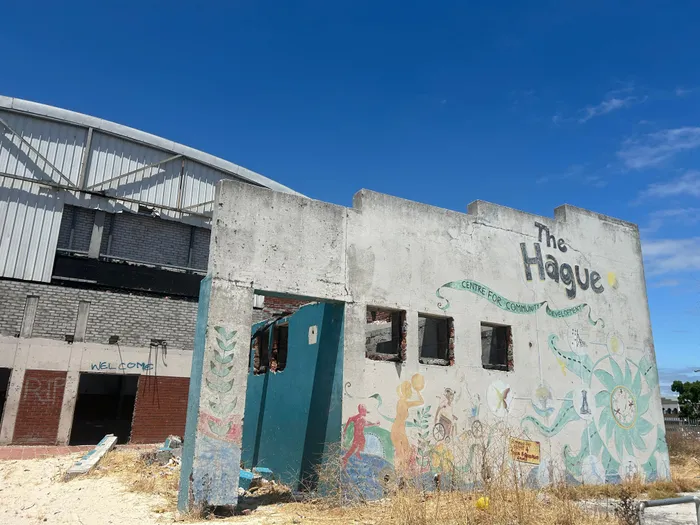
Kiddies gangs are running amok in Delft
Image: WENDY DONDOLO
Ward 13 councillor Michelle Adonis said things were now “out of hand”, with gangs running amok.
“There’s definitely a gang–citizen problem here within the Delft area," she said.
"And the scary part is, the group members are as young as nine years old.
“Those kids, whenever there is a truck, they jump on the truck, they open it up, they take out the stuff and they run.
"Then you will see the bigger guys that are operating with them ... that is the scary part.”
Adonis said many of the children have already dropped out of school, with little parental supervision and no structured activities keeping them off the streets.
She said incidents of theft and robbery along major routes such as Silver Sand Road have become routine, with criminals grabbing cellphones and targeting passing vehicles.
While the motive behind the children’s involvement remains unclear, Adonis believes the looted goods are often handed over to older gangsters.
“It might be that they give it to the bigger ones who are the leaders,” she said.
“Or their brothers, as they call them.”
One recent tragedy paints a picture of the deadly danger these children are exposed to.
“We had a gruesome death that happened on this main road," she said.
"One of those kids fell from the truck trying to open it. The door swung open, he fell, and then another car drove over.
“It stopped for a while, and then they started again.”
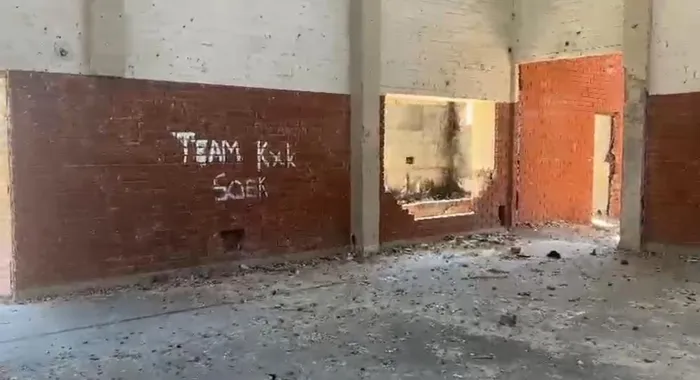
Gang names and symbols spray-painted across the walls of the derelict Delft civic centre.
Image: Brandon Nel
Adonis said the situation has become “unmanageable” despite the police attempting interventions with the younger children.
Because they are so young, she said, police cannot detain them and instead hold meetings with parents, “but it just seems unmanageable”.
She said several gang groupings were active in the area.
“I know it is the Gorillas and then there is your Terribles, and then there is your HLs, and obviously your Junkies,” she said.
School-based gangs mirror these affiliations, with names like the “Terrible Hooker Boys” emerging among pupils.
While she could not confirm whether the school gangs link directly to extortion networks, she said extortion remains rife among small businesses, including informal traders and foreign-owned shops.
“Our little mobiles, there is extortion happening and people are so afraid,” she said.
“Our foreigners, when they have mobiles, they rather pay the protection fee because at least they are protected and they are allowed to trade.”
Contractors entering the area have also sought direction on which gang leaders control which sections.
She also showed the reporters the dilapidated Centre for Community Development building which has since become a hotspot for vandalism and youth gatherings, including children involved in gang activity.
Adonis said the building deteriorated rapidly after 2019, when a government vehicle was torched on the premises and rampant theft and vandalism followed.
“They were sitting on the roof and taking stuff off,” she said, adding that groups of youngsters now roam the site as the structure continues to fall apart.

Gang names and symbols spray-painted across walls in Delft
Image: Brandon Nel
It is no secret that drug addiction is often at the root of the problem.
Cape Town Drug Counselling Centre director Iain Watermeyer agreed.
“When people are desperate, they'll do anything," he said.
"Selling drugs gets them enough money to buy food or help them hide from their problems ... that is what makes the situation so problematic,” he said.
“If you can improve education and you can improve employment, you generally find that substance use and associated gang-related behaviours tend to taper off.”
He said many people who need help from clinics are too frightened to get there, as the walk often takes them through gang hotspots.
Watermeyer said the recent spike in gun violence across Cape Town reflects “pressure for limited resources”, with gangs competing in increasingly fragile communities.
“The explosion in the last two months has been unbelievable,” he said.
Despite this, he said clinics themselves are not typically targeted by gangs, though spill-over violence is common.
“If there's a taxi rank nearby, when the violence erupts there, it invariably impacts the clinic.
"But it's never coming to our doors.”
Cape Town's gang shootings and revenge killings have now also spilled over to the courts.
A man, believed to be a suspect in a murder case he was due to appear in, was shot inside the Wynberg Court in April, while two men were shot dead by four armed men outside the Mitchells Plain Court four months later.
In a separate incident, a man was shot inside Athlone Magistrates Court in September while, during the same month, a man was arrested for trying to smuggle a firearm into the Wynberg Court four.
There have also been incidents of violence related to the transport industry as taxi bosses and groupings compete for taxi routes.
On September 17, the Western Cape Government closed several taxi routes, due to ongoing violence between rival taxi groups CODETA and CATA.
In addition, there has also been push-back against planned developments by the City of Cape Town, for example the killing of Wendy Kloppers, a city official, on February 16 2023 at a housing site in Delft.
Three contractors at the Delft Symphony Way housing project were shot in the same year.
In 2024, the City of Cape Town signed a memorandum of understanding with the police ministry which, among other things, provides for greater co-operation in combating crime and improving safety in Cape Town and the wider Western Cape.
According to a recent parliamentary report, September 2025 has turned out to be one of the bloodiest months for people living on the Cape Flats.
Between September 8-15, several mass shooting incidents claimed the lives of 15 people in Kraaifontein, while four people were killed and three injured in two separate incidents on September 14 in Gugulethu.
Several others were injured during these shootings.
Also in September, at least five people were killed in Steenberg and Retreat, while unconfirmed reports were also received of shootings in Overcome Heights near Capricorn/Vrygrond, Valhalla Park, Delft and Manenberg.
The motives for the shootings, according to the report, are usually described as “gang related”.
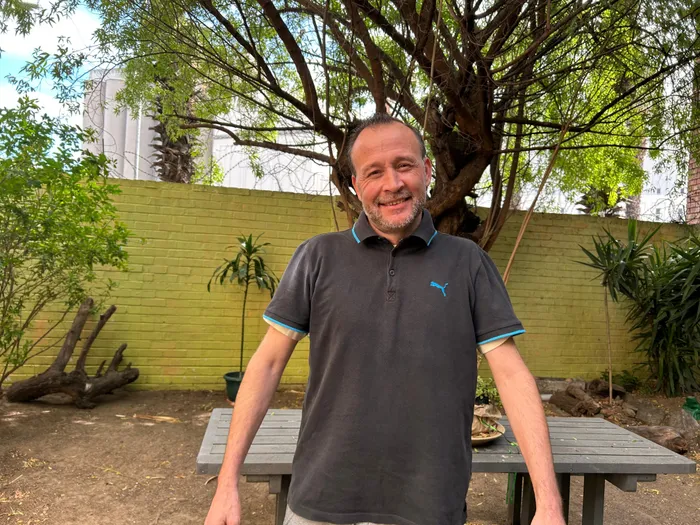
Dexter Johnsen, 44
Image: WENDY DONDOLO
But those who lived the life of gangsterism and were addicted to drugs said it was possible to turn your life around, though very difficult.
Dexter Johnsen, 44, and David Watton, 39, said they were drawn into criminal networks that thrived inside the city’s forgotten buildings.
But both men were now getting help at Loaves and Fishes, a Christian second-phase shelter and renewal centre in Observatory.
Johnsen, originally from Fish Hoek, said he “ended up staying in an abandoned building in town, in Loop Street” after losing contact with his family due to his addiction.
“There were gangs, different types of gangs, running this building," he said.
"They forced you to do things illegally to stay there."
Inside the building, Johnsen said, each person was expected to “have a job to do every day”.
“You can’t come back unless you have something, either drugs, money, food.
"They gave you orders.
"Fraud, robbery, car theft, that was the day-to-day life in that building.”
Both men described the environment as dominated by gang bosses and crew leaders who controlled rooms and corridors.
These groups operated like micro-cartels, demanding daily tributes in drugs or stolen goods.
Johnsen said "being high was essential" to survive the pressure and violence.
“You need to be high constantly to do these crimes because there’s no conscience.
"You lose complete emotion.”
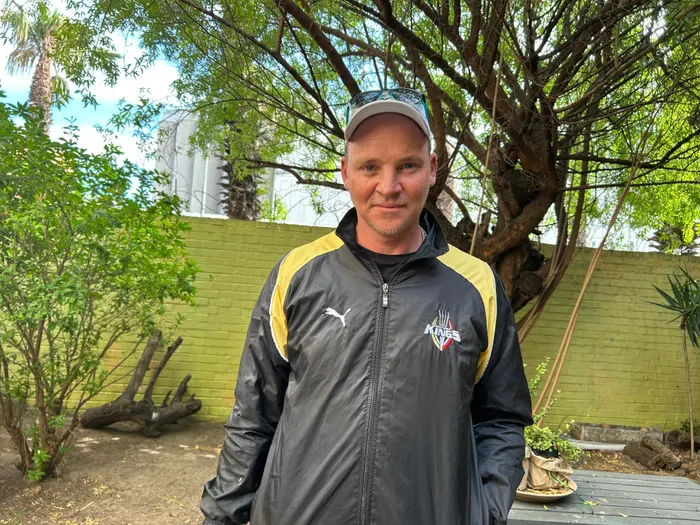
David Watton, 39
Image: BRANDON NEL
Watton, a former paramedic from Johannesburg, said his own path into criminal circles began after years of drug use starting at age 14.
“I got involved with a lot of bad people.
"I started smuggling diamonds across South Africa,” he said.
His criminal involvement escalated until he was held captive.
“I was in a room where they wanted to hang me,” he said, adding that the moment pushed him to seek help.
Watton fled to Cape Town and, like Johnsen, eventually entered the U-Turn recovery programme.
Both men said that for many addicts, gang life was not a choice.
Policing expert Patricia Mashale said young people joined gangs, mostly because of unemployment.
"Unemployment leads to drug abuse," she explained.
"Even if they are going to rehab, they must still return to the communities and the same circumstances that led to their drug abuse.
"That means that they are definitely going to relapse, because they have to feed their habits, meaning that they are joining the gangs again.
"Different NGO's and business should work together with the community, to identify ways to create jobs, or develop skills, in order for rehabilitation, the same way rehabilitation is being applied by correctional services."
ActionSA said children were increasingly caught in the crossfire of warring gangs that continue to reign unchecked, with no clear plan of action from government.
"ActionSA rejects the ongoing blame shifting that persists over which sphere of government carries responsibility, as this blame shifting cheaply distracts from the collective duty that all spheres of government share to confront the bloodshed and lawlessness that has engulfed Cape Town," party MP Dereleen James said.
GOOD City of Cape Town councillor Jonathan Cupido said: [We] call on all spheres of government to start prioritising funds towards the social development departments to ensure we start identifying the root causes of these actions and start putting programmes in place to deal with the social conditions of our communities.
"The department will play an important role that will guide funding where most importantly needed to change the socio-economic conditions of our communities that effectively will ensure a cohesive approach to minimise crime."
DA MP Ian Cameron said the city's metro police were among the few "remaining trusted and functional law-enforcement structures in the province".
"They are already on the frontlines, but without the legal powers to investigate gang-related gun crime, conduct ballistic testing, or gather intelligence on organised criminal networks, their ability to respond remains constrained," he said.
"The DA therefore calls for the immediate authorisation for the City of Cape Town’s Metro Police to assume expanded policing powers so they can act decisively against gang violence and restore safety to communities abandoned by [the police]."
IOL News