Financial lessons from 2025: Key insights for South Africans in 2026
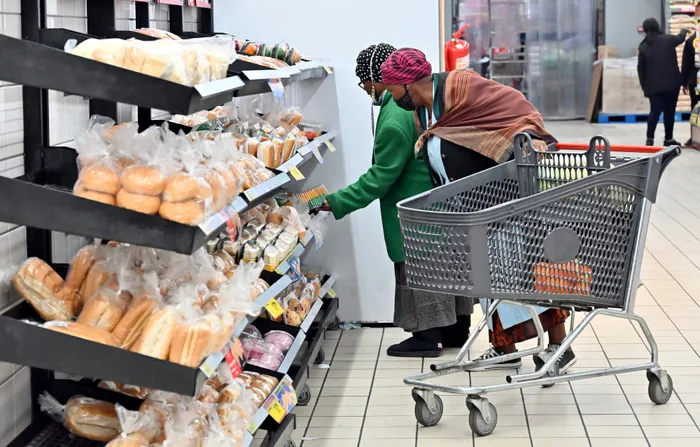
South Africans are at a pivotal moment as they prepare for 2026. The financial lessons of 2025 provide a roadmap for navigating the economic landscape, encouraging prudent personal finance management and strong government reforms. Now is the time to seize opportunities that lead to a sustainable financial future.
Image: Ayanda Ndamane/ Independent Newspapers.
As South Africa approaches 2026, the economic landscape for both businesses and households is imbued with a sense of cautious optimism.
This outlook is underscored by the recent Medium-Term Budget Policy Statement (MTBPS) and the latest Monetary Policy Committee (MPC) decisions, which suggest a gradual movement towards macroeconomic and financial stability.
Adding to that was the GDP data released this past week which revealed that the country's economy expanded by 0.5% in the third quarter of 2025, this was slower than the revised 0.9% growth in the second quarter.
According to Frank Blackmore, Lead Economist at KPMG, nine out of ten industries displayed positive growth from the second to the third quarter, a positive indicator of a broadly distributed recovery.
Blackmore emphasised that while some industries exhibit growth, the economy’s overall trajectory remains precarious, with expectations of GDP closing under 1% for the year—even if an optimistic fourth quarter is achieved.
Reflecting on the 2025 MTBPS, which emphasised a structured approach to fortifying South Africa’s economic foundations, Blackmore said, "In my view, it addressed all the points that had come up prior to this budget. Notably, the budget endorsed a pivotal shift towards a 3% inflation target, with a 1% band, proposed by the South African Reserve Bank. This move promises to fortify income protection, reduce borrowing costs, and foster an environment conducive to stable long-term investments."
Additionally, South Africa's fiscal outlook slightly improved, with revenues exceeding earlier projections by an impressive 19.3%. Critical sectors such as health and education were allocated funds, along with provisions for elections and parliamentary reconstruction. The government’s intensified campaign against the illicit economy, costing the nation R40 billion annually, signals a renewed commitment to enforcement.
Blackmore emphasised that structural reform is paramount, citing the expansion of "Operation Vulindlela", advancements in the electricity and logistics sectors, and the introduction of the Basic Facility for Infrastructure (BFI). These initiatives reflect a significant shift towards greater public-private collaboration, which is crucial for driving economic growth.
Moreover, the MPC's decision to lower the repo rate by 25 basis points to 6.75%, enabling a prime rate of 10.25%, is expected to shield consumer activity and bolster business investments.
“If this trend continues, further reductions in interest rates can be anticipated,” Blackmore added, painting a hopeful picture for the economic trajectory.
What this means for households: The personal finance outlook
On the personal finance front, Hayley Parry offered insights on how South Africans can leverage the budgetary developments of 2025.
With the government projecting a surplus of R49 billion over the next three years, she said that the importance of fiscal discipline at the household level.
“Long-term stability starts with spending less than we earn,” she said.
"However, uncertainties linger regarding adjustments to income tax brackets, as clear guidance from Treasury remains elusive," Parry said.
As inflation eases and interest rates decline, Parry highlighted a timely opportunity for households to:
- Reduce high-interest debt
- Rebuild emergency savings
- Reassess insurance and protection needs
- Strengthen long-term investment commitments
“Resilience isn’t built in crisis; it’s built in periods of relative calm,” she said, underscoring the importance of proactive financial management.
Looking ahead to 2026
The road to 2026 hinges on two coordinated efforts.
On one hand, the government must deliver on reforms, enhance infrastructure, and fortify state capacity.
On the other, households should focus on repairing and stabilising their finances, making the most of the favourable economic circumstances.
Businesses stand to gain substantially from this favourable backdrop, benefiting from lower inflation, diminishing interest rates, and increasing policy predictability.
However, the success of these measures relies heavily on consistent and effective implementation, rather than mere promises.
As South Africa transitions from the stabilisation achieved in 2024 and 2025, the next two years must focus on tangible delivery.
The nation’s financial future hinges on collaborative effort, with discipline from the government, strategic foresight from businesses, and careful financial management from households all playing crucial roles.
BUSINESS REPORT