Did President Ramaphosa's 2025 promises deliver? A deep dive into the SONA scorecard
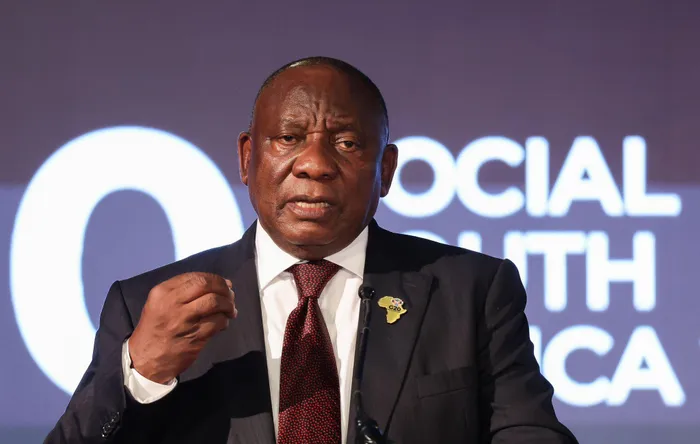
President Cyril Ramaphosa will present the second State of the Nation Address under the Government of National Unity on Thursday evening.
Image: Presidency
As South Africa prepares for President Cyril Ramaphosa’s next address State of the Nation Address,” IOL compiled a scorecard as to what was achieved versus the targets missed.
A year ago, the President stood in Parliament and sketched a vision of structural renewal.
Today, the data tells a story of a Government of National Unity (GNU) that has moved from “crisis management” to “structural execution.”
Here is how the 2025 promises stack up against promised delivery:
Energy: from “constraint” to “stability”
- The 2025 promise: Ramaphosa promised to “put the risk of load shedding behind us once and for all” by completing the reform of the energy system and launching a competitive market.
- The 2026 reality: This is the GNU’s undisputed crown jewel. As of February 2026, South Africa has surpassed 266 consecutive days without load shedding. The Energy Availability Factor (EAF) has climbed to a steady 65%, with diesel spending slashed by over R4.8 billion.
- The engine: Operation Vulindlela. The passage of the Electricity Regulation Amendment Act (which came into effect in January 2025) and the operationalisation of the National Transmission Company were the legislative hammers used by Operation Vulindlela to break the Eskom monopoly.
Logistics: the long road to rail
- The 2025 promise: A “second wave of reform” to fix Transnet, including open access for private rail operators and new equipment for ports.
- The 2026 reality: Progress is visible but slower than energy. The Durban Container Terminal Pier 2 concession was finally signed in late 2025, bringing in international capital. While 11 private rail companies have been “selected,” most are still in the final safety-certification phase.
- The engine: The government-business partnership. Business leaders (via Business Unity South Africa and Business 4 South Africa) provided the technical expertise and “crisis committees” that stabilised Transnet’s operations, while Operation Vulindlela handled the “Network Statement” regulations to let private trains on the tracks.
The “paperless” border: visa reforms
- The 2025 promise: To launch an Electronic Travel Authorisation (ETA) system using AI to reduce corruption and slash turnaround times for tourists.
- The 2026 reality: delivered. The ETA system rolled out in late 2025, specifically targeting G20 markets like China and India. The “Trusted Tour Operator Scheme” alone brought in 35,000 extra tourists in just months.
- The engine: Operation Vulindlela. This was a classic Operation Vulindlela “unblocking” exercise, moving the Department of Home Affairs from a paper-based laggard to a digital-first department.
The growth gap: 3% vs reality
- The 2025 promise: Ramaphosa explicitly stated: “To create this virtuous cycle... we must lift economic growth to above 3%.”
- The 2026 reality: missed. While the “green shoots” are there, 2025 GDP growth hovered around 1.2% to 1.5%. High interest rates and the “water crisis” in Gauteng acted as a handbrake. However, the first S&P credit rating upgrade in 20 years (November 2025) suggests the market believes the 3% target is now possible by 2028.
- The Engine: projected for phase 3 of the government business partnership. In late January 2026, the President met with business leaders to pivot the partnership’s entire focus toward “Growth, Jobs, and Confidence.”
The new threat: water and municipalities
- The 2025 promise: To establish “ring-fenced utilities” for water and electricity to stop the rot in local government.
- The 2026 reality: This remains the “Red Flag.” While the National Water Resource Infrastructure Agency was established, the “tap-side” reality for citizens in Joburg and the Eastern Cape remains dire.
- The engine: Operation Vulindlela Phase II. Local government reform was added as a priority in 2025, but the political complexity of “ring-fencing” municipal revenue means this will be the main battleground of the 2026 SONA.
Verdict
The “GNU Effect” is real. By pairing Operation Vulindlela’s legislative muscle with the government and business partnership’s operational expertise, the state has proved it can fix “big” things like the grid.
The 2026 challenge? Moving that success into the streets where the water is leaking and the jobs are still scarce.
IOL