Scholar transport in South Africa: when the ride to school becomes a death trap
Tragic reality
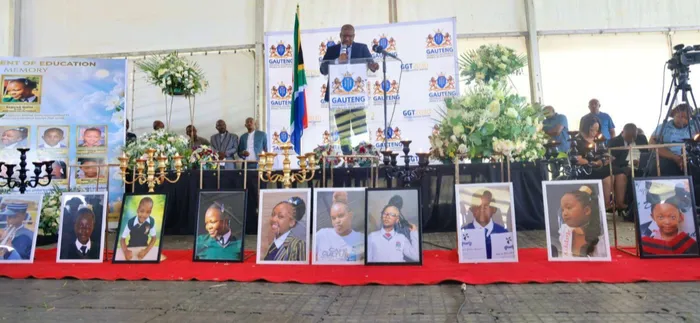
A memorial service for the 14 pupils who died in a crash involving a private scholar transport driver and a truck took place at the Saul Tsotetsi Sports Ground Hall in Sebokeng on Friday, with Gauteng Premier Panyaza Lesufi and members of the provincial executive council in attendance.
Image: Supplied: GDE
THERE is a particular kind of pain that words cannot fully carry - the pain of a parent who packs a lunchbox, straightens a school uniform, gives a quick kiss on the forehead, and watches their child leave home with the innocent promise, “I’ll see you later,” only to receive a call that shatters their world forever. No mother or father should ever have to identify their child at a mortuary because a journey to school became a death sentence.
Yet, this is the cruel reality that continues to confront too many South African families, as preventable scholar transport tragedies claim young lives and steal away the dreams of future leaders, professionals, and community builders.
Scholar transport plays an essential role in our education system, especially in communities where pupils travel long distances to attend school. For many families, it is not optional - it is the only practical means for a child to access learning. But this critical service is increasingly becoming a space of danger, fear and heartbreak. Recent incidents in various parts of the country have once again exposed what many parents have known for years: scholar transport is not always managed as a child safety priority, and the consequences have been fatal.
A disturbing pattern emerges in case after case. Pupils are transported in vehicles that are unroadworthy, poorly maintained, illegally modified, or operating without proper permits. Many vehicles are dangerously overloaded, far beyond their legal carrying capacity, leaving children squeezed into unbearable conditions without proper seating, ventilation or basic safety. Some drivers are reckless, untrained or simply negligent, speeding to maximise trips and profits while carrying the most precious cargo any nation could have - its children.
These are not “unavoidable accidents.” In many situations, they are the foreseeable result of lawlessness, weak enforcement and a culture of impunity. What is even more troubling is that these tragedies reveal something deeper about us as a society. It is becoming increasingly clear from these and other incidents that South Africa remains a largely reactionary society - we respond after lives are lost, after headlines are made, after grief overwhelms families, and after communities are left traumatised. We gather for memorials, we issue statements of condemnation, we call for investigations and promise accountability. But too often, once the immediate outrage fades, the same unsafe practices return to our roads. This must change.
We need to shift from being reactionary to becoming a proactive society - one that prevents disaster rather than merely mourning it. The danger is worsened by the fact that scholar transport often operates in the shadows of the formal economy. In many areas there are responsible operators, and in some districts there are systems of registration and monitoring. Where this happens, there are controlling structures, regular checks, and some level of accountability. Unfortunately, in too many communities, regulation remains inconsistent, compliance is treated as optional, and enforcement is sporadic.
In such conditions, tragedy is not a surprise - it is an eventuality. South Africa’s legal framework already provides a strong foundation to act decisively. The Constitution of the Republic of South Africa is clear that every child has the right to basic education and that the best interests of the child are of paramount importance in every matter concerning the child. These are not symbolic ideals; they are binding obligations.
When the state and society fail to ensure safe conditions for pupils to travel to school, we are failing the Constitution itself. The right to life and the right to human dignity are also at the heart of our constitutional democracy. When children are packed into unsafe vehicles like goods in transit, their dignity is violated and their lives are placed at unacceptable risk. No one can claim to respect children’s rights while tolerating a system that turns the school commute into a gamble with death. In addition, the National Road Traffic Act provides for critical requirements that relate directly to this crisis, including the obligation that vehicles operating on public roads must be roadworthy and comply with safety regulations.
Operating a vehicle that is not roadworthy, allowing overloading, and driving negligently are all behaviours that the law is meant to prevent. The problem is not a lack of law - it is the lack of consistent, visible, fearless enforcement. Furthermore, the South African Schools Act places a duty of care on public schools and gives School Governing Bodies a meaningful role in the governance and wellbeing of pupils. While transport may not always fall directly under the operational responsibilities of a school, the safety of pupils most certainly does. Schools cannot wash their hands of this crisis simply because the vehicle is privately owned. If pupils are dying on their way to school, then education stakeholders are duty-bound to respond with urgency, advocacy and coordinated community protection.
This is why School Governing Bodies (SGBs) must lead campaigns to confront and manage this growing crisis. They must engage parents, call community meetings, invite traffic authorities to school safety briefings, and build a culture where unsafe transport is named, reported and removed from the system. SGBs should also work with school management teams to keep records of the transport operators used by pupils, identify recurring concerns, and actively promote safe and compliant transport options. Where possible, schools should create structured drop-off and pick-up monitoring points so that overcrowding, reckless driving and unsafe vehicles can be identified early and reported immediately.
This is not work for government alone. Local Community Police Forums also have an important role to play. CPFs exist to strengthen cooperation between communities and law enforcement. Scholar transport safety must be included in CPF priorities, especially during school peak hours. Communities can no longer normalise dangerous vehicles simply because they are common. CPFs, together with local SAPS and traffic departments, should advocate for targeted roadblocks near schools, regular compliance checks on scholar transport routes, and a reporting system where parents and pupils can raise concerns without fear of intimidation.
If a community can mobilise around crime prevention, it can certainly mobilise around the protection of children being driven to school. Traffic officials must become far more vigilant during school travel times. Enforcement should not be occasional or reactionary, only after lives are lost. Roadblocks and vehicle inspections must be routine and sustained, particularly in high-risk areas. Vehicles transporting learners should be subject to more frequent roadworthy testing, because transporting children is not ordinary transport - it is a high-responsibility public service.
Where operators fail to comply, there must be real consequences. Heavy fines, impounding of vehicles, suspension of operating permits and criminal charges where warranted should not be rare - they should be automatic and swift. Dangerous vehicles must be treated for what they are: potential death traps.
Parents also have a responsibility. Many parents are under extreme economic pressure and are forced to choose what they can afford. But we must confront the uncomfortable truth that the “cheapest option” can sometimes become the most expensive price imaginable - the life of a child. Parents should monitor their children’s transport conditions, ask questions about compliance, and be willing to report unsafe practices. Children often know when something is wrong: when a vehicle is overloaded, when a driver speeds, when the vehicle is falling apart, when doors do not close properly, and when they feel unsafe. Parents must listen, investigate and act before tragedy strikes.
In the short term, stricter enforcement, tighter monitoring, community mobilisation and zero tolerance for overloading can save lives. But South Africa must also face the long-term policy reality: pupil transport cannot remain a largely unregulated and informal system in areas where it is a daily necessity.
The Department of Basic Education, together with provincial governments and transport authorities, must seriously consider expanding formal school transport solutions where pupils are forced to travel long distances. In many countries across the world, school transport is structured, regulated and treated as a core safety matter, with strict rules and harsh penalties. South Africa must learn from such examples and develop sustainable systems that prioritise safety, dignity, reliability and accountability. If we claim to value education, then we must value the lives of pupils enough to protect them beyond the classroom walls.
We cannot continue to mourn children after preventable incidents, issue temporary outrage, and then return to business as usual. Every pupil lost in scholar transport is not merely a family tragedy- it is a national failure. The crisis of scholar transport is not just about roads and vehicles. It is about the kind of society we are building. It is about whether we truly mean what we say when we speak of children as the future of South Africa. That future is being buried far too soon. The ride to school should never be a death sentence. It should be safe, dignified and protected - every day, in every community, for every child.
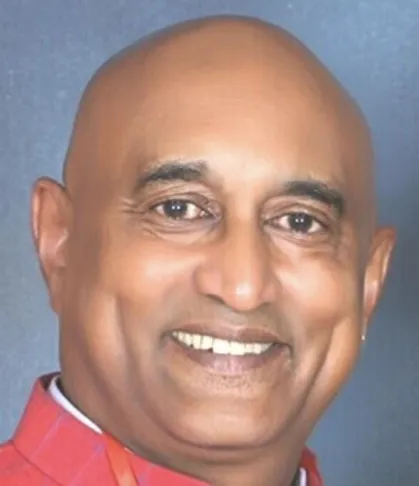
Dr Rajendran Govender
Image: File
Dr Rajendran Govender is a social anthropologist and researcher; a Ford and IBSA Fellow; Commissioner in the Cultural, Religious and Linguistic Rights Commission; Board Member of the Pan South African Language Board; Glohbal Coordinator of the Global Repository of Ancient Cultural Endeavours; and Chairperson of the Africa Kingdom Diaspora Alliance. He writes in his personal capacity.
** The views expressed do not necessarily reflect the views of IOL or Independent Media.