Trust and affordability in crisis: The troubling state of South Africa's private healthcare

South Africa faces mounting challenges in healthcare affordability argues the writer.
Image: Supplied
A crisis of trust and affordability is unfolding in South Africa’s private healthcare system. Patients, already strained by high medical aid contributions, face a second, devastating financial blow: out-of-pocket payments for services billed at 200%, 300%, or even 500% above medical aid scheme rates.
This practice, known as “balance billing”, has evolved from an occasional nuisance to a systemic feature. It forces a painful question: has the profession’s healing ethos been supplanted by unchecked profit pursuit, and where are the guardians of patient protection?
The abstraction of percentages becomes a human catastrophe in real stories. In 2022, a Gauteng man faced an R85,000 shortfall after emergency spinal surgery, with his specialist having charged 480% of the medical aid rate – a life-altering debt for a life-saving procedure. In 2023, a patient reported to Daily Maverick a radiologist charging 350% for an MRI, leading to an unexpected R4,200 bill.
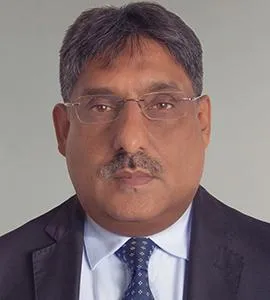
Sanjith Hannuman
Image: File
These are not anomalies but symptoms of a calculated business model. Where is the open-hearted, patient-centred, loving approach that defines true care? It is being suffocated by a ledger of excess. This practice persists because South African law lacks a regulated fee structure for healthcare providers.
Since the National Health Reference Price List (NHRPL) was declared invalid in 2010, providers may charge what they deem appropriate, constrained only by the vague requirement to offer “fair value” – a subjective standard with no enforcement mechanism.
The statutory regulator, the Council for Medical Schemes (CMS), has acknowledged that co-payments are a key driver of complaints and member financial risk. However, the Medical Schemes Act only mandates full coverage for Prescribed Minimum Benefits (PMBs), creating a significant loophole. It does not prevent providers from charging exorbitant multiples for non-PMBs or demanding top-ups for PMBs – a gap exploited without consequence.
The landmark Health Market Inquiry (HMI) Final Report (2019) was scathing, identifying the lack of a single, transparent, binding fee structure as a core market dysfunction. It recommended a supply-side regulator and a common benchmark tariff to protect consumers. Years later, these recommendations remain largely unimplemented.
The Health Professions Council of South Africa (HPCSA) mandates that fees be “fair and reasonable”. Yet it possesses no effective enforcement mechanism to answer a fundamental question: what quantum of skill or ethics justifies a fee five times the benchmark?
Professional bodies like the South African Medical Association (SAMA) have historically defended high billing under the banner of clinical autonomy and the argument that medical aid rates are unsustainably low.
Following the 2010 NHRPL ruling, SAMA suggested 300% of the old benchmark as appropriate, while the HPCSA floated an “ethical tariff” of 314%. However, when mark-ups routinely hit 500%, these arguments lose credibility.
While cost recovery is a legitimate concern, the leap from covering practice expenses to charging extreme multiples for procedures represents a shift from sustainability to profiteering. The scripture warns that “the love of money is a root of all kinds of evil.” Have we, as a profession, forgotten this timeless wisdom in pursuit of profit margins?
A vicious, self-reinforcing cycle has emerged:
- Providers charge higher multiples.
- Patients, in desperation, purchase “gap cover” insurance.
- Providers, perceiving patients as “covered”, feel emboldened to increase mark-ups further.
- All patients face higher medical aid premiums as schemes pay inflated PMB claims. This cycle benefits specialists charging 500% and the gap cover industry selling policies to mitigate it, while patients remain on a hamster wheel of escalating costs and perpetual financial anxiety.
For patients, this is a profound betrayal. The doctor-patient relationship, built on trust, shatters when a life-threatening diagnosis is followed by financial catastrophe. Advocacy forums document emptied retirement savings, re-mortgaged homes, and severe psychological distress from “bill shock.” The system monetises vulnerability at its most acute moment.
Meanwhile, medical aid contribution increases consistently outpace inflation and salary growth, pushing quality healthcare increasingly out of reach for the middle class. Where is our Ubuntu spirit?
The philosophy that declares “I am because we are” seems absent at the consulting room door, where a bill for five times the benchmark is presented. The medical profession was once a sacred calling, entered upon with a solemn vow. What has become of the Hippocratic Oath? Its promise to “do no harm” must extend to financial harm, yet it is trampled by the stampede for revenue.
Why has greed, and not God, become the moral compass guiding so many in this noble field? Our forebears understood that true healing required compassion in action, not just clinical skill.
They measured success by integrity and service, not by the size of a bank account swelled by the misfortune of the sick. The love of money has distorted the mission, turning healers into billers and patients into revenue streams.
No one disputes that healthcare professionals deserve fair compensation for their skill, risk, and sacrifice. The crisis is one of proportionality and transparency. Does a 15-minute follow-up charged at 400% of the medical aid rate represent a fair exchange?
Are astronomical mark-ups on implants a reflection of surgical skill or supply-chain exploitation of a captive patient? The pervasive lack of upfront, itemised cost information stifles any semblance of market forces, rendering patients powerless.
This crisis is a moral failure wrapped in a regulatory vacuum. It is the abandonment of the values that built this profession. We must confront the heart of the issue: Can we stand before our Creator, our community, and our own conscience and justify bankrupting families in their most vulnerable moments? Can we, with hands that once took an oath to heal, present an invoice that we know will cause ruin?
Doctors must lead a moral reform by justifying fees transparently, engaging ethically on tariffs, and remembering that their primary covenant is with the patient, not the bottom line. Regulators must find the courage to enforce “fair and reasonable” with definitive authority. The money-driven free-for-all must end.
The profession must choose: will it be guided by the moral imperatives of Ubuntu and its sacred oaths, or will it continue to be driven by the relentless calculus of greed? To restore trust, it must first restore its soul. The healing hands must lay down the heavy ledger and remember their true purpose: to serve, to comfort, and to heal – in every sense of the word.
| Hannuman is a Director at AVIB and a seasoned financial services consultant who holds an MBA from UKZN, is an FSA of the Financial Planning Institute of South Africa, a Human Values Practitioner, and a Behavioural Life Coach.