Addressing South Africa's STEM crisis: The decline in mathematics and physical science engagement
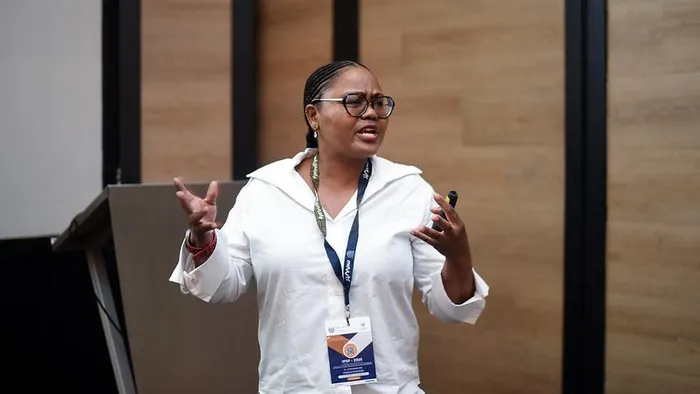
Dr Kgomotso Mtshatsheni is an analytical chemistry specialist and senior lecturer at Vaal University of Technology.
Image: Supplied
South Africa will continue to face a critical shortage of future scientists, engineers and technologists if the declining engagement in core mathematics and physical science is not urgently addressed. This is a universal truth I share in my research: ‘Investigating the Declining Engagement in Core Mathematics and Physical Science within STEM Pathways’ and which I had the honour of presenting at the first International Conference on Innovative Pathways for Sustainable Futures (IPSF 2025), recently hosted by VUT.
When academics and researchers from across South Africa gathered for our first annual IPSF, I seized a rare opportunity to present my study on the harsh reality that many vital university programmes – including engineering streams such as analytical chemistry – remain consistently undersubscribed.
The theme of this critical conference, ‘Integrating Mathematics, Sciences, Education and Technology,’ aims to highlight and explore solutions for "interwoven challenges", such as climate change and resource scarcity. The cause of our persistent university enrolment gap in STEM fields can clearly be attributed to a trend of students dropping mathematics and physical science for seemingly easier alternatives.
The mathematical literacy trap
My study monitored mathematics enrolment over several years, showing a decline from 120 000 learners in 2018 to 98 000 by 2022. This trend aligns with a broader 10-15% decrease in students enrolling in key mathematics and physical sciences subjects nationwide during that period.
Many learners are increasingly choosing mathematical literacy, a trend that reveals deeper issues of confidence, curriculum exposure and classroom delivery. While mathematically literate learners may meet the minimum school exit requirements, this shift restricts access to engineering, health sciences, ICT and other STEM fields. This creates a disastrous scenario for students later on, when they are shocked to find these careers are simply not available to them.
Do you want to be a doctor? Sorry, you can’t because you took maths literacy. Do you want to be an engineer, an architect, a chartered accountant, or a data scientist? Sorry, all these exciting fields are no longer options because you did maths literacy.
The foundational challenge
While the overall figures are concerning, my research reveals another surprising shift: in many schools, 80% of students now choosing core science subjects are girls, with only 20% being boys. Even with this gender reversal, the fundamental crisis persists – overall numbers are declining.
Systemic issues
The research highlights numerous system issues, mainly a significant lack of quality teaching. In a rural school I visited recently, a history teacher was assigned to teach physical science for grades 10, 11 and 12.
Furthermore, there is a stark resource disparity between schools in South Africa, with urban schools typically enjoying better access to laboratories, ICT tools and qualified STEM educators, supporting quality education. Conversely, many rural or township schools lack basic infrastructure and teaching materials.
Many learners only encounter a science lab for the first time at university, which immediately puts them at a disadvantage. As educators, we need to emphasise community action and structural support to combat this disengagement.
We need targeted interventions, such as mentorship programmes and community outreach, to expose learners to the reality and opportunities of a scientific career. We must democratise STEM education to provide equal opportunities and then establish clear assumptions and motivations.
Resources should be allocated to community programmes and school infrastructure to encourage practical learning. Teacher training must also be continuous to boost educators' confidence and subject knowledge, helping to attract and retain students. By strengthening the link between educational policy and the real world through informed choice and practical exposure, South Africa can develop the next generation of innovators necessary for its economic progress.
Dr Kgomotso Mtshatsheni is an analytical chemistry specialist and senior lecturer at Vaal University of Technology (VUT)