Changing labels is easy. Fixing things isn’t
GreyMutter
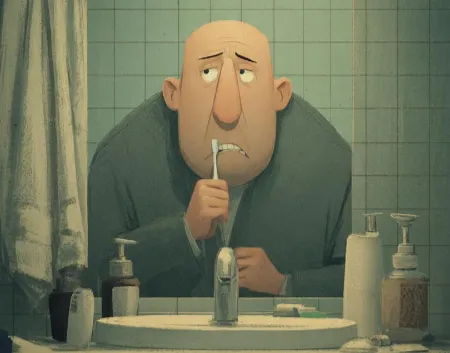
There is something deeply satisfying about brushing your teeth: approaching the bathroom with a mouth that feels like a mossy forest floor and, five minutes later, walking away feeling clean, minty, and human. It’s as if your soul gets a makeover. And this applies to most things that work well.
Image: Lance Fredericks / Meta AI / DFA
LIFE’S pleasures are often so ordinary that we don’t notice them until we don’t have access to them anymore.
When I caught Covid in 2020, the frightening part went beyond just being ill; what got me was realising I couldn’t take a full, deep breath. My lungs simply wouldn’t expand the way I was used to. When I eventually recovered, I found myself savouring the most basic human luxury: a deep, clean inhale. Even today, I am grateful for it.
I’ve had other losses that taught me the same lesson. For instance, I used to love brushing my hair; the gentle tug at the roots, the bristles waking up my scalp. I’ve been bald for more than 20 years, and the baldness doesn’t bother me in the least … but I still miss that tingling sensation that accompanies brushing.
And then there’s the humble shower: that reset at the end of a long, hot, sweaty day, or the quick morning rinse that makes you feel like a person again. You don’t fully appreciate it until you can’t do it.
Which brings me, oddly enough, to teeth. For me, there is something deeply satisfying about brushing your teeth: approaching the bathroom with a mouth that feels like a mossy forest floor and, five minutes later, walking away feeling clean, minty, and human. It’s as if your soul gets a makeover.
On a recent trip to the Far East, that pleasure was heightened when I discovered a toothpaste I hadn’t used before: Darlie Fresh ’n Brite. It’s minty but gentle, clean without being overpowering, and it leaves your mouth feeling properly fresh.
I’m naming the brand on purpose, not to provoke, but because of its history.
Decades ago — you can look it up — this toothpaste was marketed under a different name and logo that leaned on a racial slur and blackface imagery. Eventually, under global pressure and changing standards, it was rebranded. The name and the face on the packaging changed. The toothpaste, the actual product, didn’t.
That distinction matters.
Rebranding Darlie didn’t require the company to pretend the toothpaste was terrible. It didn’t require a reinvention of something that already worked. It was, in effect, a correction: removing needless offence from the label while keeping the substance people valued. The result is that consumers can now buy it without carrying the old insult in their shopping basket. The product remains good; the presentation became more humane.
I found myself thinking about that while brushing my teeth one morning, standing there, enjoying the simple miracle of fresh, clean breath, and wondering why our public life so often feels like the opposite: an obsession with labels while the substance struggles.
What I am getting at is that, in South Africa, renaming places is not a frivolous topic. Names are identity. They are memory. They signal whose history is honoured and whose is ignored. For many people, older place names don’t feel like “heritage”; they feel like a reminder that their ancestors were never meant to belong.
I can respect that and still ask hard questions about sequencing and outcomes.
Think about it: What was once Grahamstown is now Makhanda. Port Elizabeth has become Gqeberha. Uitenhage is Kariega. More changes are proposed, and each one requires updates to maps, books, signage, websites, navigation systems, and the daily language of ordinary people, and visitors to our shores, trying to find their way to work, school, or a destination.
My concern isn’t that renaming is meaningless. My concern is what happens when renaming becomes the most visible “proof of progress” while the lived experience of residents remains stuck: unreliable water, electricity that fails, sewage spills, cable theft, decaying roads, violent crime, and the constant low-grade stress of not feeling safe.
A name can be corrected. But a society cannot be fixed by relabelling alone. I could adjust to a name that isn’t my preference, or a bit difficult to pronounce, if the foundations of the residents’ daily life were sound – safety, reliable water, steady electricity, clean public spaces, and a sense of basic order.
What’s harder to accept is what is regarded as a meaningful and significant name change alongside the same old instability that makes everyday life feel precarious.
This is the difference between renaming a product and renaming a place. A good toothpaste can survive a name correction because the substance is already sound. The rebrand removes offence; it doesn’t pretend to solve deeper structural problems.
But when a country or city changes names while basic services collapse, the symbolism risks feeling like substitution: a new label placed over an old, festering wound.
Names matter. They should be examined, corrected, and restored where justice demands it. But the moral work of uplifting a nation is bigger than mere signage.
If we want changes that truly honour people, then renaming must be paired with rebuilding, restoration, and revival, so that the label and the actual lived reality finally tell the same story.