The Silent Crisis: Government inaction on PetroSA's collapse threatens a generation
Opinion
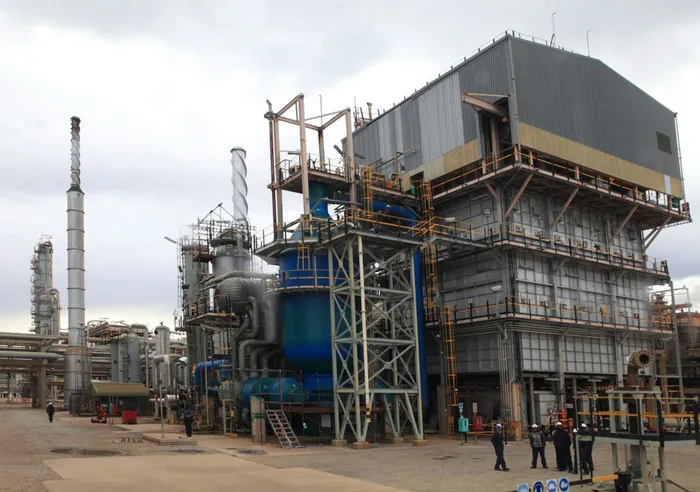
PetroSA’s gas-to-liquid refinery in Mossel Bay. PetroSA’s decay is not just another SOE failure … it is a national risk, with devastating social consequences, and the government’s indecision is letting an entire generation in the Garden Route slip into despair.
Image: Supplied
SOUTH Africa has seen too many state-owned emterprises (SOEs) collapse to be surprised by PetroSA’s crisis. The warning signs have been there for years: chaotic leadership, revolving-door executives, politically influenced boards, and murky procurement battles.
But PetroSA’s decay is not just another SOE failure. It is a national risk, with devastating social consequences, and the government’s indecision is letting an entire generation in the Garden Route slip into despair.
PetroSA was never an ordinary company. Its gas-to-liquids refinery in Mossel Bay was a world-class engineering achievement. It generated jobs, revenue, and pride. For decades, families in Mossel Bay, George, and surrounding towns built their futures around it.
Young people believed it was a door to stability and opportunity. Entire communities depended on its economic gravity.
Today, that anchor is gone. The refinery is idle. Training programmes are frozen. Job opportunities have vanished. And the recent compliance actions by the SA Revenue Service (Sars) have exposed what PetroSA’s leadership has long tried to hide: internal controls are broken, governance has collapsed, and the company is no longer a functioning strategic asset.
Let’s be clear, Sars does not act lightly. When the revenue authority audits a state-owned oil company, questions its books, and enforces compliance, it signals serious dysfunction. A well-run national oil company never ends up in disputes with the taxman. PetroSA did, and that tells South Africans everything they need to know.
The social cost is immediate. Idle youth are drifting. Vulnerable youth are becoming desperate youth. In the Garden Route, where PetroSA once anchored opportunity, communities are now being swallowed by hopelessness. Drug abuse, crime, and risky behaviour are rising in the vacuum left by the refinery’s collapse.
This is not just an economic failure; it is a social disaster unfolding in real time.
Government cannot hide behind the curtain of ignorance. Every month the refinery sits idle, another cohort of school-leavers loses the chance to gain skills, earn a living, and imagine a future. PetroSA’s decay is creating a generational crisis that no municipality can fix.
The Mossel Bay refinery has not failed due to a lack of engineers or technical expertise. It has failed because politics smothered governance, strategy shifted with every new appointment, and accountability disappeared. PetroSA became a site of factional contestation rather than production. Strategic partnerships and revival plans have repeatedly failed, not due to complexity, but because leadership neglected their institutional mandate.
This is a pattern across the country’s SOEs. My research into Eskom, Transnet, SAA, and PetroSA shows a consistent story: mismanagement, political interference, and weak governance cripple institutions meant to serve the public. If state-owned companies are to function again, something must give. The status quo cannot continue unabated.
Government must restore competent leadership, enforce compliance, depoliticise boards, and rebuild institutional capacity. Without decisive intervention, strategic assets will continue to fail, and communities, especially youth, will pay the price.
PetroSA’s crisis is now both an economic and social emergency. The idle refinery is not just a financial liability; it is a threat to a generation of young people who once saw the company as a pathway to dignity and opportunity.
Government intervention is urgent. Not another cosmetic “turnaround plan”, not another PR-friendly reshuffle, but a serious rebuilding of governance, operations, and youth employment programmes.
PetroSA can be saved, but only if the government confronts the political rot that allowed it to fail in the first place. Anything less would be another missed opportunity, another generation sacrificed, and another strategic asset left to crumble in plain sight.
* Nyaniso Qwesha is a writer with a background in risk management, governance, and sustainability. He explores how power, accountability, and innovation intersect in South Africa’s landscape.
** The views expressed here do not reflect those of the Sunday Independent, IOL, or Independent Media.