South African Human Rights Commission calls for urgent steps to improve mental health in the Northern Cape
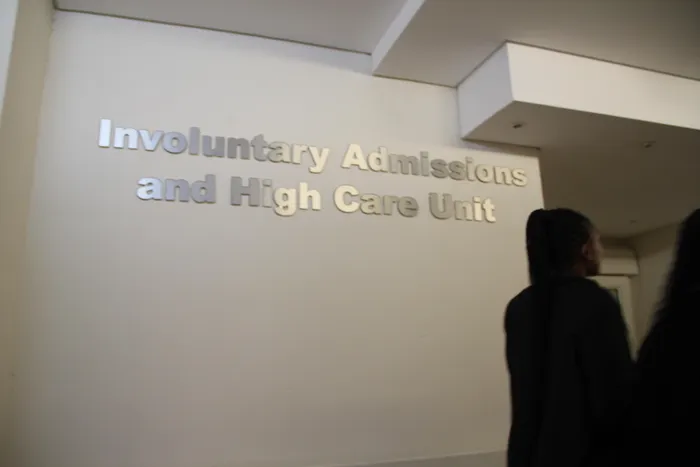
The South African Human Rights Commission has released the final report on the status of the NCMM and RSMH.
Image: Sandi Kwon Hoo / DFA
MALFUNCTIONING mortuaries, laundry rooms, critical staff shortages, broken equipment, poor sanitation, collapsing ceilings and peeling walls are but some of the problems that need to be remedied at the Northern Cape Mental Health Hospital (NCMM) and Robert Sobukwe Hospital (RSMH).
The final investigation report that was released by the South African Human Rights Commission (SAHRC) this week called for urgent steps to be taken following the death of psychiatric patients who experienced complications at the NCMM and RSMH during 2024.
One patient reportedly froze to death, another remains bedridden and dependent on nursing staff following brain surgery, and a third died after contracting double pneumonia, possibly due to exposure to the severe cold.
Rampant cable theft, persistent electricity outages and a broken air-conditioning system were blamed for the patient’s demise. Patients were also served cold food during electricity outages at the NCMHH.
Mortuary doors "stuck"
The report, signed off by SAHRC provincial manager Uzair Adams, dated October 2025, pointed out that the non-functional mortuary had further impacted the dignity of deceased patients and their families.
“The NCMHH mortuary ceased operations on October 19 2023, following a power outage that compromised refrigeration systems. Although electricity was later restored, the refrigeration units and motorised components were not repaired, and the facility remained non-operational at the time of the investigation. Consequences include outsourcing of body storage to a private mortuary, placing undue burdens on families to provide their own undertaking services, and delays in dignified post-mortem care.”
He stated that the mortuary entrance doors were “stuck” at the time of inspection and could not be opened.
He added that uncollected dirt and refuse, as well as snakes, reptiles and spiders, were a common occurrence in the courtyards at NCMHH.
“Several broken furniture and equipment items were observed in the courtyard, including garden benches with broken bolts that were reportedly used by patients to harm each other.”
He pointed out that since the hospital first opened its doors on September 20 2019, the building was left to deteriorate without a maintenance or capacity plan.
“At the centre of the many ongoing infrastructural challenges is the centralisation of supply chain management and procurement processes, as well as the appointment of service providers by the provincial office of the Department of Health. The hospital management team is unable to monitor service providers or hold them accountable for poor or non-performance”
Adams stated that state patients were still being detained at correctional facilities, while they should be accommodated at health establishments.
“Mixed-gender and age arrangements also compromise safety and dignity. Of concern was the pneumatic doors that were forced open, which required specialists to repair. These doors pose a significant security risk to both patients and staff.”
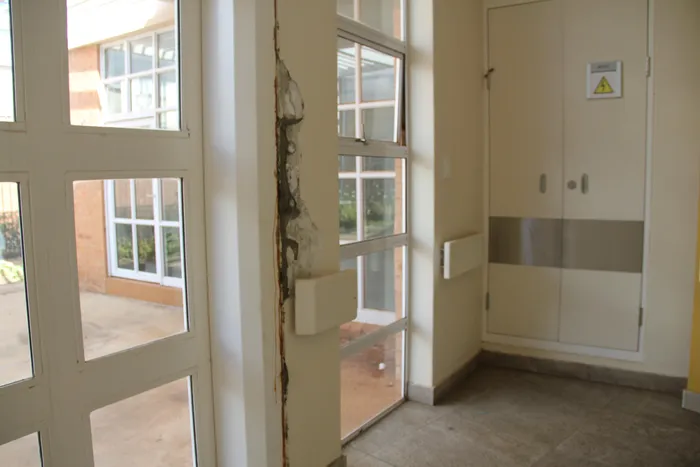
A wall that is peeling at the Northern Cape Mental Health Hospital.
Image: Sandi Kwon Hoo / DFA
Cardboard used to cover broken windows and doors
He indicated that several wards where cardboard and couches were used to cover broken windows and doors that were collapsing provided a possible escape route for patients.
“The CCTV, biometric access controls and alarms have not been operational for over two years. The absence of adequate security personnel, combined with repeated incidents of cable theft and vandalism, poses significant risks to patients and staff.
“This is worsened by the hospital not being guarded in areas like the sub-station, plant room and sanitation pump station. We observed ongoing incidents of theft and vandalism within the facility. The security hubs in the wards and emergency rooms are also not functional, and some are used as storage rooms.”
He stated that during the investigation, the Department of Labour had visited the facility with a view to declaring it "dysfunctional and an occupational health and safety hazard.”
Adams said that there was only one sewage pump station for the mental hospital, the Northern Cape Department of Social Development building, and nurses’ residences.
“For the pumps to function, it relies on a sub-transformer that provides power connected to the hospital. This cable was stolen prior to the hospital's opening in 2019.”
He added that laundry operations were suspended in 2023 and partially resumed in 2024, although persistent equipment failures and shortages of appropriate clothing and linen were experienced.
“The blankets used by patients at the hospital are very thin and of poor quality. Although prior visits to the hospital highlighted a persistent challenge with the shortage of pyjamas, at the time of the joint investigation, it was found that the hospital ordered 600 units of linen, blankets and patient pyjamas, of which only 580 units were received.
“Several orders of patient clothing were rejected or returned to the suppliers due to inferior quality.”
He reported that the laundry unit only had one industrial ironing machine that had never worked since it was delivered by the suppliers.
Adams indicated that the sewing room has not functioned as the equipment was never procured.
Pharmacy doors do not lock
He stated that a hole was drilled in the door where Schedule 4, 5 and 6 medications were stored at the pharmacy, in case it mistakenly closed, where a knife had to be inserted to re-open it.
“Containers were found filled with expired medical supplies and waste dating back to 2022 due to one pharmacy door that could not open. Pharmacy doors cannot lock due to the failure of the biometric system, which was deactivated during Covid-19.”
Adams explained that the main entrance door to the pharmacy was locked with the use of a steel chain and a padlock.
“The security guard keeps a spare key for emergencies, which is also not allowed in terms of pharmaceutical standards, a provision made to control unauthorised access to the stock.”
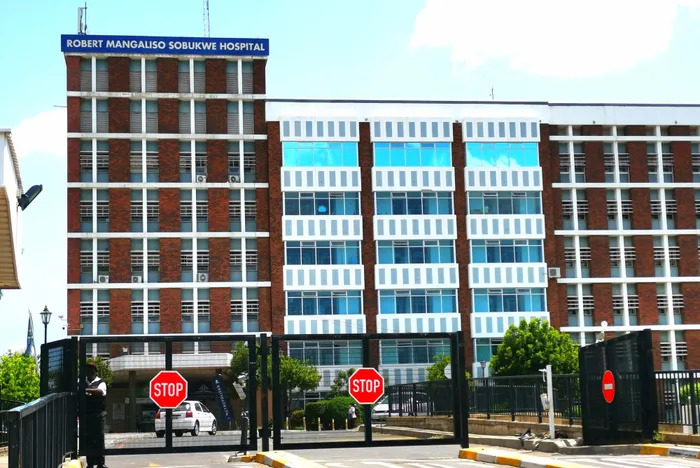
The Robert Mangaliso Sobukwe Hospital in Kimberley.
Image: File
Robert Mangaliso Sobukwe Hospital
Adams said that during visits conducted at RMSH in March 2025, patients were observed sleeping on benches while waiting for beds to become available.
“In the surgical recovery ward, 16 patients were admitted into an eight-bed ward.”
He added that the water boiler feeding the laundry unit was broken, while parts that were needed to fix it were estimated to cost R1, 5 million.
“The boiler used by the laundry is incredibly old and uses coal, which is oftentimes challenging to procure. Due to this, all operations at the laundry unit are closed, and patient clothing is sent to Dr Harry Surtie Hospital in Upington. During the oversight visit, there were batches of linen waiting to be sent to Upington for washing, which takes two days.”
Adams stated that most of the equipment of the dilapidated mortuary was old and beyond repair.
“It has no proper drainage system. The mortuary has 21 fridges which can accommodate 42 bodies. However, two fridges were not functioning and needed to be replaced as they are old. In cases where the mortuary is overcrowded, they would use external service providers to store the bodies, but the contract lapsed earlier this year in 2025.”
He said the grounds were poorly maintained, where all the lawnmowers and grass cutters were broken.
Similar challenges
Adams stated that RMSH and the Kimberley mental hospital were experiencing similar challenges.
“The patient passed away at RSMH three days after being discharged, but was not transported back to the NCMHH, since emergency transport was not arranged for him. It is further alleged that during the three days the patient was not checked on at RMSH, where his condition deteriorated, and he regrettably passed away.”
He highlighted the failure of the Department of Health to address ailing infrastructure and protect the safety of staff and patients.
Silence of the Mental Health Review Board is 'deafening'
He pointed out that the silence of the Mental Health Review Board was concerning, as the chief psychiatrist had reported how the conditions of the facility had contributed to the death of two patients who died of hyperthermia.
“The lack of proper clothing, electricity and cold temperatures placed them at risk of exposure to the elements. The CEO of the facility reported that the budget for repairs, maintenance and procurement of essential items is located within the province, and the facility does not have an operating budget. This state of affairs makes it impossible for his office to effectively manage the facility.”
The SAHRC has instructed the department to realign its budgets to improve the state of both facilities, appoint skilled and qualified personnel and improve the quality of mental health care, treatment and rehabilitation services.
The Department of Health was given 60 days from receipt of the final report to take remedial steps and implement the recommendations of the report.