How AI can tackle youth unemployment in South Africa: Insights from UCT researcher
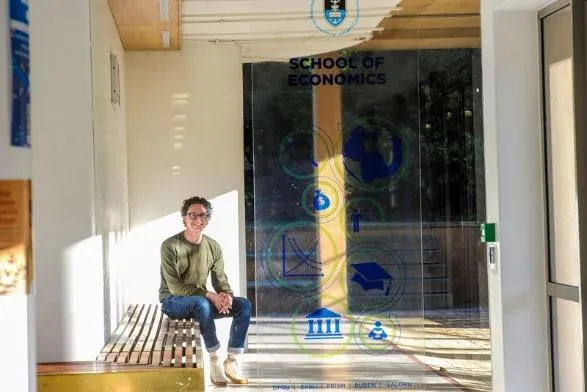
Dr Tim Köhler, a senior research officer at the University of Cape Town, has been selected as one of just 19 early-career scholars to receive funding through the AI at Work programme run by Schmidt Sciences.
Image: UCT NEWS
The latest Quarterly Labour Force Survey from Statistics South Africa shows that roughly 6 in 10 young people aged 15–24 who are economically active cannot find work, while about 40% of those aged 25–34 are unemployed.
In the Western Cape, a province that is usually regarded as one of the country’s stronger provincial economies, youth unemployment rates consistently hovering well above 30% depending on age group and definition used. Researchers have repeatedly warned that prolonged joblessness at a young age has long term effects, lower lifetime earnings, reduced skills accumulation and diminished long-term wellbeing.
Recent research on youth unemployment in the Western Cape underscores how structural barriers compound the crisis. Studies by provincial economic research units and university-based labour market analysts have found that young jobseekers frequently lack reliable information about available opportunities, struggle to access networks that connect them to employers, and face significant transport and digital access costs. Evidence from Cape Town’s townships, for example, highlights how limited career guidance and patchy internet access narrow the horizons of school-leavers, even in a province with comparatively better infrastructure.
It is against this backdrop that a University of Cape Town researcher has secured a major international research grant to test whether artificial intelligence can make a measurable difference to young jobseekers’ prospects.
According to UCT News, Dr Tim Köhler, a senior research officer in the Development Policy Research Unit in the School of Economics at the University of Cape Town, has been selected as one of just 19 early-career scholars worldwide to receive funding through the AI at Work programme run by Schmidt Sciences.
The initiative is investing more than US$3 million globally in research examining how generative AI is reshaping labour markets. Köhler’s study is the only South African-led project in this international cohort and will produce some of the first rigorous evidence from a developing-country context on whether a generative AI-powered career guidance tool can improve employment outcomes for unemployed youth.
"Youth unemployment remains one of South Africa’s most urgent socio-economic challenges," Köhler said, pointing to the scale and persistence of the crisis.
"A variety of factors explain these high rates, but for young jobseekers, severe information constraints can play a particularly important role. They may not know which career paths are viable given their circumstances, what skills employers are actually looking for, or how to navigate both formal and informal labour markets."
While debates about artificial intelligence and the future of work have largely been driven by evidence from high-income countries, Köhler argues that South Africa presents a critical test case.
"If AI can help young people navigate these complexities here, the lessons are likely to be relevant for many other countries across the continent and the Global South," he said.
The research will evaluate a generative AI-based career guidance tool designed specifically for unemployed young people. Developed in partnership with a Cape Town technology firm and shaped through engagement with non-governmental organisations, researchers and government stakeholders working in youth employment, the tool is powered by large language models and built to function in low-bandwidth environments.
It will operate as a personalised, interactive assistant accessible via mobile phones or computers.
"Through a simple conversational interface, users can receive guidance tailored to their own circumstances," Köhler explained.
"That might include identifying realistic job opportunities, improving a CV, preparing for interviews, or considering training or self-employment pathways when formal jobs are limited."
The emphasis, he said, is not on flooding users with more generic advice, but on delivering relevant, context-sensitive support.
"Many young people receive generic advice that doesn’t reflect local labour market conditions or their personal circumstances. We want to see whether more relevant, personalised, dynamic guidance can help improve decision-making and, ultimately, well-being."
According to UCT News, the project also signals the university’s intention to shape global conversations about technology and inequality from an African perspective.
"This award places UCT and South Africa more broadly at the forefront of an emerging global conversation about AI and work," Köhler said, "one that has so far been dominated by evidence from high-income countries."
Ultimately, he added, "the goal is grounded in the lived realities behind the statistics. The aim is to support more grounded and responsible approaches to using technology, as part of a wider effort to expand opportunities for young people and reduce poverty and inequality."
lilita.gcwabe@inl.co.za