South Africa to withdraw troops from UN mission in DRC after 27 years
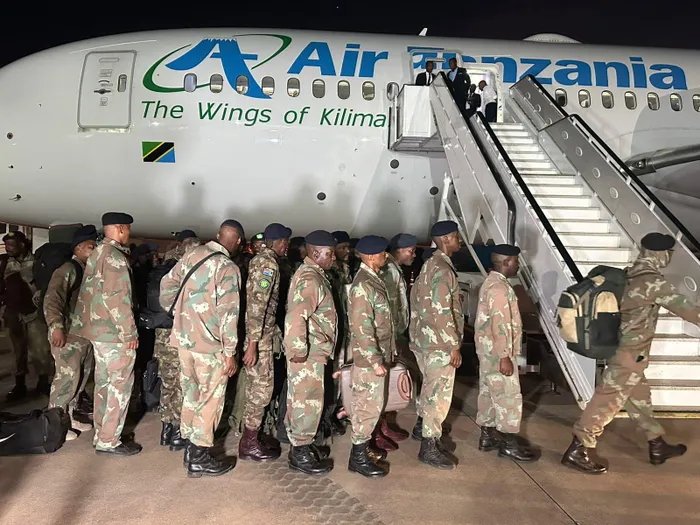
South Africa has announced it will withdraw more than 700 troops from the UN’s MONUSCO mission in the DRC, ending 27 years of peacekeeping involvement amid ongoing regional instability.
Image: Jonisayi Maromo/ IOL
SOUTH Africa has decided to end its long-running troop contribution to the United Nations Organisation Stabilisation Mission in the Democratic Republic of Congo (MONUSCO), drawing to a close nearly three decades of involvement in UN peacekeeping operations in the country.
President Cyril Ramaphosa informed United Nations Secretary-General Antonio Guterres of the decision during a telephone conversation on January 12, according to the Presidency.
South Africa currently has more than 700 soldiers deployed in the Democratic Republic of Congo and ranks among the top 10 troop-contributing countries to MONUSCO.
Decision conveyed to the United Nations
The Presidency confirmed that Ramaphosa personally communicated South Africa’s position to Guterres, formally notifying the UN of Pretoria’s intention to withdraw its soldiers from the mission.
Presidential spokesperson Vincent Magwenya said the decision was driven by “the need to consolidate and realign the resources of the South African National Defence Force, following twenty-seven years of South Africa’s support to UN peacekeeping efforts in the DRC”.
A separate statement from Ramaphosa’s office said the move was influenced by the need to “realign” the resources of South Africa's armed forces.
Magwenya added that South Africa would work with the United Nations to manage the process. “South Africa will work jointly with the UN to finalise the timelines and other modalities of the withdrawal, which will be completed before the end of 2026,” the statement said.
Another account of the decision said the withdrawal of South African forces “would be finalised before the end of the year”. This creates a discrepancy in the stated completion timeframe, which is not clarified in the source material.
South Africa’s role within MONUSCO
MONUSCO was established by the UN Security Council in 1999 to support the Lusaka Ceasefire Agreement. Over time, its mandate has evolved in response to ongoing instability in the region.
According to the Presidency, the mission is tasked with protecting civilians, humanitarian personnel and human rights defenders under imminent threat of physical violence, while also supporting the Congolese government’s stabilisation and peace-consolidation efforts.
Another account describes the mission’s mandate as countering the many rebel groups active in eastern Congo, where conflict has persisted for decades and where there has been a recent escalation in fighting.
When its mandate was extended in December, the UN mission had a total deployment of nearly 11,000 troops and police, according to one report.
Context of escalating conflict
The decision to withdraw comes against the backdrop of heightened instability in eastern DRC.
The conflict escalated in early 2025 as the Rwanda-backed M23 armed group seized large swathes of territory and several key cities. There were mounting calls in January 2025 for South Africa to pull out of the region after several of its soldiers were killed, including at least two deployed under the UN mission.
Last year, South Africa also repatriated hundreds of troops deployed under a separate Southern African Development Community military mission after 17 soldiers were killed in fighting between government forces and the M23.
In a further escalation, the M23 claimed responsibility this week for a drone attack on a key airport in Kisangani, several hundred kilometres from the armed group’s usual area of operations.
The United Nations has said it would soon send a mission to the volatile region to help enforce a ceasefire.
Diplomatic efforts are also under way. Qatar has been mediating between the Congolese government and the M23 for several months, with a commitment towards a ceasefire signed in July. In December, the DRC and Rwanda formalised a US-brokered peace deal in Washington.
What happens next
Despite the withdrawal from MONUSCO, the South African government has stressed that it will not disengage from the DRC entirely.
Magwenya said Ramaphosa welcomed the appreciation expressed by the UN Secretary-General regarding South Africa’s decision.
The Presidency said South Africa would continue to maintain close bilateral relations with the Congolese government and provide ongoing support to multilateral peace initiatives led by the Southern African Development Community, the African Union and the United Nations, aimed at achieving “lasting peace” in the country.