The Return of the Eagle’s Eye: Kimberley exhibition honours enduring legacy of Vusi Tukakhomo
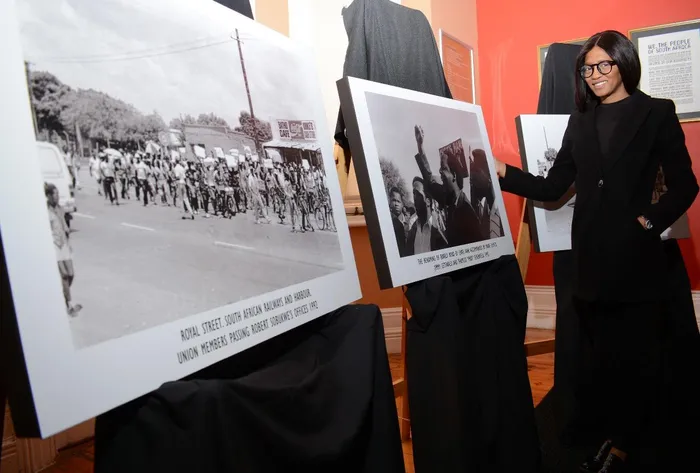
The Return of the Eagle’s Eye exhibition honours legendary DFA journalist and photographer Vusi Tukakhomo.
Image: Emile Hendricks
WHEN the doors of the Duggan-Cronin Gallery, a satellite of the McGregor Museum, open on January 29, visitors will step into more than a photographic exhibition. They will enter a carefully curated journey through memory, community, and history, guided by the lens and pen of one of Kimberley’s most revered chroniclers, the late Vusi Tukakhomo.
Titled The Return of the Eagle’s Eye, the exhibition is curated by emerging Kimberley filmmaker and creative director Frellet Koope of Frellets Pictures. Made possible through the support of the Department of Sport, Arts and Culture and Mzansi Golden Economy, the exhibition honours Tukakhomo’s powerful body of photographic work and the lasting legacy he left behind.
Koope, who has established herself as a storyteller rooted in Northern Cape narratives, describes the exhibition as both a tribute and a responsibility. As curator, she has carefully selected and arranged Tukakhomo’s images to reflect themes of resilience, heritage, and identity, inviting the community to engage with the visual narratives of a man who documented life in Galeshewe, Vergenoeg, and beyond with uncommon depth and empathy.
“This exhibition is about honouring Vusi Tukakhomo,” Koope says. “These are his images, his vision. I am here to make sure his story reaches the people, to celebrate his life and the moments he captured, which continue to inspire us today.”
Intersections of community, memory and experience
At its core, The Return of the Eagle’s Eye explores the intersections of community, memory and lived experience. Tukakhomo’s photographs do not simply record events; they preserve moments that shaped collective identity during some of the most turbulent periods in Kimberley’s history. Koope’s curatorial approach ensures that each photograph is presented with context, care and reverence, allowing audiences to fully appreciate both the journalistic and artistic weight of the work.
Balancing respect for the original material with her own creative vision as a storyteller, Koope has designed the exhibition to be immersive rather than static. Visitors are drawn into the world Tukakhomo saw through his camera, guided by thoughtful curation that emphasises narrative flow and emotional connection.
“My job is to honour Vusi’s legacy,” Koope says. “Every image tells a story. Every frame deserves to be seen and remembered.”
The exhibition arrives as a renewed celebration of a man whose contribution to journalism and photography in the Northern Cape is widely regarded as extraordinary. Vusi Tukakhomo was born on March 21, 1945, in Barkly Road, Kimberley. He attended Barkly Road High School, now known as Tshireletso High School, and began his working life at the then Kimberley City Council before moving on to Morris Radio.
His relationship with journalism began early. While working for the then Bantu Education Department, he started freelancing for the Diamond Fields Advertiser in 1966. Sport, particularly soccer, was his first love. In an earlier interview, Tukakhomo recalled that in those days, everyone wanted to write soccer stories, and he was no different. Initially, he submitted his reports through friends and fellow freelancers Ronnie Joel and Lennie Himson before realising that his work was being published unchanged.
“After I realised that stories I had given to Joel were being used without any changes, I started thinking that I could do this myself,” he said.
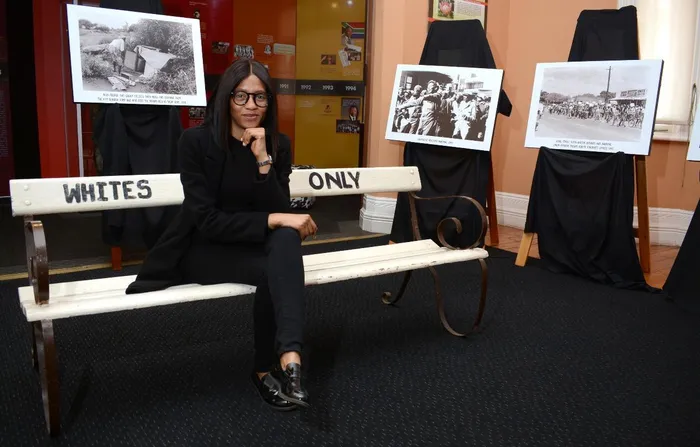
Filmmaker and creative director Frellet Koope of Frellets Pictures is seen at the Duggan-Cronin Gallery.
Image: Emile Hendricks
Building relationships
Living and working close to the DFA offices, Tukakhomo built relationships with newsroom staff and soon began submitting his own reports. His first published story was a soccer report in the Weekend World. On November 5, 1978, he was appointed as the DFA’s first full-time black reporter, a landmark moment both for the newspaper and for local journalism.
Over a career spanning more than 35 years, Tukakhomo became far more than a sports writer. While soccer remained close to his heart, he expanded into general news, court reporting and photography, using his pen to document the history of Kimberley and its people in meticulous detail.
Former DFA editor Kevin Ritchie paid tribute to Tukakhomo in the newspaper’s 130th anniversary supplement, describing him as a legend. Ritchie recalled how Tukakhomo would sit quietly in the corner of the newsroom, producing vast amounts of copy on tiny portable typewriters, covering virtually any subject imaginable.
“It seemed Vusi knew everyone in Kimberley,” Ritchie wrote. “He did. He knew them as far back as their grandparents and normally tried to get all of it into his stories, too.”
Honoured as a prolific writer and photographer
That reputation only grew over time. In the DFA’s 140th edition, Tukakhomo was again honoured as a prolific writer and photographer, equally adept in the courtroom and on the soccer field. He was particularly celebrated for his indefatigable documentation of township life and the encyclopaedic knowledge he brought to the newsroom.
His work earned him widespread recognition, including a De Beers Shining Light Award in 2000 during a Heritage Day concert. Originally established to recognise excellence in the local jewellery industry, the award was extended to honour excellence in community service and the arts. Alongside former Sowetan editor-in-chief Dr Aggrey Klaaste, Tukakhomo became one of the first journalists to receive this accolade.
Photography was a crucial part of his legacy. Several exhibitions showcased his work over the years, most notably Through Vusi’s Lens, a retrospective exhibition at the Duggan-Cronin Gallery that featured 15 years of his photographs. He was also invited to contribute to the McGregor Museum’s Between States of Emergency exhibition, where his work appeared alongside that of other legendary South African photographers such as Alf Kumalo, Peter Magubane and David Goldblatt.
A love of reading and writing
Tukakhomo himself often spoke modestly about his career. In an interview with journalist Boipelo Mere, he said his decision to enter journalism was triggered by his love of reading and writing. During his school years, he excelled in English and Afrikaans and was encouraged by friends to consider journalism as a career. He retired from the DFA in 2006, explaining that he felt his memory was no longer serving him as well as before.
Yet his influence endured. Ritchie later described him as a legendary newspaperman who played a vital role in telling the full stories of people who might otherwise have been erased from the news agenda. His humility, Ritchie noted, would likely have left him embarrassed to know how many colleagues considered him a mentor and role model.
Former Sol Plaatje Municipality spokesperson Sello Matsie also highlighted the historical importance of Tukakhomo’s work. Through his lens and pen, Matsie said, very few people managed to record the lives and struggles of the people of Galeshewe during the most turbulent times. Despite media restrictions, military lockdowns, violent confrontations and mass protests, Tukakhomo documented it all.
A celebration of Northern Cape heritage
After retiring, he continued freelancing and worked on a book about the business people of Galeshewe, further evidence of his lifelong commitment to preserving local history.
It is this depth of contribution that The Return of the Eagle’s Eye seeks to honour. More than a visual display, the exhibition is positioned as a celebration of Northern Cape heritage and an opportunity for audiences to reconnect with the work of a photographer and journalist who helped shape their collective memory. With new pieces and extended narratives, Koope ensures that Tukakhomo’s vision continues to inspire, educate and move new generations.
The exhibition opens on January 29 at the Duggan-Cronin Gallery in Kimberley, starting at 6pm. Members of the public are invited to attend an evening that promises vibrant and powerful visual storytelling, as well as a renewed appreciation of a legacy that continues to watch over the city through the eagle eye of Vusi Tukakhomo.
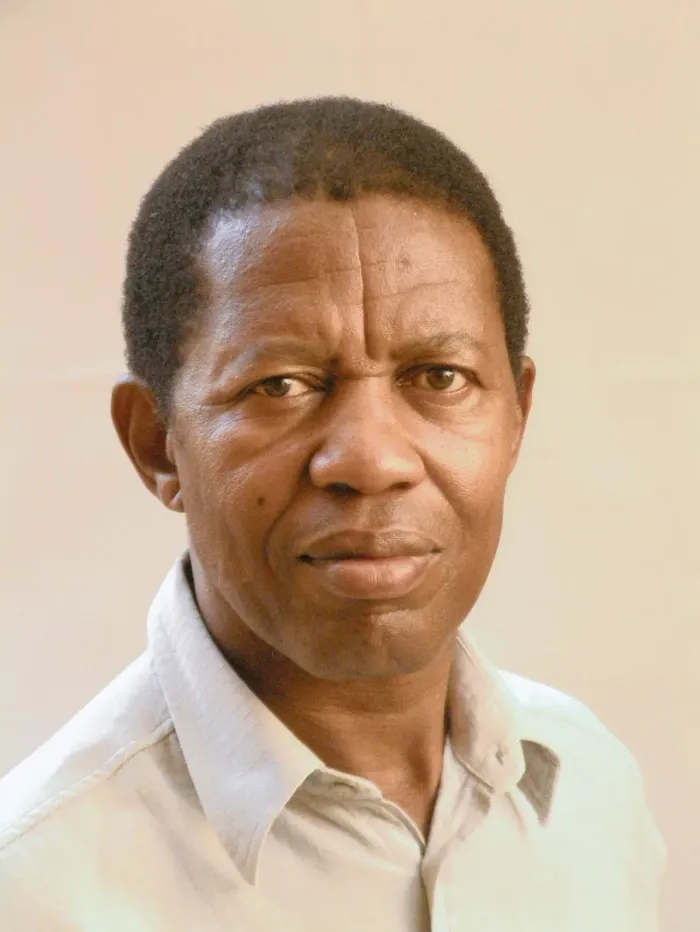
Vusi Tukakhomo – legendary DFA journalist and photographer whose eagle eye captured the people, stories and soul of Kimberley.
Image: File picture