From Pampierstad roots to amapiano rising star: Ntwana Ya Kasi’s comeback story
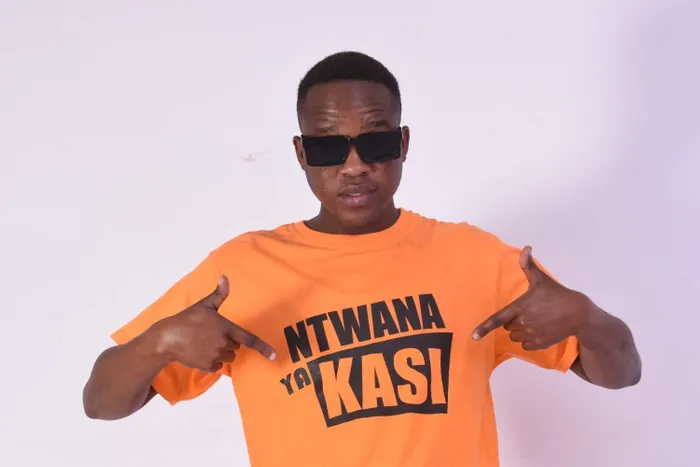
Ntwana Ya Kasi, born in Thota Ya Tau and raised in Pampierstad, rose from hip-hop to amapiano success. After losing his sight due to diabetes, he regained vision in one eye and released the album Stara Sa Piano.
Image: Supplied
ORAPETSE Sehako, better known as Ntwana Ya Kasi, has built a story of survival, faith, and determination that reaches far beyond music. Today, he is releasing albums, running a clothing brand, and preparing for his second eye surgery — yet his journey began in the township of Pampierstad, where life forced him to grow up fast.
“Being born in different locations has shaped me into something strong,” he says. “Growing up in the township is the hardest thing ever. You are forced to become a man at a very young age.”
The move from his birth village, Thota Ya Tau in the North West, to Pampierstad in the early 1990s exposed him to the harsh realities of township life. “You are surrounded by fast life, danger, and bad influences,” he says. “You learn to survive early. For me, music became my purpose.”
From dance floors to amapiano
Sehako’s first love was music. Growing up with kwaito and dance music taught him confidence and stage presence. “There was never a point where I would have stage fright,” he says. “The energy of township dance culture taught me to perform like I already belonged.”
When hip-hop took over the streets, he joined the wave, but it never felt fully his. Then came Amapiano. “I developed more love for amapiano music,” he explains, “and I decided to stick to the genre because I excel and love the culture.”
The name Ntwana Ya Kasi — the boy from the streets — became his identity. “I’ve always believed that I could carry the hood to bigger heights,” he says. “The name would open a lot of doors because of its originality.”

Orapetse Sehako's story is not just about music. It is about survival, faith, and courage in the face of darkness. Through it all, he remains true to his name — the boy from the streets, carrying the township spirit, and pushing kasi culture to new heights.
Image: Supplied
Rising star until life struck
By 2023, his career was gaining momentum. He landed his first national radio interview on Lesedi FM with DJ Lovers on Party Time and released his first professional music video on Channel O. In 2024, he appeared on Motsweding FM’s Dia Boa 3 to 6 with LTK and Nelly Moruri.
Then, life took a sudden turn. In July 2024, he was diagnosed with diabetes. Two months later, he lost vision in both eyes. “My career went on standstill,” he admits. “It was very difficult for me as a young promising artist.”
Yet he refused to give up. He continued recording music, even while blind. “I kept my faith from day one,” he says. “I knew God would perform a miracle because I’m chosen.”
A year later, the miracle came. Sehako regained vision in one eye after surgery and is now waiting for the second operation. “My recovery taught me to always put my health and God first,” he says. “And never worry about what people think.”
Stara Sa Piano: Proof he’s still here
In December 2025, Ntwana Ya Kasi released Stara Sa Piano, available on all digital platforms. The album wasn’t about reflecting struggle, he says, but about showing that he hasn’t given up.
“I just wanted to drop music online since I hadn’t been releasing music in a while,” he explains. “I wanted to show people that I’m still here and I’ve still got this.”
One track, Maatla, delivers a message to listeners: with God’s strength, anything is possible. “I still want to release music that speaks about what I went through,” he says. “But that will happen when the time is right.”
A brand beyond music
Sehako’s vision extends beyond the stage. In 2015, he founded a clothing brand also called Ntwana Ya Kasi in Johannesburg. The brand embodies the same identity his music represents: raw, authentic, and rooted in township culture.
“The legacy I want to leave behind is for artists from disadvantaged backgrounds to benefit from the brand Ntwana Ya Kasi,” he says. “I want to lift as many artists as I can before I leave this world.”
A journey of resilience and faith
His career has taken him across provinces and cities. In 2014, he moved to Johannesburg to pursue music. He toured Limpopo, building a fan base in Polokwane, Seshego, Turfloop, Mokopane, and Lebowakgomo. In 2017, he moved to Pretoria, and the pandemic later forced him back home. In 2020, he relocated to Postmasburg, where the local community welcomed him warmly.
“It wasn’t bad at all,” he says. “They welcomed me with warm hands and still treat me as one of their own.”
The man who refuses to lose
For Ntwana Ya Kasi, success isn’t about awards or recognition. He recalls being “nit-picked” at a ceremony due to poor management. “I told myself I would never sacrifice my brand again,” he says. His dream is bigger than personal fame: creating opportunities for young artists facing barriers like red tape, poverty, and lack of resources.
“I’ve always been that kid who never relies on anyone,” he says. “I’m in control of my dreams.”
Today, Ntwana Ya Kasi is rebuilding his career, his health, and his life. He is preparing for his second eye operation, releasing music, and maintaining faith.
“I thank God I didn’t lose myself,” he says. “I’m forever grateful for giving me a patient heart.”
His story is not just about music. It is about survival, faith, and courage in the face of darkness. Through it all, he remains true to his name — the boy from the streets, carrying the township spirit, and pushing kasi culture to new heights.
Find him online:
Facebook: Ntwana Ya Kasi TC1
Instagram: Ntwanayakasi_TC1
X: NtwanayakasiTC1
TikTok: ntwanayakasiTC1