Zero stars, zero excuses: What Hyundai’s Grand i10 defence says about road safety in South Africa
OPINION
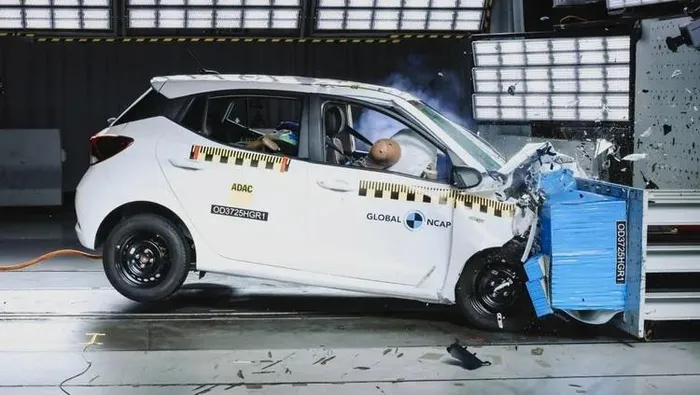
Hyundai South Africa has defended the Grand i10 after a zero-star Global NCAP adult safety rating, reigniting debate over weak local regulations, minimum safety compliance, and whether budget car buyers are being short changed on protection.
Image: Supplied / Global NCAP
HYUNDAI South Africa has moved to defend the Grand i10 after the popular budget hatchback received a zero-star adult occupant safety rating from Global NCAP, reigniting debate about whether legal compliance is enough in a country with some of the world’s deadliest roads.
The Automobile Association of South Africa sounded the alarm after the Global NCAP results were published, warning that one of the country’s top-selling entry-level vehicles falls short of modern safety expectations.
According to the AA, the Grand i10 is sold with only basic safety equipment. Standard features include front airbags, but there are no side or head airbags and no Electronic Stability Control. Crash test results revealed weak chest protection for the driver in a frontal collision and a high risk of severe chest injuries in side impact crashes, as reported by TopAuto.
Global NCAP further highlighted concerns about an unstable bodyshell and footwell, suggesting limited structural strength. The organisation also flagged the absence of seatbelt reminders for passengers, with only the driver receiving an alert. While the vehicle scored three stars for child occupant protection, it received zero stars for adult occupants.
In response, Hyundai Automotive South Africa said the Grand i10 complies with all local safety and homologation requirements set by the National Regulator for Compulsory Specifications. The company said vehicles must meet 53 mandatory safety standards before they can be sold in South Africa, including requirements for braking performance, frontal impact protection, airbags, and child restraint systems.
“Safety is deeply embedded in Hyundai’s product philosophy,” said Stanley Anderson, CEO of Hyundai Automotive South Africa. He added that while Global NCAP ratings provide useful insight, they do not override South Africa’s legal safety requirements, which are independently verified by the NRCS.
Hyundai also said it remains engaged with regulators and its global parent company and would support stricter safety regulations should they be introduced locally.
That response, however, raises a deeper and more uncomfortable question.
If a vehicle can score zero stars for adult occupant safety and still be legally sold, what does that say about the standard being applied and about the value placed on South African lives?
Hyundai’s defence is technically correct. The Grand i10 meets South African regulations. But by leaning so heavily on minimum legal compliance, the company appears to be saying that if the law allows it, it is acceptable. In effect, the responsibility is shifted away from the manufacturer and placed squarely on the regulator.
That logic cuts both ways.
If South Africa allows the sale of vehicles with zero NCAP ratings, it suggests the country does not care enough to demand better. But if Hyundai is willing to sell a vehicle here that would struggle to meet safety expectations in stricter markets, it also raises questions about how seriously the company takes the safety of its customers in this country.
Until South Africa implements tougher safety regulations that reflect modern crash protection standards, manufacturers will continue to sell vehicles engineered to meet the bare minimum. And until that changes, buyers of cars like the Grand i10 are left paying for affordability with reduced protection.
For many South Africans, a budget car is not a luxury choice but the only option. Telling them that zero stars are acceptable because the paperwork is in order feels less like reassurance and more like a slap in the face.
Safety should not depend on how much a consumer can afford or how weak the law happens to be. When a car scores zero stars, meeting the minimum should never be the end of the conversation.