
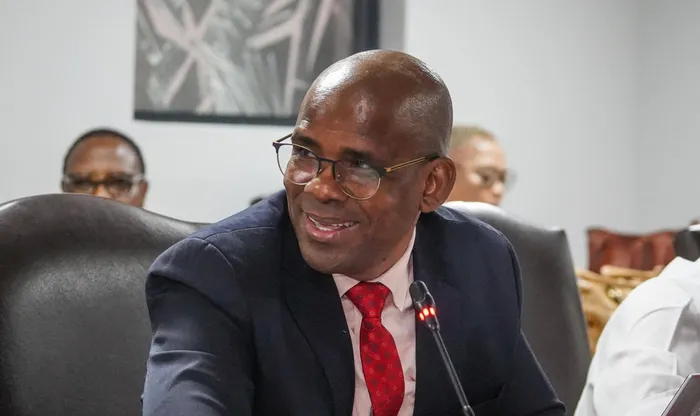
New Northern Cape Agriculture MEC Lebogang Motlhaping says his farming background will guide efforts to strengthen departmental systems, unlock stalled projects, and work closely with farmers to secure food security and grow the province’s agricultural sector.
Image: Facebook
LEBOGANG Motlhaping has taken office as Northern Cape MEC for agriculture with a clear message to farmers and officials alike: implementation, stability and accountability will define the next phase of the department’s work.
Speaking after taking the oath of office, Motlhaping said his experience as a farmer gives him a practical understanding of the pressures facing producers and the shortcomings within the system meant to support them. He assured farmers that their concerns would be addressed, with food security for the province remaining a central priority.
“We are not starting a new government. Policies are already in place,” Motlhaping said. “What is required now is stronger implementation. As a farmer myself, I understand the weaknesses farmers experience when dealing with the department and the challenges that arise.”
Motlhaping acknowledged the efforts of his predecessor, Mase Manopole, who has moved to the Department of Social Development. He said his time in the provincial legislature and on the agriculture portfolio committee has given him a deep understanding of the department’s constraints and commitments.
“I know the hardships the department is facing, and I also know the commitments that were made by the previous MEC and her team,” he said.
Soon after his appointment, Motlhaping convened an early morning meeting with the new Head of Department, Zolile Monakali, and senior management of the Department of Agriculture, Environment, Rural Development and Land Reform. During the engagement, key agreements were reached on a structured turnaround plan aimed at stabilising and accelerating service delivery.
The discussions resulted in a ten-point plan, supported by measurable targets and structured monitoring protocols, designed to drive a turnaround within the department. The plan is time-bound and will be monitored monthly.
This year, the department will place significant focus on unlocking the Northern Cape’s underutilised agricultural potential. Specific initiatives will prioritise improved support for emerging farmers and faster implementation of land reform programmes across the province.
Premier Dr Zamani Saul has also engaged with Motlhaping, Monakali and senior managers, with discussions centred on the same ten-point plan to strengthen governance and speed up delivery to communities.
The priority areas identified include addressing leadership instability, strengthening governance, approving and managing conditional grant business plans, improving project management, managing support to producers and projects, reducing turnaround times for environmental impact assessments, implementing climate change initiatives, managing research stations, strengthening cooperation with the national department of land reform and addressing labour issues.
In addition, the Premier is set to visit 10 Comprehensive Agricultural Support Programme projects across the province as part of ongoing oversight.
Motlhaping, who has previously led departments such as health and transport and served as chief of staff to the Premier, said engagement with both officials and farmers would be central to his approach, particularly in a constrained fiscal environment.
The National African Farmers Union of South Africa in the Northern Cape has welcomed the leadership changes and pledged its support in growing the sector and the provincial economy.
As expectations mount among farmers for decisive action, Motlhaping now faces the task of turning plans, targets and monitoring into tangible progress on the ground.