Northern Cape back-to-school 2026: Premier Saul, MEC Manopole assess readiness, encourage matrics
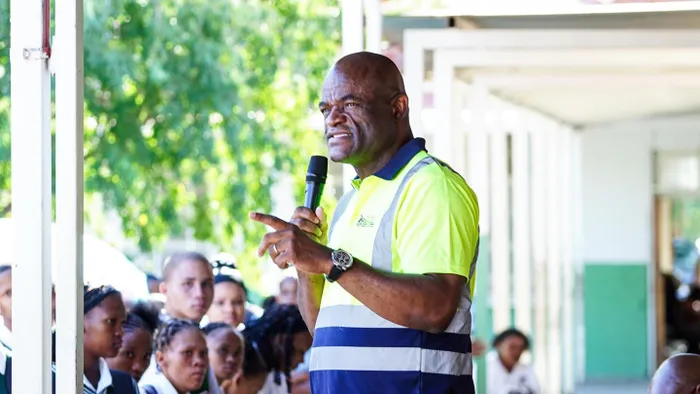
Northern Cape Premier Dr Zamani Saul during a back-to-school visit as the 2026 academic year gets under way.
Image: Northern Cape Provincial Government
NORTHERN Cape Premier Dr Zamani Saul and MEC Mase Manopole joined provincial government’s back-to-school drive this week, visiting schools in Renosterberg Local Municipality and the John Taolo Gaetsewe (JTG) District to assess readiness for the 2026 academic year and to motivate learners – particularly the Class of 2026.
Premier Saul visits Petrusville and Philipstown
Saul took the Back to School campaign to Petrusville High School and Philipstown High School in Renosterberg on Wednesday, where he delivered a message focused on discipline, order and respect in the schooling system.
At Petrusville High School – in the Premier’s hometown – he encouraged learners to show respect for their educators, peers and parents, and to respect themselves.
The school had a cohort of 58 learners in 2025 and achieved a matric pass rate of 86.2%.
Saul’s second stop was Philipstown High School, one of the smallest schools in the district. The school has 24 matric learners this year, and learners and parents gathered in the school hall to hear the premier’s message.
He urged the matric class to approach the year with hyper-focus, to work smart from day one, and to remain disciplined throughout the academic programme, encouraging them to aim for an above 90% pass rate in 2026.
MEC Manopole checks readiness in JTG
In a separate programme, Mase Manopole – the MEC for Agriculture, Environmental Affairs, Rural Development and Land Reform, and acting MEC for Health – monitored the reopening of schools in Tsineng in the JTG District.
Manopole, joined by Joe Morolong Local Municipality mayor Dineo Leutlwetse, officially launched the 2026 academic year at KS. Shuping High School and Khiba High School.
According to the department, the programme included engagements with school management and the school governing body (SGB), class monitoring, and direct interaction with Grade 12 learners to assess and strengthen academic readiness for the year ahead.
As part of government’s support for learner well-being, the MEC led the distribution of comfort packs and sanitary towels to previously disadvantaged learners.
The visit also highlighted environmental sustainability initiatives, including tree planting, the establishment of school gardens, and the donation of litter bins to promote environmental responsibility.
Improved matric results, school safety and R100,000 boost
KS Shuping High School was highlighted for improved performance in the latest matric results, achieving an 82.9% pass rate – above the 2025 target of 80% – improving from 74.8% the previous year, an increase of 8.1 percentage points.
Manopole congratulated the Class of 2025 and encouraged Grade 12 learners at Khiba High School to aim higher and pursue careers that contribute to building “a modern, growing and successful province”.
She also addressed concerns affecting learner safety and well-being, including bullying, gender-based violence and substance abuse, emphasising inclusive, supportive learning environments and a zero-tolerance stance on violence, discrimination and intolerance in schools.
In addition, Manopole committed R100,000 towards textbooks and furniture at the school, and participated in tree-planting and garden projects aimed at strengthening food security and promoting self-sufficiency and access to healthy nutrition.
The provincial government said both programmes underline its commitment to supporting schools, improving educational outcomes and fostering a culture of sustainability and responsibility.

MEC Mase Manopole during a back-to-school programme in the John Taolo Gaetsewe District to monitor school readiness for the 2026 academic year.
Image: Northern Cape Department of Agriculture, Environmental Affairs, Rural Development and Land Reform