Archbishop Makgoba calls gambling ‘Economic Self-Medication’ but South Africans fire back on social media
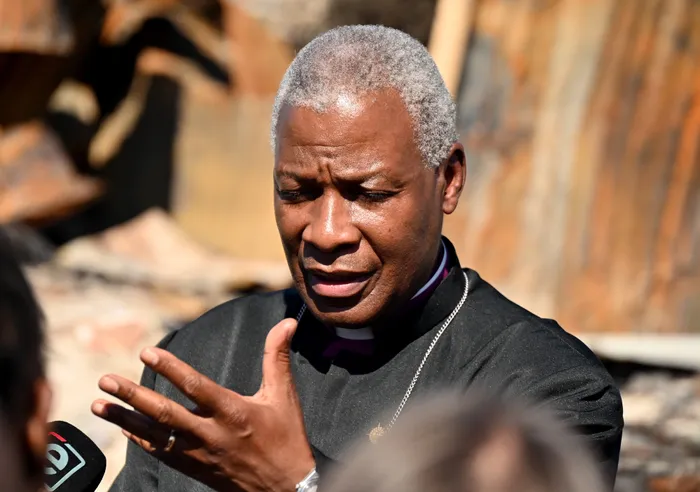
Archbishop Thabo Makgoba of the Anglican Church delivered a pointed Christmas sermon at St George's Cathedral in Cape Town, describing gambling as "a form of economic self-medication" — a desperate search for luck in a society offering little opportunity.
Image: Ayanda Ndamane / Independent Newspapers
Illegal online gambling is draining more than R50 billion from South Africa's economy annually, with unlicensed offshore operators now controlling nearly two-thirds of all online gambling activity in the country. According to the South African Bookmakers' Association (SABA), the crisis has reached a tipping point—threatening consumers, legitimate operators, and the broader economy.
"While much of the recent public debate has focused on the growth of legal online betting, the existential crisis lies in the scale and impact of illegal offshore operators that continue to target South African consumers unchecked," says SABA CEO Sean Coleman.
“These operators pay no local taxes, contribute nothing to responsible gambling programmes, have no enforceable self-exclusion mechanisms, and pose serious risks to vulnerable players.”
Among the most vulnerable: women. As gambling extends from casinos to mobile apps, more women are being drawn into addictive patterns — often while already navigating financial strain, emotional pressure, and social judgment. Research published in Frontiers in Psychology notes that female gamblers are frequently "branded as negligent, vicious, and bad mothers," generating deep feelings of guilt that keep them silent.
The National Gambling Board confirms that gambling has become increasingly normalised, warning that regulations must evolve to address the expanding online landscape.
The Archbishop speaks out
It was against this backdrop that Archbishop Thabo Makgoba of the Anglican Church delivered a pointed Christmas sermon at St George's Cathedral in Cape Town. Makgoba described gambling as "a form of economic self-medication"—a desperate search for luck in a society offering little opportunity.
He pointed to unemployment, poverty, and inequality as key drivers behind rising problem gambling, warning that the trend reflects a deeper crisis of hope linked to failures in governance and economic leadership.
"Despair now defines much of South African life," Makgoba said, noting that the online gambling industry accounts for 60% of South Africa's R12.5 trillion gambling sector—a system he accused of entrapping people in cycles of addiction.
The Archbishop also addressed growing disillusionment with government, referencing an Afrobarometer survey released in October 2025 showing that seven in ten South Africans are dissatisfied with democracy. He expressed concern that support for military rule has increased.
Some pushback
Not everyone welcomed his message. Social media responses ranged from dismissive to defiant. "I bought myself a flat screen TV in 2019 with gambling money, so imagine if I didn't gamble," wrote Keorapetse Ramaoka. Anthonia Ledwaba added: "He must just relax because we didn't complain about church offerings." And Mtukulu waBhantjie Ngomane offered a sharper critique: "At least in gambling, you win some and lose some. In church, they pay tithe every Sunday, and by that time, it only goes to him and his family."
The pushback underscores a tension at the heart of South Africa's gambling debate: for some, it represents exploitation; for others, it's one of the few remaining pathways to hope—however risky.
What remains clear is that billions continue flowing offshore, regulations lag behind reality, and those most harmed often stay silent.
For help to quit gambling, contact the South African Responsible Gambling Foundation: Toll-free counselling line: 0800 006 008 WhatsApp/SMS HELP to: 076 675 0710 Email: helpline@responsiblegambling.org.za