Student activist pushes for Sol Plaatje residents to buy power directly from Eskom
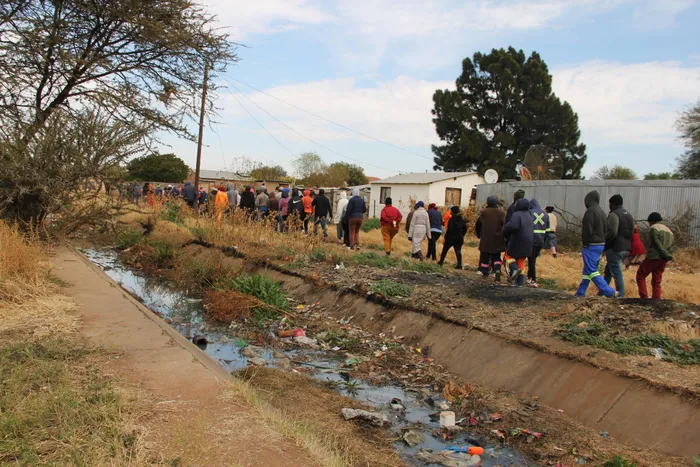
Ward 33 residents, like many others in Kimberley, say they are fed up with poor service delivery, blocked drains and littered streets.
Image: Sandi Kwon Hoo / DFA
EFF STUDENT and community activist Tebogo Kaulela intends to petition on behalf of cash-strapped residents in the Sol Plaatje municipal area, calling for households to be allowed to purchase electricity directly from Eskom.
The sale of electricity is the local municipality’s largest source of income.
Kaulela, a Unisa student, said living conditions in Kimberley had become “increasingly challenging” due to high electricity tariffs, sewage spills, poor water quality and spiralling crime.
He said the petition, which has attracted 79 signatures so far, will be handed over early next year.
“We encourage the community to join hands in the fight for service delivery and affordable living costs. Round-table discussions will be held with religious leaders, local businesses, trade unions and anti-crime organisations,” he said.
Kaulela has also convinced the Madlanga Commission to allow a former Kimberley magistrate to testify on allegations relating to maladministration and possible corruption within the judiciary in the Northern Cape.
His urgent court application against the Sol Plaatje Municipality, to address the service delivery crisis in the city by the beginning of 2026, is expected to continue in the Northern Cape High Court next year.
“Should the municipality refuse, we will add our electricity demands to our notice of motion,” he said.
‘Eskom should sell electricity directly’
Kaulela said prolonged power outages and soaring electricity rates were making it increasingly difficult for households to budget and meet expenses.
“Eskom has the capacity to deliver more consistent electricity at a lower rate. This will alleviate the financial burden on residents,” he said.
He added that lower electricity costs would also help reduce the prices of goods and services.
“Income is lost through illegal tuck shops that do not pay rates and taxes, while revenue generated in the local economy is deposited in bank accounts outside the country,” Kaulela said.
He further urged the municipality to urgently address sewage spills to protect public health and the environment.
“Residents are being denied their basic rights to a clean, healthy environment and access to quality drinking water.”
Kaulela proposed that community crime-fighting groups and Community Policing Forums be established under the Sol Plaatje Municipal Police unit to enforce municipal by-laws and combat crime.
“These groups are skilled in dealing with criminals. They can assist in raiding illegal tuck shops, taverns and gambling houses and should receive salaries from the municipality,” he said.
Crime-fighters ready to assist
Pantsi Obusitse from Operation Wanya Tsotsi said the organisation was willing to help “clean up the streets” and enforce municipal by-laws under the municipality’s banner.
He added that he hoped to establish a rehabilitation centre in Kimberley to equip offenders with skills to rebuild their lives.
“Crime will never be eradicated if offenders are not given the tools to earn a living. At the same time, offences such as illegal dumping and threats to public safety must be rigorously policed,” Obusitse said.
Kabelo “Cabinet” Segami, also from Operation Wanya Tsotsi, said members were already working to reduce crime in the CBD using their own resources.
“We sacrifice our lives, spare time and use our own petrol to ensure the safety of the community,” he said.
However, Segami said the group needed the freedom to conduct its proactive operations without unnecessary red tape.
“We are prepared to work in partnership with the municipality and the police, but it must be done on our terms in order to be effective.”
Water is ‘undrinkable’
Meanwhile, AfriForum’s December 2025 water-quality report has declared drinking water in the Sol Plaatje, Kai !Garib, Keimoes, Kamiesberg and Garies local municipalities unfit for human consumption.
It added that none of the sewage treatment plants tested in the Northern Cape met the required discharge standards.
“The 2025 results show that 100 percent of the tested sewage plants discharged polluted water into rivers.”
AfriForum said the Northern Cape recorded a 41.46 percent microbiological compliance rate according to the Department of Water and Sanitation’s Water Services Knowledge System for 2025, compared to zero percent compliance in its own independent sampling.
“South Africa’s water crisis now poses a greater threat than the country’s energy crisis because it is directly life-threatening. Urgent action is needed to prevent the complete collapse of municipal water and sanitation services,” the organisation said.
It warned that untreated sewage continued to pollute rivers and dams, contaminating drinking water.
“This pollution drives up treatment costs, increases the risk of waterborne diseases and further weakens already fragile freshwater ecosystems.”
Provincial water systems in crisis
The most recent Blue Drop report, published in 2023, showed that the Northern Cape had the highest percentage of drinking-water systems in the country classified as poor or critical, at 87 percent.
The Department of Water and Sanitation (DWS) found that no water supply system in the province achieved a score above 95 percent and therefore none qualified for Blue Drop certification.
It further reported that 104 water supply and sanitation systems recorded unacceptable microbiological water-quality levels, posing a serious health risk to communities.
Wastewater management deteriorates
The Green Drop report found that none of the province’s wastewater treatment works (WWTWs) met the required standards for effluent discharge.
The DWS highlighted high effluent failure ratings, with a 31 percent compliance rate. Only 12 percent of WWTWs met acceptable microbiological limits.
“This indicates that effluent from these WWTWs presents a serious health risk to downstream users due to the presence of pathogenic bacteria,” the department said.
The DWS expressed extreme concern over the lack of wastewater management in the province, noting that 98 percent of WWTWs in the Northern Cape fell within the high- or critical-risk category.
It classified the Beaconsfield, Homevale and Ritchie WWTWs as being in a critical state.
No festive-season water shutdowns planned
Sol Plaatje Municipality spokesperson Thabo Mothibi said the largest reservoir at Newton Reservoir had been de-sludged and cleaned.
Unlike previous years, he indicated that there were no planned city-wide water shutdowns for the remainder of the year.
"We have good volumes coming through from Riverton, and the reservoirs are in optimal operation. So far, we are expecting a festive season without any water troubles. The investment in our water infrastructure is already showing results,” Mothibi said.
He added that work would continue at water treatment plants to address areas experiencing low tap water pressure.

The Hoemevale wastewater treatment plant.
Image: Sandi Kwon Hoo / DFA
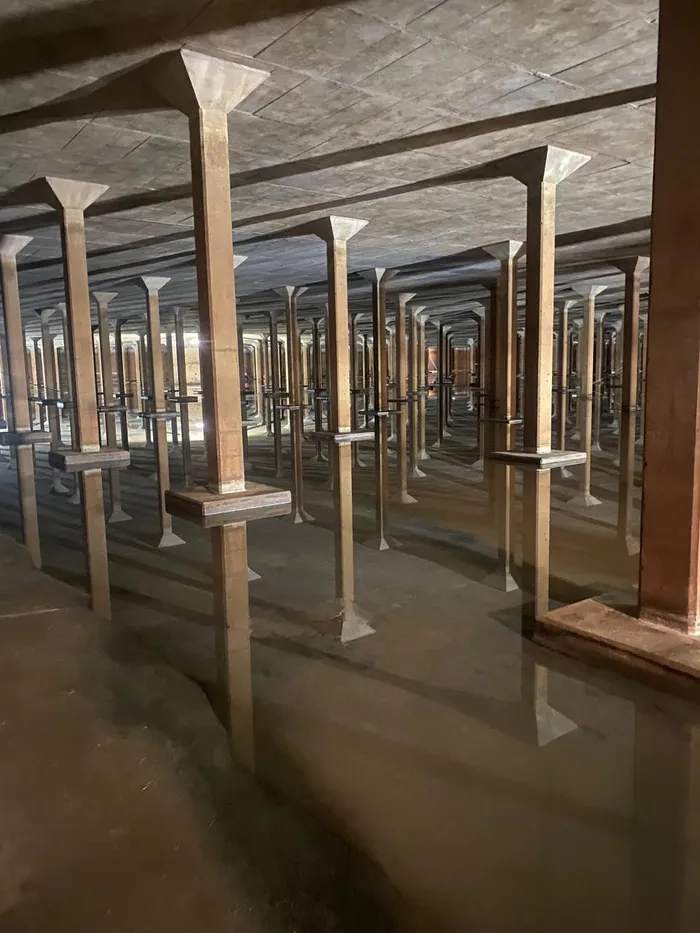
Sol Plaatje Municipality said reservoir 102 at the Newton Reservoir has been cleaned.
Image: Supplied/ Sol Plaatje municipality