South Africans share festive season realities as some thrive and others barely hold on
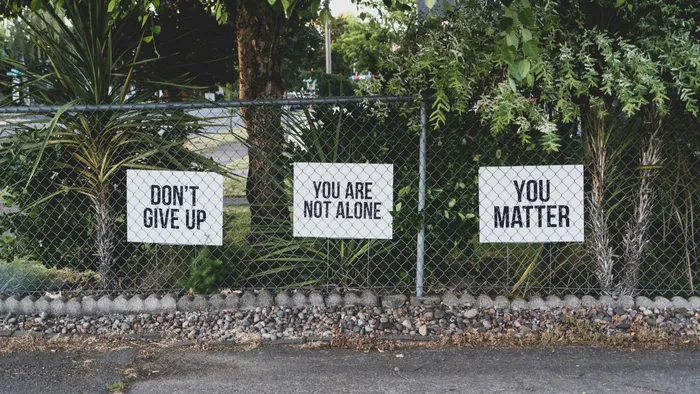
SADAG’s 2025 Festive Feeling Study reveals South Africans are either thriving, surviving, or struggling, with financial pressure, loneliness, and emotional exhaustion widespread, while helplines remain open to support those feeling overwhelmed during the holiday season.
Image: Unsplash
IF YOU listen closely this festive season, you can almost hear the heartbeat of a nation trying to keep pace with its own expectations. For some, December arrives wrapped in joy. For many others, it comes with a knot in the stomach. And for a significant number, it brings a quiet sense of disconnection, a feeling of watching the celebrations from the outside.
This is the story revealed by the South African Depression and Anxiety Group’s new 2025 Festive Feeling Study, a snapshot of how 2,095 South Africans aged 18 to 65+ are truly feeling as the country enters its busiest, loudest, and often loneliest time of year.
The worry that arrives before the holidays even begin
Imagine walking through a mall filled with decorations, but instead of hearing carols, you hear a constant reminder: January is coming. This is the reality for 73 percent of respondents, who said their biggest stressor is the fear of not making ends meet once the celebrations are over.
For many, the pressure hits long before the holidays: 69 percent feel anxious about not having enough money to spoil or support the people they love. It’s a heavy emotional tax, one that does not disappear with a Christmas bonus or a discounted sale.
Tired hearts and heavy minds
Nearly half of the respondents said they felt tired for no good reason most or all of the time. Not the kind of tired one fixes with a nap, but the deeper kind, the kind that makes 36 percent say everything feels like an effort.
And for 31 percent, the festive season sits under a cloud of depression, hopelessness, or constant nervousness.
Dr Bronwyn Dworzanowski Venter says the diversity in people’s experiences is striking. “Some are thriving, enjoying the holidays despite challenges. Some are surviving, feeling stressed about money, family responsibilities, or personal problems. Some, mostly men, feel disconnected, often due to unemployment or financial pressure, which can lead to loneliness and isolation.”
Men withdraw, women worry, but everyone carries something
The study’s gender breakdown reveals a telling divide. Men, though fewer in number among respondents, often report withdrawing, disconnecting, and quietly struggling with conditions like depression or OCD. Their silence is heavy and often unnoticed.
Women, meanwhile, carry a different load: worrying about safety, juggling family responsibilities, and feeling lonely even in a room full of people.
But one fear unites both groups: the fear of failing financially, especially when children are involved.
Loneliness in a season meant for togetherness
Festive lights have a way of making loneliness feel even sharper. Forty five percent of participants said they had been very lonely in previous festive seasons, a reminder that the loudest month of the year can be the quietest in someone’s heart.
Many try to cope the best way they can:
- 51 percent plan to prioritise sleep
- 39 percent will go for walks
- 32 percent say they’ll cancel plans to rest
Yet despite these coping strategies, 58 percent say they start each new year already exhausted.
Why diagnosis matters
One unexpected insight: people who have been officially diagnosed with mental health conditions report feeling less stressed than those who haven’t.
Forty six percent of respondents have a diagnosis, and according to Dr Dworzanowski Venter, this highlights something important: Getting professional help, and naming what you’re going through, can bring relief.
Help that doesn’t close for the holidays
While many businesses shut down for the break, SADAG’s support systems do not.
“SADAG Helplines will remain open throughout the festive season,” says Call Centre Manager Tracy Feinstein. “We want everyone to know that help is just a phone call away. Reaching out is a sign of strength, not weakness, and our Helpline is here to ensure that no one has to face these challenges alone.”
Whether it’s a small concern or a deep struggle, someone will be there to listen.
Free Telephonic Counselling Helplines: 0800 456 789 or 0800 567 567, available 24/7, SMS 31393, or WhatsApp 087 163 2030 (available Monday to Sunday from 8am to 5pm).
A country carrying many stories
This festive season, behind every decorated home, every family gathering, and every bustling shop, there is a mix of stories, people thriving, people surviving, and people barely holding on.
SADAG’s study reminds us of one powerful truth: no matter how different our experiences are, no one deserves to navigate them alone.