R300m Gone: Richtersveld land settlement faces collapse amid government failure
SOE Mess
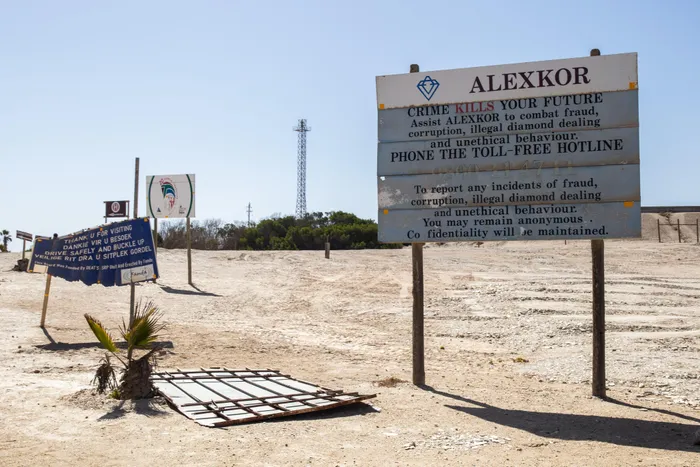
While Alexkor’s Board chairperson, Dineo Peta, claimed partial compliance, citing a R200 million PSJV capitalisation, R190m in restitution payments, and asset transfers, the Committee focused on glaring failures.
Image: X
A LANDMARK land restitution deal, meant to redress apartheid-era injustices for the Richtersveld community, has descended into a morass of financial mystery, legal warfare, and governmental failure, a damning Parliamentary committee report has revealed.
At the heart of the crisis is the stunning disappearance of over R300 million in community funds and a bitter blame game that has left the community in poverty while a state-owned diamond mine nears exhaustion.
The Select Committee on Agriculture, Land Reform and Mineral Resources this week grilled the Department of Mineral and Petroleum Resources (DMPR) and Alexkor over the unimplemented High Court Deed of Settlement concerning the Richtersveld community and the pending transfer of Alexander Bay.
What emerged was a portrait of an agreement in catastrophic dysfunction.
While Alexkor’s Board chairperson, Dineo Peta, claimed partial compliance — citing a R200 million PSJV capitalisation, R190m in restitution payments, and asset transfers — the Committee focused on glaring failures. “Major aspects of the court order remained unimplemented,” the report noted, particularly the handover of the township to the municipality, and fixes for crumbling electricity, water, and sewage infrastructure.
The reason for the stalemate is a legal and financial catch-22. The Municipal Finance Management Act (MFMA) “prohibits a municipality from providing services on land it does not own”, as Peta confirmed.
The land, as per the court, belongs to the community. Yet, both the Richtersveld Local Municipality and Alexkor plead poverty. “Both Alexkor and the municipality lacked the financial capacity to finalise the transfer,” Peta said, citing “years of dilapidated infrastructure” Alexkor cannot afford to rehabilitate and a municipality without resources to take it on.
MPs expressed fury at the delay. “The handover should have taken place in 2013, yet by 2025 it still had not occurred,” the PA’s Bino Farmer said. The DA’s Nicolaas Pienaar stressed the acute urgency: “We were told that there were only 10 years of viable diamond mining left.” He cautioned that without swift action, “the handover would only occur when the diamonds were already depleted”, leaving the community with nothing.
The most explosive controversy centres on the fate of community money. Members revealed that “over R300 million had been paid to the Communal Property Association (CPA)”, with the Department confirming it was transferred as far back as 2008. Yet, the community has seen negligible benefit. “The community had not received any benefit from those funds,” Farmer said.
Peta could only confirm knowledge of CPA payouts of “R15 000 per person to beneficiaries” — a fraction of the total. Farmer highlighted the staggering disparity: based on 3 000 beneficiaries, R15 000 each would total R45 million. “What had happened to the remaining funds?” he said.
This financial black hole exists within a governance vacuum. The Department of Rural Development and Land Reform reported that the CPA was “dysfunctional”, an assessment contradicted by the CPA’s very own leadership during the oversight visit. “This discrepancy… needed clarity,” the ANC’s Patrick Mabilo stated.
Despite this dysfunction, the CPA remains the legally recognised body, leaving thousands of community members in limbo.
Further controversy surrounds the structure of the mining operation itself. Despite the Constitutional Court awarding the community 100% of the land and mining rights, the Pooling and Sharing Joint Venture (PSJV) gives Alexkor a 51% controlling share. Farmer questioned this imbalance, arguing: “Alexkor's majority shareholding could not be justified,” as it doesn’t mine directly but manages contractors.
The revenue flow is also contentious, with an “80/20 revenue split between contractors and the PSJV”, meaning a mere 20% of proceeds flow to the joint venture co-owned by the community. Governance is paralysed by “ongoing litigation between the community mining structures and the entity”.
Peta revealed a frustrating cycle: just as constructive talks were held, “the PSJV received a legal letter from the RMC directors”, challenging appointments and dragging the parties back to court. “The PSJV did not have the funds to continuously litigate,” she said.
Minister Gwede Mantashe offered a bleak diagnosis of the entity he inherited. He described Alexkor as “a cat thrown at us”, an entity that arrived with a disclaimer audit and “significant complications”. He was rather scathing about its operations: “Alexkor was not being run as a functional mining operation,” and diamond losses were so severe they were “beyond theft”.
However, a tense exchange revealed a philosophical clash. Mantashe warned the Committee to be strategic, not operational, and to allow the Department space to fix what he described as a mess. He cautioned against viewing Alexkor as a “cash box” for the community. Farmer pushed back, stating he “had never referred to Alexkor as a ‘cash box’,” and that the Committee was seeking accountability, not operational interference.
The Committee, chaired by the ANC’s Gift Modise, stressed: “The court order remained binding and must be fully implemented.” The ANC’s Mapule Dhlamini appealed for political intervention, noting “a number of departments were not present”. The solution, she suggested, required ministers to ensure “court orders were adhered to”.
With the mining lifespan finite, the pressure is immense. Pienaar painted a dire picture: The CPA is “on paper, one of the richest in the country”, yet the community lives in “deep poverty, with unemployment, failing infrastructure, and buildings in disrepair.”
The Committee resolved to pursue all relevant departments, committing “to completing all legacy issues before the end of the term.” But as legal letters fly, infrastructure crumbles, and hundreds of millions remain unaccounted for, the promise of the Richtersveld settlement risks being buried for good, not in diamond-rich soil, but in the rubble of failure.