Kimberley residents demand visible policing amid fears of rising crime
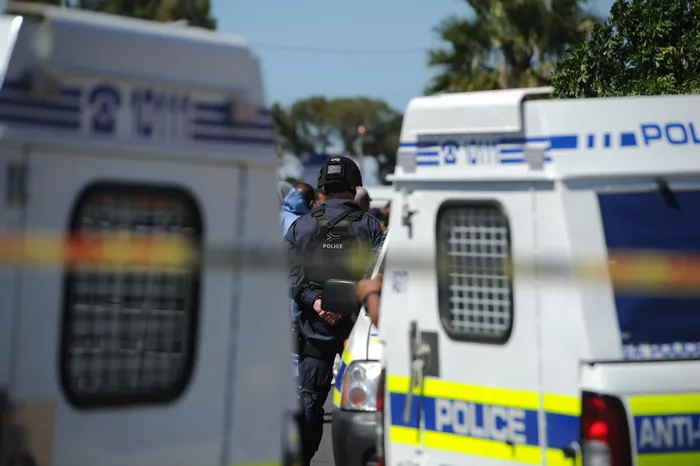
Kimberley residents are raising the alarm over a lack of visible policing amid limited patrols and slow police response times.
Image: Henk Kruger / Independent Newspapers / File
WHERE are the police? Why don’t we see their vehicles patrolling our streets anymore? What is really going on?
These are the urgent questions being asked by anxious Kimberley residents who say law enforcement has become “invisible” on the streets and in their neighbourhoods.
People across the city are growing increasingly frustrated and uncertain, demanding answers from those in charge.
“It is time for the provincial police commissioner, Lieutenant-General Koliswa Otola, to address the residents of her province directly, explain what the challenges are, and start prioritising visible policing in the city. It’s time to come clean and stop hiding the problems, because we are not blind – we see them,” said one concerned resident, echoing the growing call for action across Kimberley.
Communities across the city say they are living in fear as thefts, housebreakings, assaults and other criminal incidents continue to rise. Many residents report that police vehicles have become a rare sight and that response times are often slow, leaving them feeling vulnerable and unsafe.
“I used to see the police vans patrolling up and down the main roads in my neighbourhood day and night, but I can’t remember the last time I saw one,” said another Kimberley resident.
In a recent incident near the North Cape Mall, two vehicles were involved in an accident. One driver was taken to hospital, treated, and returned to the scene – but no police reportedly arrived for more than five hours. Residents say delays like this are becoming increasingly common, blaming a shortage of available police vehicles.
Pantsi Obusitse, chairperson of Wanya Tsotsi in Kimberley, said that SAPS patrols have been a serious problem for the past 15 years.
“When you call the police with a problem, you hear the excuse that there are not enough vehicles at the moment. This in itself is a problem, because if there are not enough vehicles, then visible patrols cannot take place,” he said.
“Many cases have been noted where police vehicles are seen parked at homes during the day, while people out there are in need of visible policing on the ground. That is why the police are no longer preventing crime; they only attend to complaints. They have become a reactive service, not a preventive one.
“Our people want to feel safe on the ground; they want to be able to play in the streets without fear of being robbed. We are facing a serious challenge. The police do not seem to understand that communities want to feel safe, and they want to see visible patrols in their areas.”
Another issue Obusitse raised is that SAPS vehicles are not shared across stations
“When there is a crime in Galeshewe and there are no vehicles available, they will not use vehicles from the Kimberley station. That means crimes go unattended, because vehicles are restricted to specific stations,” he explained.
He also raised concerns about unbranded SAPS vehicles, saying that proper branding would help residents feel safer when they see police patrolling their areas.
Local community leaders describe the situation as a systemic failure within SAPS, limiting law enforcement’s ability to work effectively with residents to prevent crime. Manpower shortages, limited resources and a shortage of operational vehicles are cited as key challenges.
The apparent lack of policing and a growing fear of rising crime have forced many residents to rely on private security companies such as ADT, Top Security and others, at an extra cost that most households simply cannot afford.
“People have realised that the police are not there to protect them anymore,” said one Riviera resident.
“The police have lost the fight against crime, and they have neglected the residents of the Northern Cape. They are supposed to serve and protect, yet all they do is give excuses. We can’t let our children ride their bikes in the road because they will be robbed. In the old days, the SAPS were feared and respected. Today, they are a sad state of affairs.”
Growing pressure on SAPS leadership
There is growing pressure on Lieutenant-General Otola to “step up" and "get her house in order”, with residents saying the situation has deteriorated under her watch.
In response to concerns raised by residents, SAPS Northern Cape spokesperson Colonel Cherelle Ehlers provided clarity on several operational issues affecting policing in the province.
“Responses to complaints are prioritised based on the seriousness and urgency of each incident, categorised as Alpha, Bravo, or Charlie. This classification may influence the police’s reaction time,” said Colonel Ehlers.
She added that motor vehicle accidents without injuries may be reported at the nearest police station, where an accident report will be opened. “SAPS responds swiftly to motor vehicle accidents involving fatalities or serious injuries,” she explained.
Colonel Ehlers also outlined the specialised units deployed across the province to deal with road safety and traffic-related crime. “Frances Baard District currently hosts the only Flying Squad in the province. Highway Patrol units, equipped with suitable vehicles, are operational in Hartswater, De Aar, Victoria West, Kuruman, Upington, and Springbok. Additionally, Colesberg has an Accident Unit that provides support to highway patrol operations.”
Addressing concerns about visible policing, she said, “Visibility and related patrols are guided by the crime threat analysis and crime patterns. Police actions are targeted and focused in hot-spot areas according to intelligence-driven information.”
She confirmed that additional resources have recently been introduced to strengthen policing. “A total of 232 newly trained constables have completed their basic training and will be deployed across the province. The province has also recently been allocated a new vehicle fleet. These vehicles will be distributed throughout the province as per identified needs.”
“These additional resources are expected to significantly enhance policing capacity and service delivery within the Northern Cape,” Colonel Ehlers concluded.