‘NC must do more with less’
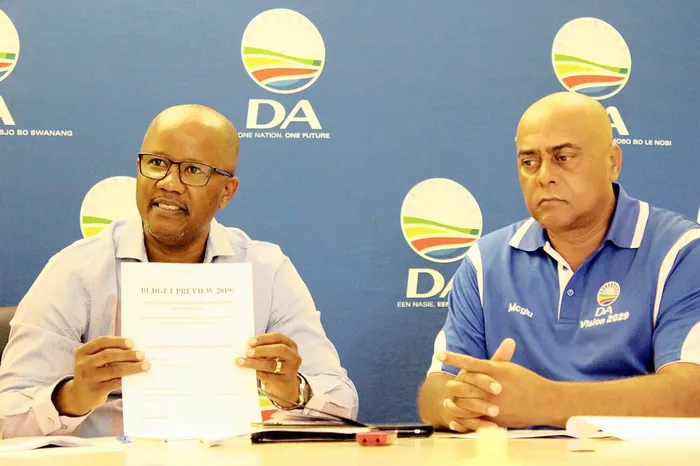
WITH an expected slash in the provincial budget allocation, the Northern Cape will have to “do more with less” with the available funds in the upcoming financial year.
The MEC for Finance, Economic Development and Tourism, Mac Jack, will deliver the provincial budget at the Frances Baard District Municipality tomorrow, starting at 9.30am.
This may prove to be a challenge for big spending departments including the Department of Health, which in the past financial year incurred over a billion rand in medical legal claims.
Parliament last year raised eyebrows over the the fiscal risk pertaining to the high unauthorised and irregular expenditure and high accruals at the departments of Education and Health in the Northern Cape.
It noted high levels of non-compliance in supply chain management processes in both departments, while new health facilities were left to become white elephants due to the non-availability of operational budgets.
The Province is also reeling from the effects of the ongoing drought.
Due to cuts in the national budget, municipalities had to forfeit their grants after failing to spend, due to a lack of capacity.
An amount of R1.9 million for the early childhood development grant had to be shifted from the Northern Cape to KwaZulu-Natal’s Department of Social Development in the form of revised allocations.
The spokesperson for the provincial Department of Finance, Economic Development and Tourism, Zandisile Luphahla, indicated that the finances of the Province were “healthy”.
“Without letting the cat out of the bag, it is safe to indicate that this year’s budget speech is people oriented. The people of the Northern Cape were encouraged to submit budget tips via social media of what they want the budget speech to address. The MEC has done precisely that,” Luphahla said.
He added that the MEC would announce intervention programmes that would “definitely turn the tide for the better”.
Offering the DA’s alternative budget yesterday, the party’s provincial leader, Andrew Louw, highlighted the “precarious position” of the state of the Province’s finances.
“The increase of cumulative irregular expenditure to R10.5 billion and of unauthorised expenditure to R903.6 million shows that cash management has regressed, where fiscal difficulties are expected to continue,” said Louw.
He stated that businesses in the Northern Cape were suffering from the cost of the unreliable electricity supply.
“With abundant resources, in agribusiness, mineral beneficiation and tourism potential, we cannot accept the high unemployment and poverty levels in the Province. The research and development potential unlocked within the Square Kilometre Array telescopes makes it possible for our Province to move into the fourth, quaternary sector.”
Louw pointed out that unpaid invoices stood at R1.4 billion, as of the end of March 2018.
“This places immense pressure on the delivery of goods and services. When we settle 2017’s debts using 2018’s money, we automatically create a budget deficit and force ourselves to settle 2018’s debts using 2019’s money. This, in turn, creates an immediate difficulty for the efficient, smooth delivery of goods and services to communities.”
Louw advised that payments to small, medium and micro enterprises should be prioritised to prevent the retrenchment of workers, while negotiations should be entered into with service providers who are owed large sums of money.
“Funds should be freed up for the immediate settlement of outstanding debts by placing a ban on the purchase of luxury vehicles for politicians and officials, lavish inaugural parties and a ban on blue light brigades. Controls over supply chain management processes should also be tightened.”
He recommended that the Department of Health should settle medical legal claims out of court and that the outsourcing of legal consultants be avoided.
“This should be done in an attempt to reduce the R1.5 billion owed in contingent liabilities that was recorded as of the end of 2017/18. Competent, capable state lawyers are available.”
Louw added that to prevent litigation, it was necessary to ensure that hospitals and clinics were adequately staffed and equipped with sufficient medicine, medical supplies and resources.
He stated that senior management positions, especially heads of departments and chief financial officers, had to be filled with competent officials who were appointed on merit and not on the basis of political affiliation.
Louw indicated that with an expanded unemployment rate of 38 percent and the second highest youth unemployment rate (43 percent) in the country, more needed to be done to stimulate economic growth.
“The people of the Northern Cape are being oppressed by a lack of opportunity, a lack of employment and a lack of empowerment.”
Louw rejected the policy of the expropriation of land without compensation.
“Job creation, especially in the mining and agricultural sectors, is possible through guaranteeing private property rights and securing the rights of individuals to own their businesses, homes and farms.”
He added that market access was being hampered by poor road networks, which was in turn stifling growth in the agro-processing industry.
“The DA will prioritise the maintenance and expansion of road, rail and air-freight infrastructure that can ease the cost of transporting agricultural products to a broader variety and diversity of markets.”
He stated that the ongoing water crisis at, at least six municipalities was stunting the hospitality industry, job creation and growth.