From Plant Kariega to 38 countries: 30 years of VW Polo production celebrated
Motoring
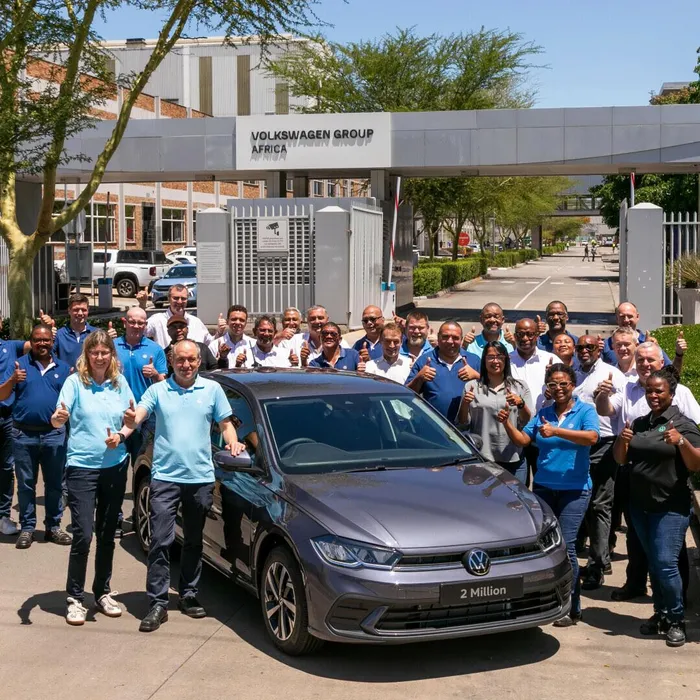
In 2026, Volkswagen Group Africa celebrates two major milestones: 75 years in South Africa and 30 years of Polo production at its Kariega facility.
Image: Supplied / Volkswagen Group Africa
NEARLY 2,000 pairs of hands. Around 1,400 individual parts. Three days of precise assembly.
That is what it takes to build a single Volkswagen Polo at the Kariega plant — a process repeated consistently over three decades.
In 2026, Volkswagen Group Africa (VWGA) celebrates two major milestones: 75 years in South Africa and 30 years of Polo production at its Kariega (formerly known as Uitenhage) facility.
The Polo journey in South Africa began in 1996 with the launch of the Polo Classic, a four-door sedan positioned between the Citi Golf and the Jetta/Golf ranges. In its first year, 5,460 units were produced.
The model quickly gained traction locally, paving the way for the hatchback version introduced in 1998. An updated Polo Classic followed in 2003, earning the South African Guild of Motoring Journalists (SAGMJ) Car of the Year award. The Polo went on to claim the same accolade again in 2011 as a joint winner.
Today, Plant Kariega has produced four generations of the Polo, with the latest model in production since 2021.
Ulrich Schwabe, VWGA Production Director, reflected on the milestone: “2026 is a year of celebration for Volkswagen Group Africa. Reaching 75 years in South Africa and 30 years of Polo production is not only a proud milestone for our company, but also for our Kariega plant and our employees.”
A global production hub
In 2024, Plant Kariega became the sole manufacturer and exporter of the Polo for Europe and the Asia-Pacific region. The plant supplies vehicles to 38 countries while continuing to serve the domestic market.
That same year marked VWGA’s highest-ever production record, with 167,084 vehicles built. Of these, 131,485 Polos were exported, while 35,599 Polos and Polo Vivos were sold locally. The plant also produces the Polo GTI.
By the end of 2025, more than two million Polos had been manufactured in Kariega. Of these, 595,043 units were sold in South Africa, while 1,421,960 were exported to 38 countries. The United Kingdom remains the largest export market.
Schwabe added: “This milestone is a testament to the dedication, skill, and passion of our employees, whose commitment has made the Polo a success story both locally and internationally. Their contribution has been the driving force behind the Polo’s success.”
Behind each vehicle lies a carefully coordinated production process. As mentioned right at the start, on average, it takes three days and approximately 1,985 sets of hands to assemble a Polo, with around 1,400 individual parts coming together in precise alignment.
Three decades on, that meticulous process continues — sustaining one of South Africa’s most recognisable automotive success stories.