Media personalities ignite a divisive debate on grace for black men in South Africa
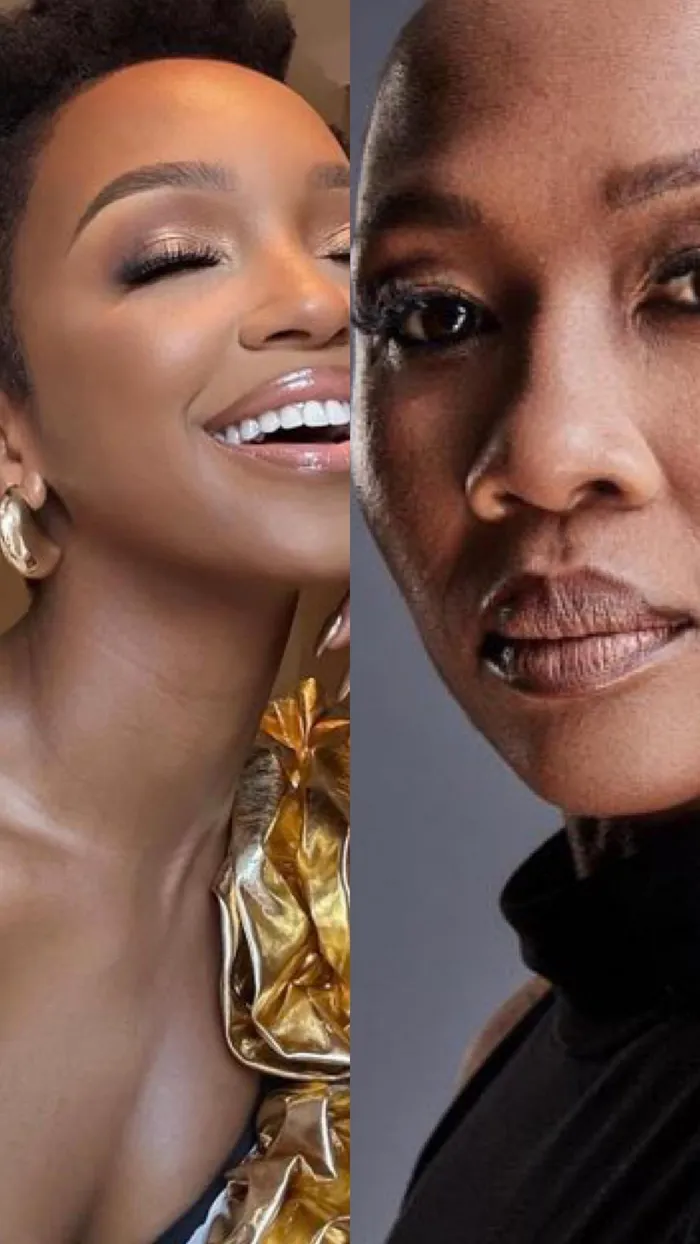
Nandi Madida and Dineo Ranaka spark national conversation on grace and responsibility
Image: social media
Singer and TV personality Nandi Madida and media figure Dineo Ranaka are at the centre of a heated discussion in South Africa about empathy, accountability and the challenges black men face.
A simple call for understanding has grown into a national debate about gender, power and survival in today’s South Africa.
On January 28, Madida appeared on the "L-Tido Podcast", where she traded her usual “soft life” persona for a more vulnerable discussion about the weight black men carry.
She asserts that society has become unrelentingly transactional, harshly judging men based solely on financial output and social standing, while turning a blind eye to the systemic hurdles they face.
In her now-viral remarks, she said: “South African black men have gone through a lot financially, and it's almost impossible for them to try to empower themselves, even when they try.”
She called on society, particularly women, to extend grace and create space for vulnerability and healing, framing this as essential for the collective health of the community.
Her comments struck a chord and a nerve on social media, sparking heated debates across platforms.
Many applauded her empathy, but others viewed her stance as problematic, including media veteran Dineo Ranaka, who issued a blistering critique, labelling Madida’s sentiments “disturbing” and “dangerous”.
Ranaka’s rebuttal: Grace without accountability?
Ranaka’s response, delivered via Instagram on Sunday, February 1, was as fiery as it was thought-provoking.
In a lengthy post, she dissected Madida’s plea, cautioning against what she views as an overextension of empathy toward black men who, she argues, are not doing enough to uplift themselves or the broader black community.
"Empathy is not just a thing you toy with. The very thing you give will be used to torture you,” Ranaka wrote. “We can't just willy-nilly feel sorry and not hold accountable.”
She challenged Madida’s framing of the issue, urging a more critical lens on how black men spend their time, their intentions and their commitment to the future of the black nation.
Ranaka’s perspective draws a sharp line between personal relationships and structural realities, asserting that Madida’s call for grace risks excusing behaviour that perpetuates societal stagnation.
"Look at the black men we are being asked to feel sorry for,” Ranaka continued. “How do they move? How do they prioritise? Are they invested in the future of the Black nation, or just themselves?”
She went on to evoke South Africa’s history, pointing to decades of empathy extended to Black leaders in governance, with, in her view, disappointing results. “Over 30 years of empathy and hope. And what are the results? High violent crime. An unstable economy. Kids still dying in toilet pits.”
Ranaka concluded by calling for a new wave of leadership, likening Madida’s plea to the soft-hearted women of past generations, while championing the tough-love approach of figures like Winnie Mandela.
“This is not the season for softness,” she declared. “We need the paramedics to resuscitate our society aggressively.”
The clash between these two influential women has ignited a broader societal conversation that refuses to be confined to binary arguments. On X (formerly Twitter), users dissected the debate with fervour, revealing a multitude of perspectives.
@TanyaJunghans wrote: “Black women still have it harder, though, and no one above us in the privilege totem pole is giving us grace. So… it’s a no from me, respectfully.”
Another user, @Amahashi, countered: “We heard Nandi loud and clear. Her point was that Black men deserve grace because the system crushes them hardest: no money, no government support, 400 years of stacked odds, and constant pressure to succeed.
"But that same system hits Black women just as hard, often harder. Patriarchy. Single motherhood. GBV risks. Grace has to be mutual, not a one-way street.”
Others, like @PenuelTheBlackPen, sought a middle ground: “There are good men & bad men, just as there are good women & bad women. Good men & women need to protect each other from bad men & women. Empathy without accountability helps no one.”
At the core of this debate lies a deeply uncomfortable but necessary question: Who carries the burden of fixing a broken system, and at what cost?
Madida’s plea for grace acknowledges the crushing weight of systemic inequality on black men, yet Ranaka’s critique underscores the danger of misplaced empathy that enables complacency or harm.
For South African women, particularly black women, the conversation is even more urgent. They bear the dual weight of systemic oppression and the emotional labour of propping up partners, families and communities.
Calls for grace often feel like another demand placed on shoulders already buckling under the weight of poverty, gender-based violence and societal expectations.
But this debate isn’t just about gender, it’s about survival. It’s about finding a path forward in a society fractured by inequality, where both accountability and empathy must coexist.
As Ranaka points out, “Empathy without truth causes more harm.” Yet as Madida suggests, truth without grace risks alienating those who need help the most.