South Africa to see partial solar eclipse on 17 February
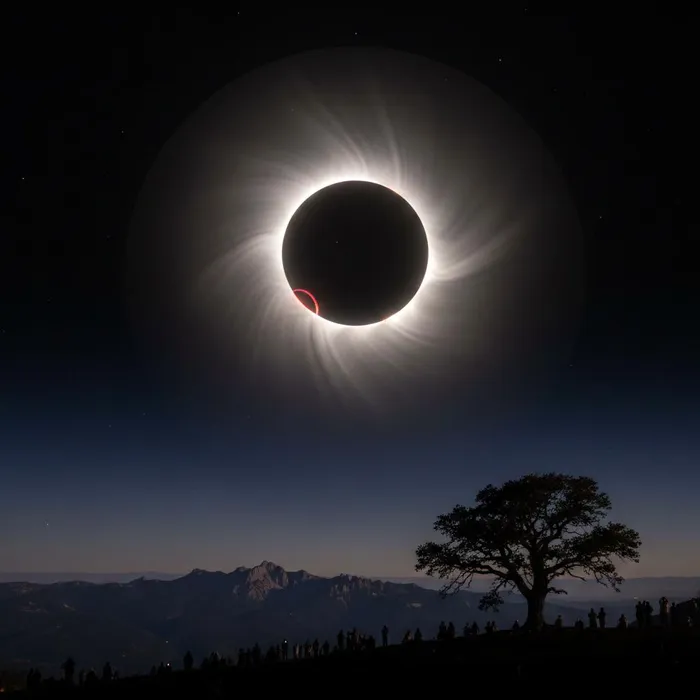
South Africans will witness a partial solar eclipse on 17 February, visible nationwide during the afternoon. Coverage will vary by region, with coastal areas seeing more of the Sun obscured.
Image: GEMINI
SOUTH Africans will have a chance to look skyward this February as a partial solar eclipse becomes visible across much of the country during the afternoon of Tuesday, 17 February.
The astronomical event will see the Moon move between the Earth and the Sun, partially blocking sunlight for close to three hours, depending on where viewers are located. Although the eclipse is classified globally as an annular solar eclipse, South Africa will not experience the dramatic ring of fire effect. Instead, residents will observe a partial eclipse only.
A solar eclipse occurs when the Moon passes in front of the Sun, obscuring some or all of its light. In the case of a partial solar eclipse, the Moon covers only a portion of the Sun, giving it the appearance of having a small section missing. The Sun is never fully covered during this type of eclipse.
According to Time and Date, the partial eclipse will begin at approximately 13:21 SAST. Maximum coverage is expected between 14:45 and 15:15, varying by location, before the event concludes around 16:03 SAST.
Visibility will differ across the country. Coastal regions in the eastern and southern parts of South Africa are expected to see a greater portion of the Sun covered compared to inland areas. Durban and East London may experience around 16 percent obscuration, while Gqeberha is expected to see roughly 14 percent. Bloemfontein could see about 9 percent, with Johannesburg and Pretoria around 8 percent. Cape Town is likely to have the smallest coverage, at approximately 5 percent.
Despite being visible, the eclipse will not cause a dramatic darkening of the sky. Weather conditions may also play a role, as February typically brings higher cloud cover along the coast, while inland areas could offer clearer viewing conditions if skies cooperate.
Astronomy experts are urging the public to take proper precautions. Looking directly at the Sun without certified protection can cause serious eye damage, even during a partial eclipse. Only approved solar viewing glasses or indirect methods, such as pinhole projectors, should be used. Ordinary sunglasses are not safe for eclipse viewing.
For those with the right equipment and clear skies, the February eclipse offers a rare and fascinating opportunity to witness a celestial event unfolding above South Africa.