Olivia Dean's Grammy win: how her Best New Artist speech became a defining moment of the 2026 awards
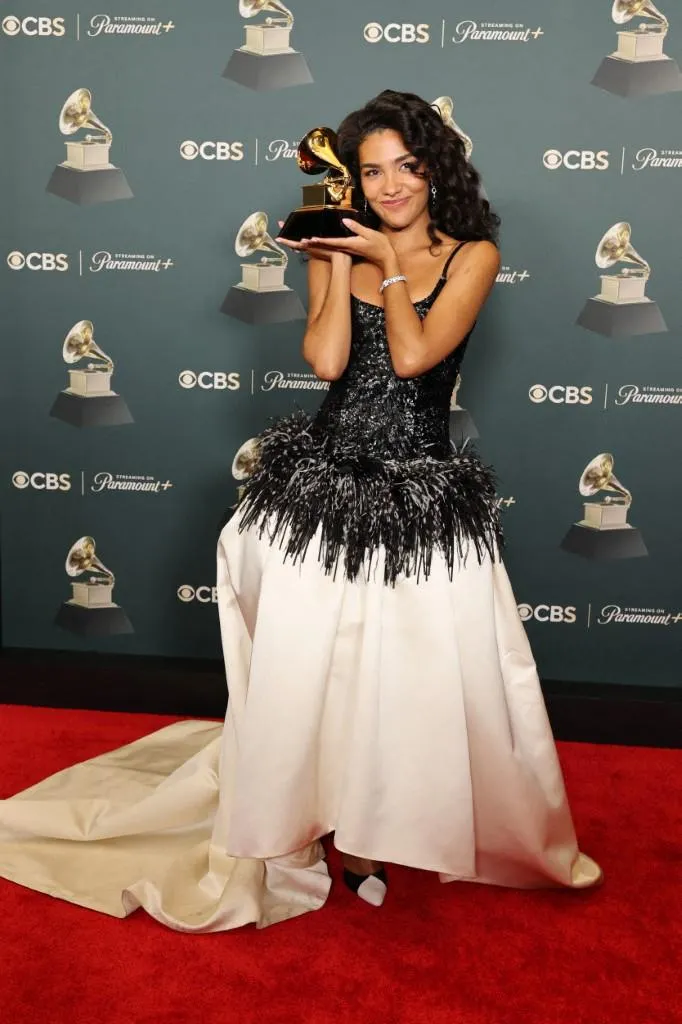
Olivia Dean, winner of Best New Artist, poses in the press room during the 68th Grammy Awards.
Image: Amy Sussman / Getty Images via AFP
“Just come be the man I need/ Tell me you got something to give, I want it/ I kinda like it when you call me wonderful.”
For many of us, that lyric has been the soft-launch soundtrack to love, longing, and late-night scrolling. On Sunday night in Los Angeles, it became something bigger: a victory chant.
Olivia Dean is officially a Grammy winner!
The 26-year-old British singer-songwriter took home the award for Best New Artist at the 2026 Grammy Awards, stepping onto the stage in a black-and-white Chanel ball gown, her signature vintage waves framing a face visibly stunned by the history of the moment.
It was a breakthrough moment for the London-born artist whose sophomore album, The Art of Loving, quietly and then loudly defined 2025 with tracks like “Man I Need”, “A Couple Minutes” and “So Easy (To Fall In Love)”.
Dean's win wasn’t just a milestone for her; it highlighted how music and cultural progress intersect, reflecting a larger conversation about representation and influence at awards shows.
In a category that included KATSEYE, The Marías, Addison Rae, Leon Thomas, Alex Warren, and Lola Young, Dean’s win felt both celebratory and symbolic.
Best New Artist has long been a crystal ball category; past winners include Adele, Mariah Carey, Dua Lipa, and Chance the Rapper. On Sunday, Dean joined that lineage.
Yet it was her speech that shifted the room.
“I never really imagined I would be up here, let alone nominated, so thank you so much,” she said, before pausing to acknowledge something far larger than herself.
“I guess I also wanted to say that I'm up here as a granddaughter of an immigrant. I'm a product of bravery, and I think they deserve to be celebrated. We're nothing without each other.”
In a political climate where immigration policy and renewed ICE raids dominate headlines under the current US administration, her words landed with quiet force. Social media lit up instantly.
For some, it was a brave and necessary reminder that the arts have always been built on migration, movement, and multicultural influence. For others, it was a pointed political statement in a space meant for celebration.
This intersection between personal achievement and cultural context shows why Dean's win holds greater meaning. It speaks to the evolving impact of artists who break boundaries.
Dean, born in Haringey and raised in Highams Park to an English father and a Jamaican-Guyanese mother, has long resisted industry labels. In a previous interview with "Harper’s Bazaar", she addressed navigating the music industry as a biracial artist.
“I feel beautiful in my skin and privileged to be a mix of things, whether that be cultures or musical genres,” she said.
“So I don’t really give a shit if people don’t think it’s Black enough or call me white or whatever. I live in a bubble of peace and serenity, and I make music that I love that pulls from all kinds of places.”
That ethos, fluid, fearless, genre-blending, defines her artistry. From her on-screen appearance in "This Town" (2024) to her 2025 "Saturday Night Live" performance and soundtrack work for "Bridget Jones: Mad About the Boy", Dean has quietly built a cross-continental résumé.
Industry insiders estimate her net worth to be between $1 million and $2 million, but Sunday night proved that her cultural currency is worth far more.
The Recording Academy’s evolving Best New Artist rules, including expanded eligibility for artists previously featured on Album of the Year nominees, reflect how fame now works in the streaming era. Breakthroughs are rarely overnight. They are layered, global and digital.
Dean embodies that new blueprint: soulful yet modern, British yet globally resonant, deeply personal yet politically aware.
At an awards show often critiqued for spectacle over substance, Dean gave us both. A love song turned into an anthem. A Grammy turned conversation. And a reminder that behind every “new artist” is a legacy of bravery.