R245 for R8.88? Shopper's disbelief over souvenir coin set price shocks South Africans
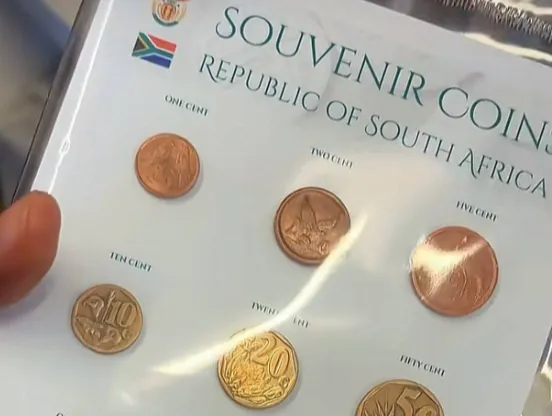
The R245 souvenir coin set that contains everyday South African currency.
Image: Screenshot/TikTok
A video filmed in a Cape Town shop has taken social media by storm, capturing a shopper's astonished reaction to the steep price of a souvenir coin set that contains ordinary South African currency.
The footage has gone viral on TikTok, garnering thousands of views and prompting spirited discussions across various social platforms.
In the clip, a woman peruses a pack labelled “original upgraded circulated coins”, which boasts a full range of South African coins: 1 cent, 2 cent, 5 cent, 10 cent, 20 cent, 50 cent, R1, R2, and R5. Together, these coins amount to a face value of only R8.88, yet the store is asking for a staggering R245.
As she films the display, her incredulity is palpable. “They are selling R8.88 for R245?!” she exclaims, clearly taken aback by the substantial markup.
The bemusement is further compounded by an off-camera voice attempting to justify the price through the inclusion of discontinued coins, which might command a degree of collector’s value.
“But you know why I think, because the 1 cent, 2 cent and 5 cent,” the voice speculates, referencing the coins that have fallen out of regular circulation. However, this explanation fails to convince the woman. “Ma’am I’m pretty sure I can find this at home,” she retorts, bringing the video to a close with her disbelief still evident.
The clip has ignited a wave of commentary online, with numerous social media users questioning the rationale behind selling circulated coins at such a premium. One user, @digital.science, quipped, “I can find these in my couch,” reflecting the sentiments of many who feel the price is exorbitant.
Others, however, have come to the defence of the pricing, arguing that souvenir items are often marketed for their novelty rather than their actual currency value.
They assert that factors like packaging, presentation, and the inclusion of obsolete coins could make the set appealing to collectors and tourists in search of a unique South African memento. User @kayrabmayrab added, “You are not the target audience. It’s for mainly tourists of whom their currency favours.”
This incident not only highlights the growing divide in perceptions of value but also underscores the differing priorities of local shoppers and international visitors when it comes to memorabilia.
As such conversations continue to trend, it remains to be seen how businesses will navigate the dichotomy of local and tourist expectations in a post-pandemic economy.