How generational vices are redefining coping mechanisms in modern society
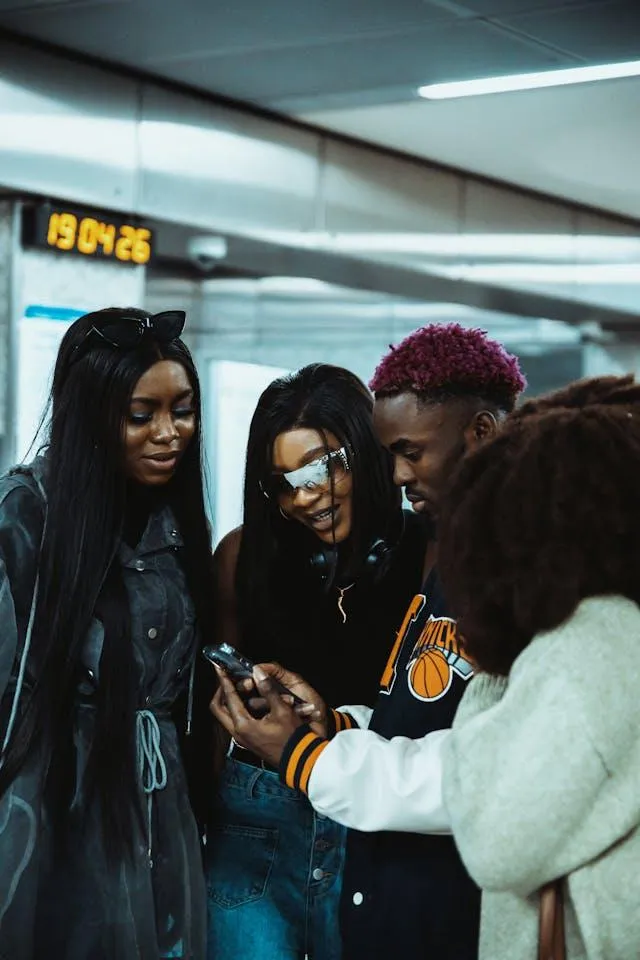
Every generation has a thing. A habit, a coping mechanism, a collective indulgence we swear is harmless until hindsight taps us on the shoulder and asks us to look again.
Image: Victor Oluwa /pexels
Every generation has its own thing, a habit, a coping mechanism, or a shared indulgence we think is harmless until we look back and see it differently.
Vices don’t go away. They change form, show up in new places, and lately, they reveal more about our values than our old guilty pleasures ever did.
Let’s start where most uncomfortable conversations begin: with the Baby Boomers. Their vice wasn’t something you could buy or stream; it was a way of life.
Entrenched racism, exclusion and systems that benefited some while erasing many others shaped entire societies. It’s not a “vice” in the playful sense, but it is a generational stain that younger generations are still actively undoing.
The reckoning continues, loudly and publicly.
Then came Generation X, children of the late ’60s to early ’80s, who came of age under a very different kind of shadow. Sex, freedom, rebellion… and HIV. In South Africa, the virus was given the chilling name ugawulayo, a word that evoked devastation on the scale of deforestation.
It wasn’t just a health crisis; it was a cultural trauma. Sex, once liberating, became fraught with fear. For Gen X, intimacy carried consequences that reshaped behaviour, relationships, and conversations about responsibility.
Millennials, my people, swung the pendulum in another direction. We became the “drunkest generation,” according to multiple global studies, drinking more heavily than Gen Z ever has. Craft beer, boutique gin, bottomless brunches, and wine culture as personality, it was all part of the aesthetic.
Alcohol became social glue and stress relief in a world of rising costs, delayed milestones, and burnout disguised as hustle. We drank to celebrate, to cope, to belong. And for a long time, no one questioned it.
Until Gen Z arrived and quietly said, actually, no thanks.
This generation, often dismissed as soft or overly sensitive, has done something radical: they’ve made wellness aspirational.
According to data from Gympass, a global corporate wellness platform, Gen Z is increasingly skipping happy hour for gym sessions, yoga classes, and wellness-driven social plans.
Alcohol consumption is down, especially among men aged 18 to 26, who are choosing protein shakes and functional drinks over cocktails. Fitness isn’t just self-care; it’s a social currency. A lifestyle flex. A statement of intention.

The indulgences of today echo the anxieties of yesteryear, revealing deeper truths about what we strive to escape, soothe, or regain control over. As we unearth these patterns, it becomes evident that the habits we choose, whether offline or online, illuminate the intricate tapestry of our generations' lives.
Image: Andrea Piacquadio /pexels
And honestly? I love them for it.
Gen Z has also been instrumental in dismantling shame around mental health. They talk about boundaries, therapy, burnout, and work-life balance with a fluency that previous generations never had permission to develop.
They are vocal, values-driven, and unapologetic about choosing clarity over chaos. But here’s the twist, because every generation has a vice.
While Gen Z drinks less, recent research suggests they’re indulging elsewhere. Specifically: online.
A study by Socialprofiler, an AI-driven analytics company launched in August, analysed 756 million public social media profiles across Facebook, Instagram, TikTok, and X between November 2024 and November 2025.
The findings, shared with "The Post", revealed a surprising pattern. Gen Z men are turning away not only from alcohol, but also from pornography and partying.
Meanwhile, Gen Z women are increasingly engaging with NSFW content online, particularly on X, where mature content is widely accessible.
“This is the first time we can quantify the difference between what people say they care about and what they actually do online,” said Anthony Noskov, founder and CEO of Socialprofiler.
Using patented AI technology, the platform analysed posts, likes, and followings across two trillion social connections. This eliminated self-report bias. The data, Noskov insists, is “precise and nuanced.”
The contrast is striking, especially with another cultural shift: Gen Z women are having less sex. According to the General Social Survey, the percentage of women aged 18 to 29 who reported not having sex doubled from 12% in 2010 to 24% in 2024.
Many cite dating apps and hookup culture as intimacy killers, too transactional, too exhausting, too hollow.
So what does it mean when a generation rejects alcohol, disengages from casual sex, yet consumes risqué content online? Maybe it’s not a contradiction, it’s control. Digital intimacy without physical risk. Pleasure without vulnerability. Curiosity without consequence.
Meanwhile, millennials are spiralling into a different vice altogether: financial risk. Socialprofiler’s report found that users born between 1981 and 1996 are increasingly consuming high-risk financial content, such as cryptocurrency trading, speculative real estate, online gambling, and penny stocks.
We’re chasing security through volatility, hoping the right investment might finally deliver the stability we were promised.
“A lot of the findings are very unconventional,” Noskov admitted.
Even Socialprofiler COO David Marohnic noted how differently generations use platforms: X for news and politics, Instagram for lifestyle and culture, TikTok for expression and creation.
In the end, our vices mirror our anxieties. What we consume offline or online reveals what we’re trying to escape, soothe or control.