Reflecting on loss: lessons from notable lives lost in 2025
How do you reckon with the losses of a year?
Over the past 12 months, the world said goodbye to a groundbreaking naturalist and a swaggering prizefighter, a Hollywood surrealist and an R&B genius, a transformative faith leader and a self-proclaimed Prince of Darkness.
Each lived a life that was singular and complex, resisting tidy summary. Yet their stories offer universal lessons.
Some are big: grand-scale insights about decency, humanity and the possibility of reinvention. Others, more modest.
Consider the life of Ed Smylie, a NASA engineer who helped save the Apollo 13 astronauts when their spacecraft was crippled by an onboard explosion. His work on the mission offered a dramatic reminder of the power of duct tape, a household staple that Smylie used to help the crew cobble together an air filter. In doing so, the Mississippi native said he drew on wisdom passed down to every good “Southern boy”: “If it moves and it’s not supposed to, you use duct tape.”
Below are 28 other lessons, big and small, from noteworthy people who died this year.
Robert Redford, 89: Actor, filmmaker and activist
For many viewers, Redford was Sundance - not the film institute but the outlaw. Starring in “Butch Cassidy and the Sundance Kid,” he escaped a posse of lawmen by jumping off a cliff and into a river. (Never mind that his character can’t swim).
A few years after the film’s release, Redford made a very different leap, throwing himself into environmental causes even as critics told him to stick to movies. “I had to hear over and over again all through the ’70s, ‘Oh, what does he know, he’s an actor,’” he said.
Before long, he had become one of the environmental movement’s most prominent champions, advocating for wildlife and public lands in the West. Critics came around, even as movie fans continued to wonder: Did he really jump off that cliff in “Butch Cassidy”?
Nina Kuscsik, 86: Women’s running pioneer
In the late 1960s, when Kuscsik and other women began breaking barriers in the marathon, the running world tended to believe that women were just too frail to run 26.2 miles. Skeptics encouraged women to limit themselves to five miles or less, warning that their uterus might fall out if they attempted a longer race.
To Kuscsik, this was nonsense: one more hurdle in a running career that saw her become the first woman to officially win the Boston Marathon and to compete in the New York City Marathon. “Seeing how many women are running marathons today,” she said in a 2016 interview, “it just makes you realize you can change things.”
D’Angelo, 51
The R&B visionary released only three studio albums. Yet his records helped pioneer the neo-soul movement, brought him widespread acclaim and demonstrated that in art, at least, less is sometimes more.
Marian Turski, 98
As a Jewish teenager in Nazi-occupied Poland, he survived Auschwitz and two death marches. He went on to spread a message of dignity and understanding, promoting what he called “the 11th Commandment”: “Don’t be indifferent.”
David Lynch, 78
Hollywood’s most celebrated surrealist believed that ideas were like fish. “If you sit quietly, like you’re fishing, you will catch ideas,” he said. “The real beautiful big ones swim kind of deep down there.”
Pope Francis, 88
The pontiff adopted an open, inclusive style, ditching the bulletproof lid on his popemobile and traveling in a modest Fiat - windows down - during his first U.S. visit. His message: “We need one another.”
Ozzy Osbourne, 76
His early years were far from promising. But it didn’t matter: After dropping out of school and doing time for burglary, Ozzy traded thieving for singing, transforming himself into the biggest name in heavy metal.
Anne Burrell, 55
The Food Network star lived and cooked on her terms, wearing skirts with her chef’s jackets and decrying the widespread use of pepper. Her advice? Treat the spice like horseradish - leave it off the dish.
Jane Goodall, 91: Primatologist and wildlife defender
When Goodall started working with wild chimpanzees, she had no scientific training or college degree. What she did have was a mind that was “uncluttered and unbiased by theory,” as her mentor Louis Leakey put it.
Beginning in the early 1960s, she conducted field work in East Africa that revolutionized our understanding of animal behavior, and that contradicted assumptions about what it is to be human. “The longer I was there, the more like us I saw that they were,” she said of her chimpanzee subjects. “We’ve been so jolly arrogant to think we’re so special.”
Joseph McNeil, 83: Civil rights activist helped spark the sit-in movement
He was only 17, a college freshman in Greensboro, North Carolina, when he and three friends sat down at a segregated downtown lunch counter in 1960, ordering coffee and doughnuts in defiance of a 'Whites-only' policy. “We weren’t thinking about making history,” McNeil said. He and his friends only wanted “to clear up a wrong.” But their protest inspired a wave of sit-ins across the South and revitalized the civil rights movement.
After years in which established faith leaders and community activists were at the forefront of the struggle, McNeil and his friends showed that students, too, could lead the way. The sit-ins taught him “the importance of service before self,” he told The Post. “I think of all those people,” he said, looking back on his friends and fellow activists. “They didn’t ask, ‘What is in it for me?’”
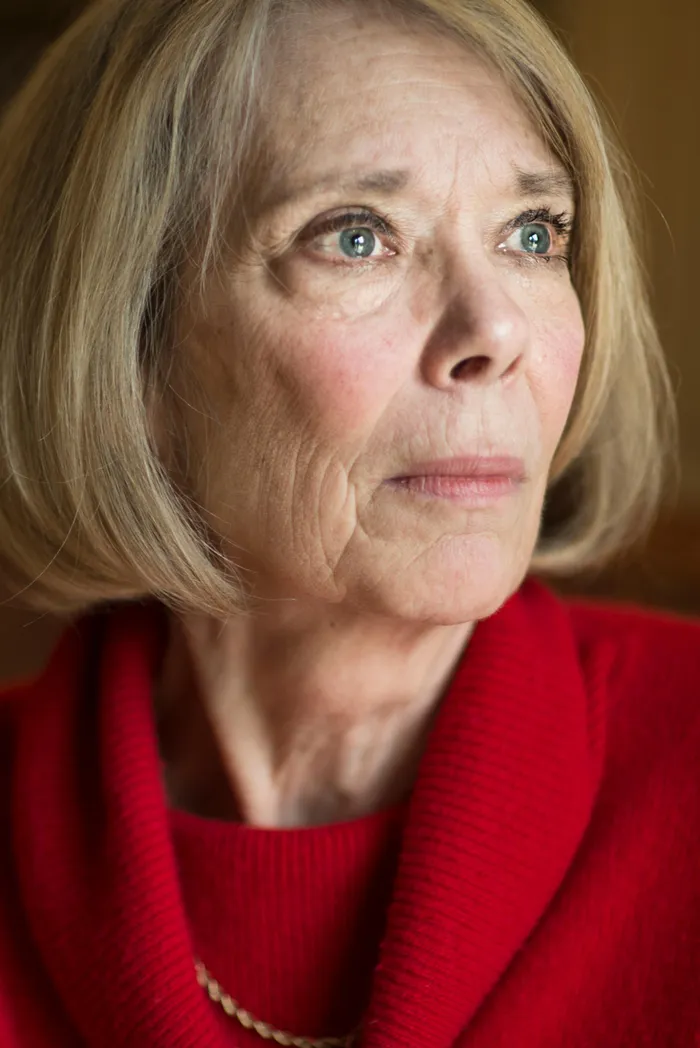
Sandra Grimes, pictured outside her home in 2013
Image: Nikki Kahn/The Washington Post
Sandra Grimes, 79: Counterintelligence analyst tracked down a mole
For years, the CIA struggled to figure out why so many of its Soviet informants ended up dead. The culprit proved to be a mole, Aldrich Ames, whose treachery cost the lives of at least eight double agents. He was finally unmasked and arrested in 1994 with help from Grimes, a CIA counterintelligence analyst who put off retirement so that she could work on the investigation. Poring over spreadsheets, she identified suspicious bank deposits that suggested Ames was the traitor.
“It doesn’t take a rocket scientist to tell what is going on here,” she recalled telling her boss. But it did take Sandra Grimes, whose meticulous digging enabled the agency to link Ames’s newfound wealth to his lunch meetings with a Russian official.
Sly Stone, 82
The funk mastermind behind hits like “Family Affair” and “Everyday People” was not just anyone. Yet his openhearted music reminded listeners that “everybody” - ev-ery-body, as he and his band sang - “is a star.”
June Lockhart, 100
Though she was best known for appearing on the TV shows “Lassie” and “Lost in Space,” Lockhart never let her job define her. “Acting is what I do,” she said. “It’s not what I am.”
Shirley Duncan, 99
A restless adventurer who once spent three years bicycling across Australia, Duncan never postponed her dreams. When necessary, she traveled solo. “If I waited for the right companion,” she explained, “I’d never go anywhere.”
Boris Spassky, 88
Success can be a burden. Just ask Spassky, a chess grandmaster who was the world champion for three stress-filled years. Only after he lost his title, he said, did he feel he could breathe “freely.”
Clint Hill, 93
The Secret Service agent was lauded for his bravery in Dallas but remained haunted by the Kennedy assassination for decades. He overcame his anguish after deciding that “life was too precious to give up on.”
George Foreman, 76
The heavyweight boxer demonstrated the possibility of second and third acts, losing the “Rumble in the Jungle” to Muhammad Ali before experiencing a religious awakening, reclaiming his title and reinventing himself as an affable pitchman.
Mark Klein, 79: AT&T whistleblower
Seven years before Edward Snowden made international headlines, Klein attempted to sound the alarm on domestic spying, revealing how the National Security Agency used a secret room at an AT&T hub in San Francisco to tap into the backbone of the internet.
In part, Klein had decided to become a whistleblower because of his memories of domestic spying scandals in the 1970s, a few years before he became a telecom technician. “The only way any law is worth anything is if there’s a memory so that people can say: ‘Wait a minute. This happened before,’” he said. “And you’ve got to step forward and say: ‘I remember this. This is the same bad thing happening again, and there should be a halt to it.’”
Roberta Flack, 88: Genre-blending singer and pianist
As a young girl in Arlington, Virginia, she practiced the piano every day, six hours a day. Music was her life; as she told it, she played even while she ate. This was even more difficult than expected: The piano didn’t smell good because her father had salvaged it from a junkyard.
But from those noxious beginnings, Flack became an unorthodox giant of popular music, a singer and pianist who applied her classical training to other genres, recording hits such as “Killing Me Softly With His Song.” Her approach to performing was emotionally honest, daringly so. “I want everybody to see me as I am,” she said. “Your voice cracks? Okay, darlin’, you go right on and keep giving it what you’ve got left, and the audience ignores it and goes right along with you. I’ve found out the way to get myself through to people is just to unzip myself and let everything hang out.”
Giorgio Armani, 91: Fashion designer
The devil, it’s said, is usually in the details. And so it’s often the filmmaker who storyboards every frame, the writer who labors over every comma, who gets praised as a master - hailed for work that’s flawless and impeccable. And yet there is also a beauty in faults, kinks and imperfections, as the designer known as Il Signor Armani knew well.
“When I began to design,” he said, “men all dressed in the same way. American industry called the shots, with its technicians scattered all over the world … all impeccably equal, equally impeccable. The Mao syndrome,” he continued. “You couldn’t tell them apart. They had no defects. But I liked defect.” In his hands, the suit jacket became slouchy, soft and lean. Worn by men and women alike, it somehow gave the effect of both elegance and ease. As fashion critic Rachel Tashjian put it, “Armani made stars on film look glamorously natural, as if they had just thrown on a blazer, left their shirt a bit wrinkled and went on to their sexy day.”
Brian Wilson, 82
When “Pet Sounds” was released in 1966, the Beach Boys record was considered a commercial disappointment. Time has shown it to be a classic, a kaleidoscopic work of art credited in large part to Wilson.
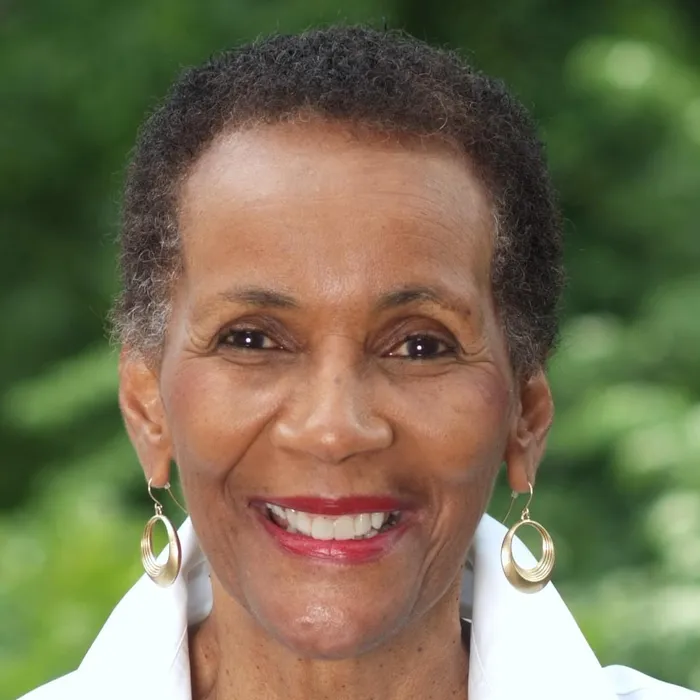
Maxine Clair, pictured in 2014, returned home after a trip to the Caribbean in 1980 and decided to quit her job to become a writer.
Image: Carol Clayton/The Washington Post
Maxine Clair, 86
As a single mother in her 40s, Clair quit her job, got an MFA and wrote an acclaimed short story collection, “Rattlebone.” “I’m no longer waiting for my life,” she said. She was living it.
Marilyn Hagerty, 99
Marilyn Hagerty became an internet sensation after her take on chicken Alfredo in 2012.
Image: Courtesy of the Hagerty family
As a columnist in North Dakota, Hagerty went viral for her earnestly matter-of-fact review of a new Olive Garden. Ridiculed by cynics, Hagerty was unbothered. She was serving her readers, and her community.
Louis Schittly, 86
Run toward the danger; go where the patients are. That was the approach of Schittly, who joined other physicians in founding the humanitarian group Médecins Sans Frontières, or Doctors Without Borders, in 1971.
Rob Reiner, 78
“The most important thing is that you be a good person,” he said, “and you live by the golden rule of do unto others. If you live by that, that’s all I care about.”
Lenny Wilkens, 88
The nine-time NBA all-star became one of the league’s winningest coaches, beloved by players for his unflappable demeanor. “He never points fingers at individuals, win or lose, which perhaps is his greatest quality,” said one.
Jim Lovell, 97: Astronaut who commanded Apollo 13
When he ended up on the big screen, played by Tom Hanks in “Apollo 13,” his signature words were slightly misquoted. That was hardly a problem for Lovell, the calm, quick-thinking astronaut whose understated message to Mission Control - “Houston, we’ve had a problem” - announced that Apollo 13 was in peril. An oxygen tank had exploded on board, forcing him and his crew to endure four harrowing days in space using the mission’s lunar lander as a lifeboat. The crew returned safely, landing in the South Pacific, thanks in part to Lovell’s skills as a pilot.
He was just grateful to be alive.
“We do not realize what we have on Earth,” he said, “until we leave it.”
Susan Stamberg, 87: Radio journalist and one of NPR’s “founding mothers”
In 1972, Stamberg became the first woman to anchor a national evening news broadcast, NPR’s “All Things Considered.” Station managers had objected to her appointment, arguing that “a woman’s voice is not authoritative.” But Stamberg went on to become a broadcasting institution, conducting serious, wide-ranging interviews in an endearingly personal style.
Her voice was only ever her own: Each Thanksgiving season, she would present her mother-in-law’s recipe for a “thick, creamy and shockingly pink” cranberry relish, complete with onion and horseradish. While the segment became a listener favorite, the relish did not. Nearly a decade ago, her 8-year-old granddaughter seemed to speak for most listeners when she told the broadcaster, “I’m never tasting it again.”