The rise of Buy Now Pay Later in South Africa
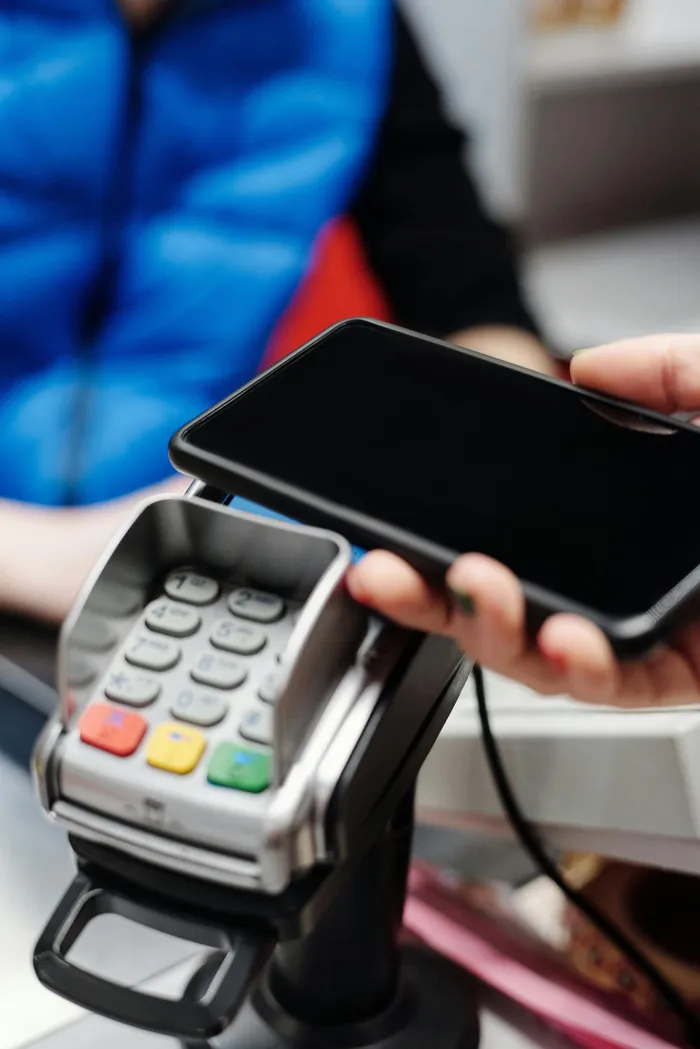
Buy Now Pay Later apps to make buying easier for consumers
Image: Pexels.com
AS South Africans navigate the choppy economic waters exacerbated by rising living costs, a financial revolution is steadily taking hold across the country.
The Buy Now, Pay Later (BNPL) payment model has emerged as a beacon of hope for consumers grappling with budget constraints, offering interest-free instalments that allow them immediate access to goods without the financial burden of upfront payments.
BNPL services are gaining traction in South Africa, with several local providers in the marketplace like Payflex, Citiq, and ZeroPay.
Tracey-Lee Zurcher-Campbell, Payflex head of marketing, which claims to be the largest independent BNPL provider in the country since its inception in 2017, explains that Payflex allows customers to split purchases into manageable intervals, either four payments over six weeks, three payments across three paydays, or two equal instalments.
She said customers register for Payflex on the website, app or on checkout at participating stores.
"Upon registration, customers will be able to see if they qualify for a Payflex facility. Shoppers need to be over 18 years old, have a South African ID number and a South African-issued Visa or Mastercard debit, cheque, or credit card. Customers need to meet our minimum credit assessment criteria and not have any adverse flags on their credit record. As part of the sign-up process, we run a real-time credit check with credit bureaus to determine eligibility. If customers miss their instalment payments, they are charged a late fee.
"The consumer is able to split their payments into more manageable instalments and pay it off over a fixed period, 100% interest and fee free. Customers use Payflex as a cash flow smoothing tool, either to purchase items that are slightly more expensive than they feel comfortable spending in one go, or when budgets don't allow them to make the full payment upfront," said Zurcher-Campbell.
She said they also send regular reminders to customers about upcoming instalment payments to ensure that customer payments are not late, therefore avoiding any penalty fees. Zurcher-Campbell said there was a strong societal demand for flexible payment options that give financially-savvy customers more agency over their lifestyle needs, without crippling interest rates and long term-over-indebtedness.
"As such, Buy Now Pay Later service providers like Payflex, who are funded by transaction fees paid by participating merchants, emerged as one of the most popular tender types in the market.
"Payflex charges the merchant a slightly higher transaction fee in order for them to be able to offer this service to their customers. The increase in frequency of purchase and average order value makes it worth the slightly higher transaction fee for the merchant, as they can see an increase of sales up to 30%," she said.
Zurcher-Campbell added that Payflex has seen exponential growth since inception and the base of customers grows month on month.
A different perspective is offered by Citiq, who has introduced the Citiq app to simplify how consumers manage their prepaid utilities.
The Citiq app gives users access to electricity when they need it most, even if funds are tight. Through Citiq Advance, users can get up to half their average monthly electricity spend upfront as a token, and simply repay it over their next two top-ups.
Maya Cajee, Citiq's head of marketing, said the Citiq app was designed to make prepaid energy simpler, smarter, and fairer.
"It gives users the ability to buy, manage, and advance electricity anytime, anywhere. Anyone using a Citiq sub-meter can download and register on the Citiq app, available on both the Google Play Store and Apple App Store. Once linked to their meter, users can view their usage history, buy tokens, and access new features like Citiq Advance.
"Unlike most prepaid utilities that only allow top-ups through third-party vendors, the Citiq app was built specifically for prepaid users, by a team that has spent over a decade innovating in this space," said Cajee.
She said the app gives users access to electricity when they need it most, even if funds are tight.
"Through Citiq Advance, users can get up to half their average monthly electricity spend upfront as a token, and simply repay it over their next two top-ups.
"Repayment happens automatically through the customer’s next token purchases. 50% of each of their next two electricity purchases goes toward repaying the Advance. Citiq Advance is completely interest-free. Instead, a small once-off access fee is charged when the Advance is issued," said Cajee.
Meanwhile Gianna Rizzo, ZeroPay's marketing and partner coordinator, said ZeroPay allows consumers to split their payments and pay for their shopping over three, zero fee, zero interest instalments.
"This makes shopping more affordable and helps the customer with cash flow. Customers get their items upfront and pay later, no fees or interest.
"This payment option emerged because customers wanted more flexibility and control over how they pay. Many consumers do not have access to traditional credit or do not want the high interest, fees and long-term commitments that often come with credit cards and loans.
Rizzo said they have a soft collection approach that allows customers 24 hours to resolve the payment, but thereafter they charge a penalty fee of R125.
Economist Dawie Roodt, said this is a convenient way of providing credit to the consumer so the consumer can have something and pay for it later.
"There is nothing inherently wrong, it's like using a credit card. But the question is can the consumer afford it and is it just a way to get the consumer deeper into debt. That is what businesses do, provide credit to consumers because they want to do business and they want to make money. The consumer in the end must take responsibility of being able to repay that.
"Unfortunately the consumer in South Africa is not financially literate and people quite often take on a lot of debt without thinking about it. These apps and technology is making life easier for the consumer and if done responsibly it is a handy and comfortable way of doing business. In the world of finance the different ways of being able to pay is a big item because everybody is getting involved in these payment systems. We are going to see a lot more of this," said Roodt.