Islamabad mosque bombing: 31 dead and 130 injured
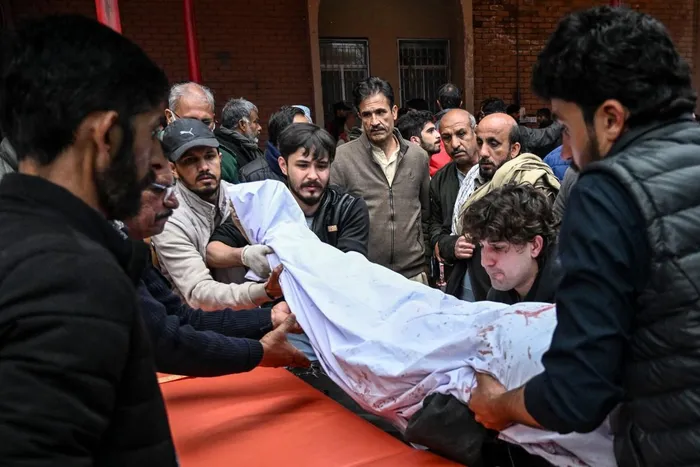
People transport the dead body of a victim killed in a suicide bombing at a Shiite mosque, in Islamabad.
Image: Aamir Qureshi / AFP
A suicide bombing at a Shia mosque in Pakistan's capital Islamabad killed at least 31 people on Friday, local authorities said, with a police source saying more than 130 were wounded.
City officials said "31 people were killed in the blast" at the Imam Bargah Qasr-e-Khadijatul Kubra mosque in the Tarlai area on the outskirts of Islamabad.
A senior police official told AFP, on condition of anonymity, that the explosion occurred after Friday prayers, when mosques around the country are packed with worshippers.
The casualty toll was "expected to rise further", he added.
A security source also told AFP: "The attacker was stopped at the gate and detonated himself."
AFP journalists at the Pakistan Institute of Medical Sciences hospital saw several adults and children being carried in on stretchers or by their arms and legs.
Medics and bystanders helped unload victims with blood-soaked clothes from the back of ambulances and vehicles. At least one casualty arrived in the boot of a car.
Friends and relatives of the wounded screamed as they arrived at the hospital's heavily guarded emergency ward.
Another team of AFP journalists saw armed security forces outside the mosque, where pools of blood were visible on the ground.
Yellow crime scene tape surrounded an investigation area, with shoes, clothing and broken glass scattered around the site.
Videos shared on social media, which AFP was not able to verify immediately, showed several bodies lying near the mosque's front gate, with people and debris also strewn across the red-carpeted prayer hall.
Pakistan's Prime Minister Shehbaz Sharif condemned the blast, saying those behind it would be found and brought to justice.
Deputy Prime Minister Ishaq Dar branded the attack "a heinous crime against humanity and a blatant violation of Islamic principles".
"Pakistan stands united against terrorism in all its forms," he added in a post on X.
No group immediately claimed responsibility for the attack, which comes as Pakistan's security forces battle intensifying insurgencies in both the southern and northern provinces of the country that border Afghanistan.
Pakistan is a Sunni-majority nation but Shiites make up between 10 and 15 percent of the population and have been targeted in attacks throughout the region in the past.
- Growing insurgencies -Islamabad has said separatist armed groups in southern Balochistan and the Pakistani Taliban and other Islamist militants in northern Khyber Pakhtunkhwa province, near Islamabad, have used Afghan territory as a safe haven from which to launch attacks.
Afghanistan's Taliban government has repeatedly denied Pakistan's accusations and bilateral relations have plummeted, with forces from both sides regularly clashing along the border.
The last major attack in Islamabad took place in November when a suicide blast outside a court killed 12 people and wounded dozens, the first such incident to hit the capital in nearly three years.
Pakistan's forces are also facing pressure in southern Balochistan, where attacks claimed by separatist insurgents last week killed 36 civilians and 22 security personnel.
Those attacks prompted a wave of counter-operations in which authorities said security forces killed almost 200 militants.
AFP