WHO stick to their guns: 'Vaccines do not cause autism'
The analysis released by the WHO’s Global Advisory Committee on Vaccine Safety, looked at decades of research and found no evidence of "a causal relationship" between vaccines and autism.
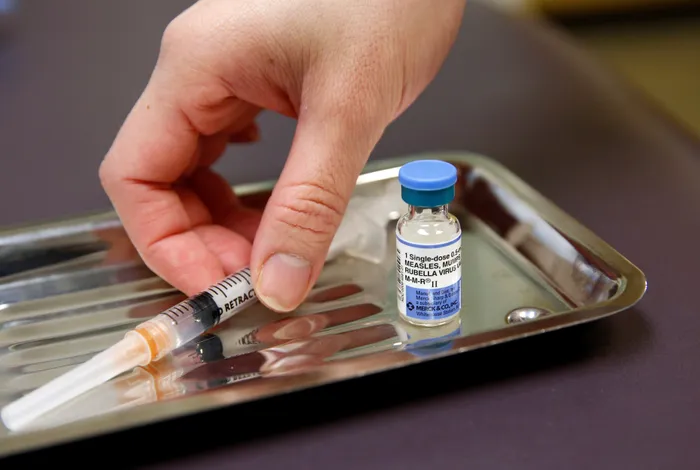
SHOT IN THE ARM: Vaccines can immunise children
Image: ANA Archives
A new scientific review by the World Health Organization (WHO) has reaffirmed that vaccines do not cause autism, pushing back against persistent claims circulating in the United States that suggest a link between immunisation and the developmental condition.
The analysis, released by the WHO’s Global Advisory Committee on Vaccine Safety, examined decades of research and found no evidence of a causal relationship between vaccines and autism. The findings come at a time of renewed controversy after the US Centers for Disease Control and Prevention (CDC) recently revised language on its website in a way that critics say weakens its long-standing, science-based position on vaccine safety.
Speaking at a press conference in Geneva, WHO Director-General Dr Tedros Adhanom Ghebreyesus said the organisation’s conclusions were unequivocal. “Based on the available evidence, there is no causal link between vaccines and autism,” he said, stressing that autism is not a side-effect of immunisation.
The committee reviewed 31 major studies conducted across multiple countries over a 15-year period. These studies focused in particular on vaccines containing thiomersal, a mercury-based preservative used to prevent bacterial and fungal contamination in multidose vials, as well as aluminium adjuvants, which help strengthen immune responses. According to the WHO, neither substance was found to be associated with autism or other neurodevelopmental disorders.
“This is the fourth comprehensive review of the evidence,” Tedros said. “Similar assessments in 2002, 2004 and 2012 all reached the same conclusion: vaccines do not cause autism.”
The renewed attention on the issue follows growing concern among scientists and public health experts over the influence of US Health Secretary
A major new review by the World Health Organization has once again confirmed that vaccines do not cause autism, directly countering claims that continue to circulate in parts of the United States and elsewhere.
Speaking at a media briefing in Geneva, WHO Director General Tedros Adhanom Ghebreyesus said the organization had released an updated scientific analysis that found no evidence of a causal relationship between immunisation and autism or other neurodevelopmental conditions. The findings come at a time of growing concern among global health experts about the spread of vaccine misinformation.
The review was conducted by the Global Advisory Committee on Vaccine Safety, which assessed 31 large scale studies carried out across several countries over a 15 year period. The research focused on vaccines containing thiomersal, a preservative used to prevent contamination in multi dose vials, as well as aluminium adjuvants that help strengthen immune responses.
Based on the available evidence, the committee concluded that there is no link between these vaccine components and autism. Tedros said the findings were consistent with earlier reviews conducted in 2002, 2004 and 2012, all of which reached the same conclusion.
“Autism is not a side effect of vaccines,” Tedros told reporters. “While vaccines, like all medical products, can have side effects that are carefully monitored, autism is not among them.”
The WHO intervention follows controversial changes made last month to the website of the United States Centers for Disease Control and Prevention. The revised language was widely criticised by scientists for weakening the agency’s long standing, evidence based position that vaccines do not cause autism. Public health officials warned that the edits could fuel confusion and mistrust at a time when vaccination rates are under pressure.
Attention has also focused on US health secretary Robert F Kennedy Jr, who has repeatedly promoted claims linking vaccines to autism despite overwhelming scientific evidence to the contrary. Kennedy’s views have gained traction among supporters of his Make America Healthy Again campaign, which forms part of President Donald Trump’s broader political coalition.
Health experts trace the origins of the vaccine autism myth to a study published in 1998 that claimed a connection between the measles, mumps and rubella vaccine and autism. The paper was later found to contain falsified data and was formally retracted, but the narrative it introduced has persisted for decades.
“That study was fraudulent, but the damage was lasting,” Tedros said. “Its claims have never been replicated and have been repeatedly disproven by extensive research.”
The WHO chief stressed the critical role vaccines have played in improving global health outcomes. He noted that deaths among children under five years of age have fallen by more than half over the past 25 years, dropping from about 11 million annually to fewer than 5 million. Vaccination programmes have been a major factor in that decline.
“Vaccines are among the most powerful and transformative inventions in human history,” Tedros said. “They protect against around 30 serious diseases, including measles, cervical cancer and malaria, and they continue to save millions of lives every year.”
The WHO urged governments, health institutions and media outlets to rely on established science and to actively challenge false information that undermines public confidence in immunisation.