Trump’s aid cuts are hitting the world’s largest refugee camps
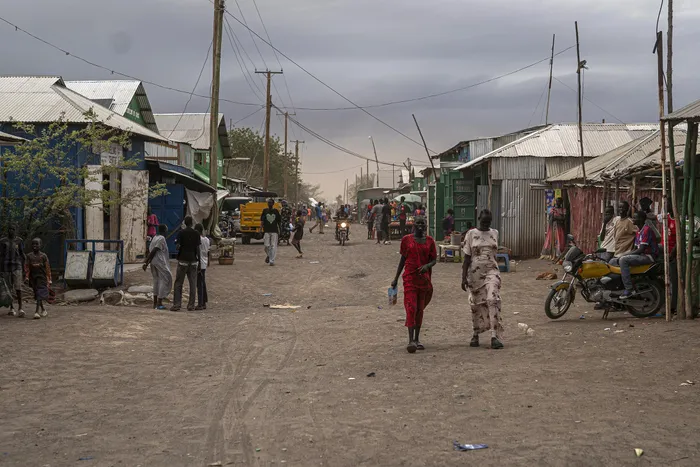
Kakuma is one of the world's largest refugee camps, with nearly 300,000 residents.
Image: Simon Marks/Bloomberg
Every two months, Claudia Ncutinamagara, a 39-year-old Burundian living in one of the world’s largest refugee camps, receives four kilograms of cereals, a kilogram of lentils and just over a liter of vegetable oil to feed her family of four. The rations are so meagre that she struggles to breastfeed her youngest, an infant boy.
Ncutinamagara is among the 240 000 refugees at the UN’s Kakuma camp in remote northern Kenya who’ve seen the aid they rely on to survive slashed this year - leaving tens of thousands of children out of school, plunging as many or more into malnutrition and depriving hospitals of life-saving medicine. Ten months after US President Donald Trump began dismantling the US foreign aid system - and other Western countries including the UK, Germany and the Netherlands slashed their giving - more than 100 million refugees and forcibly displaced people around the world are starting to feel the effects.
The Trump administration’s decision to shutter the US Agency for International Development (USAID), which had led the global fight against infectious disease, has already resulted in more than 600 000 deaths, most of them children, according to modelling done by epidemiologist Brooke Nichols at Boston University. It’s likely to get worse - US foreign assistance commitments fell by more than half in the fiscal year ending September compared to the same period in 2024, to $14.7 billion (R251.4 billion) from R540.4 billion - according to a Bloomberg analysis of spending on global health, food aid, international disaster assistance, refugees and development.
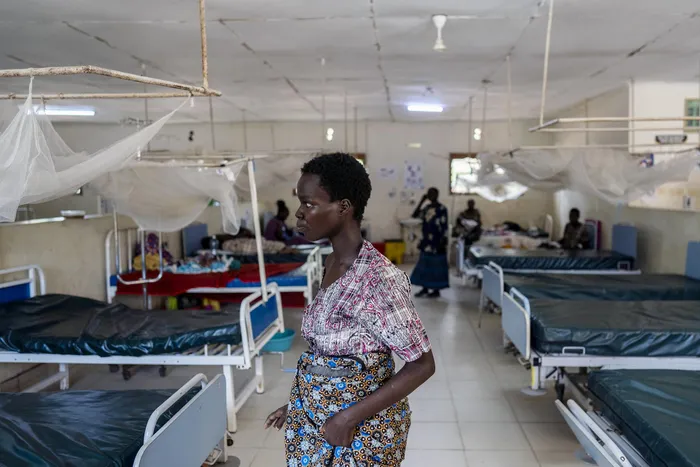
A pregnant woman at a hospital run by the International Rescue Committee.
Image: Simon Marks/Bloomberg
“We feel like we’ve been abandoned,” said Ncutinamagara, who arrived in Kenya in 2017 after fleeing violence in her home country. “We exist but that’s it - it’s hopeless.”
With aid eliminated for pregnant and breastfeeding mothers, Kakuma has seen a 50% rise this year in instances of severe malnutrition among infants under six months, according to the United Nations. Staffing levels in US-funded schools have fallen by 40%, leaving many classrooms overcrowded and forcing an estimated 20 000 children to drop out. Rates of child marriage, survival sex - when women resort to sex work in order to feed their families - and domestic violence are soaring across the camp, according to an international consortium of NGOs.
The camp is also experiencing more cases of late-stage malnutrition among children, anemia among pregnant women, neo-natal deaths and still births. The rate of immunisation is also falling. With little money coming in to replace the US funding that was lost, the situation is likely to get worse next year, according to Bai Mankay Sankoh, deputy director for the World Food Program in Kenya.
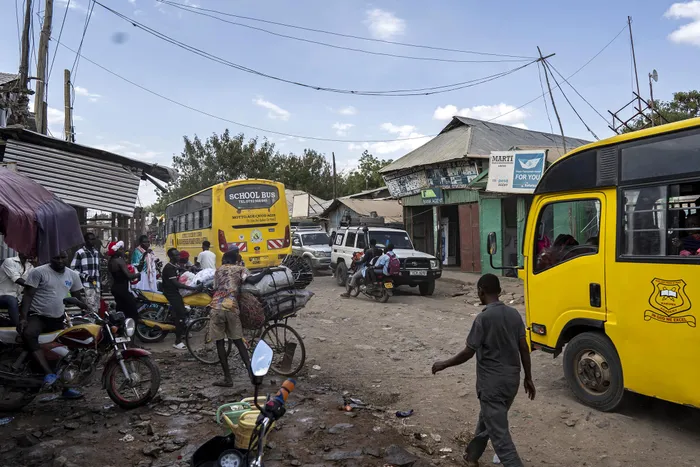
The Somali district of the Kakuma refugee camp in northern Kenya.
Image: Simon Marks/Bloomberg
“Aid cuts came in like a bang - it hit UN agencies, it hit NGOs and it even hit the government,” Sankoh said in an interview. “We all have the responsibility to ensure that we don’t leave people to die before we start to respond.”
Globally, new US commitments to health aid - allocated for diseases such as malaria, tuberculosis and HIV - dropped 34% to R128.3 billion in the fiscal year ending September compared to the same period in 2024. Funding commitments to disaster assistance fell by 68% to R42.8 billion, while those dedicated to refugees, development projects and emergency food support fell by R132 billion, to R80.4 billion, according to US budget data analysed by the Center for Global Development.
Anna Kelly, a White House spokesperson, said Trump “has successfully restored America First foreign policy while simultaneously maintaining our country’s status as the most generous in the world.”
“However, instead of bureaucrats doling out blank checks, all international assistance is distributed strategically and in line with the agenda that people voted for,” she said.
Global hunger is now at record levels, with 319 million people facing acute food insecurity, including 44 million in emergency levels of hunger, according to the WFP.
“We really are looking at millions of lives at stake here,” said Kate Almquist Knopf, the former head of the US Agency for International Development in Africa.
At one of Kakuma’s main hospitals, run by the Kenyan Red Cross, 75% of staff have been let go since the beginning of the year. The hospital has essentially run out of medical supplies, including life-saving medication for diabetes and diarrhoea, and there’s no money to service a USAID funded X-ray machine bought last year. Hospital managers even decided to reduce the bandwidth on the internet subscription to save money.
“The cuts hit us so hard,” said Moses Chesoli, a medical officer in charge of a hospital in Kakuma run by the Kenyan Red Cross.
For decades, Kenya has welcomed refugees from the many unstable countries surrounding it, including Somalia, South Sudan, Democratic Republic of Congo and Uganda.
But now Kenya is grappling with a population of nearly 1 million refugees increasingly disillusioned by hunger, joblessness and insecurity. The government has repeatedly sent security forces normally tasked with repelling the al-Qaeda-linked terror group Al-Shabaab in Somalia to instead quell violent protests inside Kakuma.
Worse, the government fears the cuts will create a generation of uneducated young people who may be drawn to crime and terrorism. Today, more than 80% of working-age refugees are unemployed in Kakuma, compared to 51% of all Kenyans, according to the Kenya Longitudinal Socioeconomic Study of Refugees and Host Communities.
Data collected in October by the NGO Refugee Group, a coordination body of international and national NGOs, show a 40% rise in extremist recruitment from Kenya’s refugee population since aid cuts came in.
“If these children are not properly engaged they get easily lured to juvenile criminal gangs and also transnational criminal networks such as the terrorist networks, who tend to offer more lucrative packages,” said Mercy Mwasaru, Kenya’s commissioner for refugee affairs.
Ninety-five percent of Kakuma refugees said they or someone they knew had been attacked in the last six months due to food shortages, reduced services or a lack of employment, according to a report by the NGO Refugee Group seen by Bloomberg.
The dire situation created by the funding cuts has led some host countries to ask whether they should close their borders to those in need.
“This is the first time you hear Kenya asking, ‘should we continue to open more doors for refugees or should we shut our door down?’” Sankoh said.
Still, Kenya’s refugee camps are faring better than their counterparts in the war-torn countries nearby.
In Somalia, the UN now only provides food aid to 350 000 people, down from 1.1 million in August. In South Sudan, the WFP warned in October that their humanitarian operations faced “severe pipeline breaks by year end as in-country food stocks run out.” And in Sudan, more than 800 field kitchens providing free meals have shuttered, dealing additional hardship to a population already struggling with a civil war that’s killed over 400 000 people and sparked the world’s biggest humanitarian disaster.
“Many people are suffering from starvation and die without anyone knowing,” said Osman Glal, a volunteer and supervisor for the Emergency Response Rooms, a Sudanese organisation running health centers and soup kitchens.
The outlook for next year is also bleak, as the US government debates next year’s budget for health and humanitarian aid.
Trump has proposed R65 billion be spent on global health in 2026, less than half the R162.5 billion in the budget passed by Congress in July. Even if that money is allocated, America’s aid infrastructure has been so decimated by job cuts that there may not be the staff, systems or expertise to disburse it. Of USAID’s 13 000 employees, just a few hundred remain.
“There is still some money there on paper but if they can’t get it out then it’s worthless,” said Almquist Knopf. “It’s an appalling state of affairs.”
The cuts will contribute to 600 000 more people in South Sudan facing high levels of acute food insecurity, along with 1 million in Zimbabwe and 2.2 million in DRC, according to the Food Security Information Network.
“These cuts have meant that families in some of Africa’s most fragile contexts, in places like Sudan, the DRC, Somalia, northeast Nigeria, and the Sahel, simply can’t feed themselves,” said Kate Phillips-Barrasso, vice president of global policy and advocacy for aid group Mercy Corps.
Back in Kakuma, Sila Monthe, a health manager for the International Rescue Committee, has watched as her organisation’s community health workforce has fallen to 97 from 217.
“We actually had periods when we were completely stocked out of essential medicines – definitely this did result in increased mortality,” she said. Today, 50% of all malnutrition cases are acute, up from 10% prior to the cuts.
Mwasaru, the refugee commissioner, said the situation will only get worse in 2026.
“The system is choking,” she said. “I’ll be left with the bare minimum to run through December.”