Animal factory farming shortens the human lifespan by almost two years, study finds
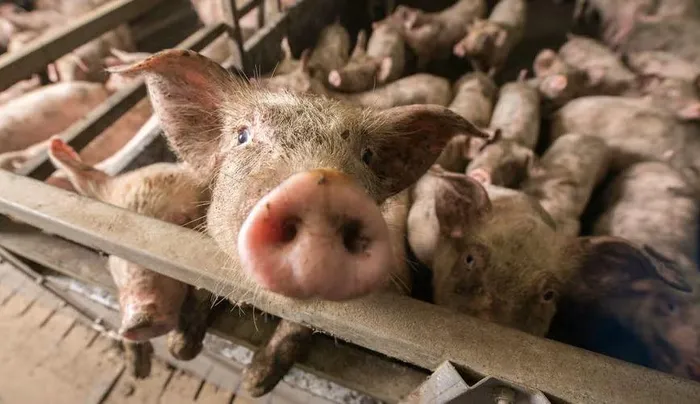
Factory farming is bad for people, bad for animals and bad for the environment.
Image: ASPCA
Animal factory farming is reducing the healthy life of the average human being by 1.8 years, according to groundbreaking global research conducted by the charity group World Animal Protection.
Until now, very little research has been conducted on the numerous effects of the global factory farming industry, which is also believed to cause widespread environmental damage as well as needless suffering to animals.
The charity’s Factory Farming Index (FFI) said the leading causes of human lifespan loss, as a result of factory farming, are antibiotic resistance as well as disease.
According to the FFI, 66,000 tonnes of antibiotics are used on factory-farmed cows, pigs and chickens, which is double the amount used on humans.
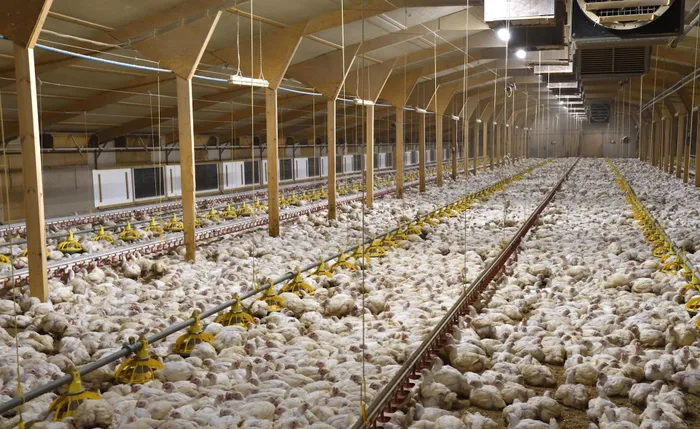
Factory-farmed chickens.
Image: The Human League
These are often given to perfectly healthy animals to mitigate the disease and stress risks in crowded and unsanitary factory farming conditions.
Further to that, the large volume of animal waste excreted at factory farms poisons the environment with ammonia, nitrous oxide and fine particulate matter. These have been linked to pulmonary health conditions in humans, particularly those working and living near these facilities.
Further to that, excess consumption of meat, particularly red and processed meat, has been linked to numerous diseases, including colorectal cancer, heart disease, stroke and diabetes.
Horrific conditions for animals
Factory farming also raises serious questions marks over ethics, given the levels of suffering recorded at many facilities. Of concern is that 74% of factory-farmed animals are produced in countries where there is no legislation on slaughter. Slaughter without stunning is permitted in many cases. Common practices include using gestation crates for pigs and battery cages for chickens.
These animals also have significantly shorter lifespans, with World Animal Protection estimating that farmed chickens live for just 5% of their potential lifespan, while pigs live for just 4%.
In South Africa, it is estimated that 99% of all eggs, 75% of beef and 60% of pork are factory farmed, according to a study commissioned by Humane World for Animals, and researched by Linzi Lewis.
"Animals in agriculture are valued exclusively for their economic and consumptive use, with little attention being given to the conditions in which animals are kept, transported and slaughtered,” Lewis said.
The local study also found that the livestock sector is one of the leading drivers of land degradation, water and soil pollution.
Livelihoods depend on the sector too, with commercial livestock production employing around 162,000 people, and a further 185,000 in mixed farming, while animal agriculture is also believed to play a significant part in the livelihoods of over a million communal and smallholder farmers.
“The only lasting solution is to move away from factory farming and shift toward an equitable, humane, and sustainable food system,” said Tricia Croasdell, CEO of World Animal Protection.
“This means making plant-based foods a larger part of our diets while supporting small-scale producers who prioritise care for animals and the land, ensuring that any remaining animal farming meets the highest standards for welfare, environmental protection, and human health.”
Croasdell highlighted the need to support countries in looking to the future of how they feed their populations without damaging human health, animals and our planet.
“This research is clear: in order to achieve a better quality of life for people, we need a better quality of life for animals. This ultimately means prioritising plant-based diets, ending factory farming, and reducing the environmental impact that we are all facing if we don’t act,” Croasdell said.
Factory farming is also a major contributor to greenhouse gas emissions, with the global agrifood system causing around 29.7% of total emissions, and it also causes around 25% of human-caused water pollution.
Around 76 billion animals are factory farmed worldwide, according to the latest figures, with 45% of cows, pigs and chickens farmed in just four countries: the USA, China, Brazil and Indonesia.
The highest-consuming countries, per capita, are Israel, Panama, Belarus, and Qatar, according to the FFI Index. In these countries, the average person consumes 10 animals per year.
IOL