State capture revealed: how the Madlanga Commission unmasked South Africa's public service failures
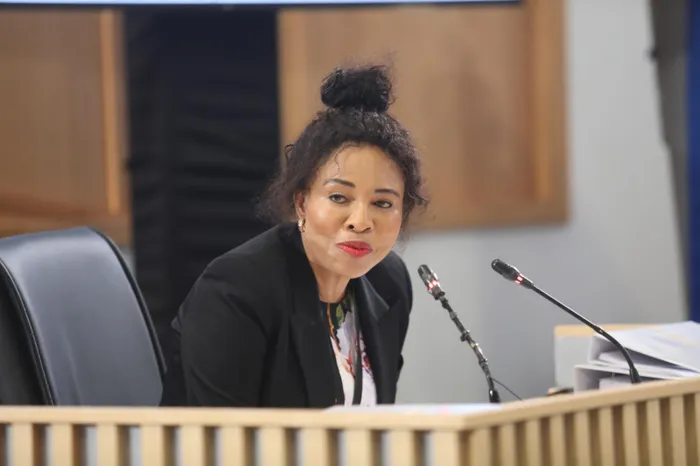
FORMER Ekurhuleni city manager Dr Imogen Mashazi's testimony at the Madlanga Commission of Inquiry, showed a disturbing level of lack of accountability and incompetence for someone who was a senior staff member in the public service.
Image: OUPA MOKOENA Independent Newspapers
The Madlanga Commission and Parliament’s Ad Hoc Committee on the KwaZulu-Natal police commissioner Lt-Gen Nhlanhla Mkhwanazi allegations have done the country a grim favour: they have stripped away the veneer of respectability from our public service and shown us the rot beneath. What is unfolding in those hearings was not the odd lapse or a few bad apples. It was a pattern. A culture of mediocrity, patronage and protection that has been normalised at the highest levels of state power.
We are watching senior officials and political appointees stumble through testimony, offering “I don’t recall” after “I don’t know”, producing no documents when pressed, checking phones in the witness box and, in some cases, contradicting sworn statements. Former municipal managers, ministers’ chiefs of staff and senior police leaders are exposed not only for poor answers but for a deeper failure: an inability or unwillingness to account for decisions that affect lives, livelihoods and the rule of law. When an accounting officer treats an IPID recommendation as a bureaucratic inconvenience rather than a call to action, the public interest is the casualty.
Memory loss strategy
The Madlanga Commission was meant to be a sober exercise in accountability. Instead, it has become a theatre of evasions. Former Ekurhuleni city manager Dr Imogen Mashazi’s testimony was a masterclass in indifference. Faced with questions about procurement irregularities and ignored recommendations, she scrolled her phone, repeated “I don’t recall”, and failed to produce documents. This was not just embarrassing; it was symptomatic of a public service where accountability is optional.
Brown Mogotsi’s appearances were equally revealing. Commissioners labelled him a “professional liar”, yet his testimony mattered because it exposed the informal networks that orbit power. His contradictions and evasions showed how unreliable intermediaries are used to muddy investigations and shield those who matter. The fact that such figures are even part of the narrative tells us how deeply informal patronage has penetrated formal governance.
Then there was Vusimuzi “Cat” Matlala, whose testimony before Parliament was explosive. He spoke of Woolworths' bag payments, of tenders worth hundreds of millions, of cash handed to senior political figures. Whether every detail will be proven in court is not the point. The point is that such allegations are credible enough to warrant hearings inside prison facilities and to dominate parliamentary inquiry. They map a pattern of influence peddling and tender capture that cannot be ignored.
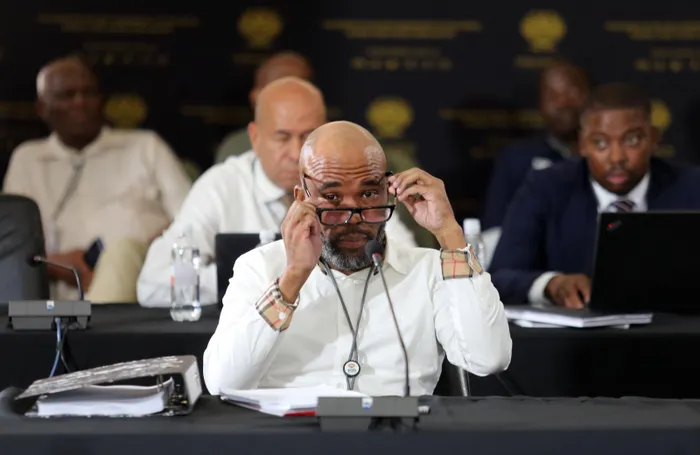
ATTEMPTED murder-accused Vusimuzi "Cat" Matlala spoke of cash delivered in Woolworths' shopping bags to senior politicians and police officers when he appeared before the Parliamentary Ad-Hoc Committee which visited him at the Kgosi Mampuru Prison where he's an awaiting trial prisoner.
Image: OUPA MOKOENA Independent Newspapers
The Disbandment of PKTT
At the centre of this malaise is the disbandment of the Political Killings Task Team (PKTT). Minister Senzo Mchunu defended his December 31, 2024 directive as lawful and based on a 2019 work study. Yet witnesses described the decision as sudden, unlawful and suspicious. The timing was damning: the unit was investigating politically sensitive cases, and its dissolution effectively neutered those investigations. This is not administrative housekeeping; it is political interference dressed up as rationalisation.
The Ad Hoc Committee hearings reinforced this picture. Cedric Nkabinde, Mchunu’s chief of staff, admitted to “thumb‑sucked” dates in a sworn affidavit. His contradictions under oath prompted MPs to question the credibility of ministerial offices. Lieutenant‑General Shadrack Sibiya’s evasive answers further underlined how senior officials can evade scrutiny or buy time to align stories. These are not minor lapses; they are tactics that corrode public trust.
Responsibility is collective and concentrated. It sits with the ANC’s cadre deployment culture, which has hollowed out meritocratic appointment processes. It sits with ministers who sign off on decisions that weaken specialised investigative units. It sits with chiefs of staff and advisors who manufacture narratives. And it sits with senior public servants who choose compliance over courage.
But responsibility does not end with the ANC. The Government of National Unity which includes parties that once thundered against capture, has shown a worrying tolerance for the very practices it once condemned. Where were the decisive reforms, the prosecutions, the public demands for accountability?
Instead we have had inquiries, statements and the occasional suspension that never leads to systemic change. Opposition parties that now sit in government have a particular moral obligation. If they once campaigned on cleaning up the state, their failure to insist on structural reform while sharing power is a betrayal of the voters who trusted them to be the corrective force.
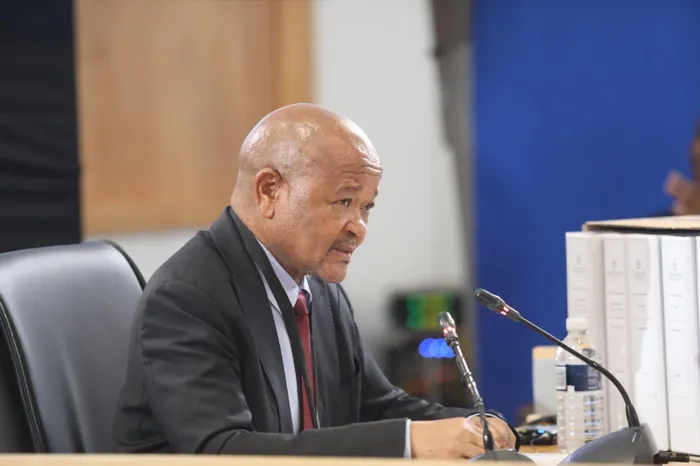
MINISTER of Police Senzo Mchunu, who's on special leave, tried to justify his reasoning and the implications of his decision to disband the KwaZulu-Natal-based Political Killings Task Team on New Year's Eve last year.
Image: OUPA MOKOENA Independent Newspapers
The murder of whistle-blowers
The hearings made painfully clear who pays for this rot. Whistle‑blowers, the people who risk careers, safety and sanity to expose wrongdoing are routinely victimised. Their evidence is dismissed, their careers are wrecked, and their lives are made difficult. That is not just unfair; it is suicidal for a democracy. Jimmy Mohlala, Babita Deokaran, Sindiso Magaqa and Mpho Mafole are but a few that paid the ultimate price for trying to do what is right. A state that punishes truth‑tellers and protects the well‑connected is a state that invites corruption to flourish.
The public pays too. When municipal managers cannot account for procurement, when specialised police units are weakened, when tenders are steered to cronies, service delivery collapses and crime goes unpunished. The hearings are not theatre; they are a window into how ordinary South Africans are robbed of dignity, safety and basic services by a system that has been captured.
If the hearings are to mean anything beyond outrage and headlines, they must lead to concrete reform. The following measures are urgent and non‑negotiable.
1. Immediate criminal referrals and prosecutions: Where testimony and documents reveal prima facie offences, the National Prosecuting Authority must act without delay. Commissions and committees are not substitutes for criminal justice. Evidence that points to theft, fraud, perjury or corruption must be handed to independent prosecutors with the resources and mandate to act.
2. Statutory vetting and public disclosure for senior appointments: All senior public servants, heads of municipalities and police leadership must undergo transparent, forensic vetting. Qualifications, conflicts of interest and past disciplinary records should be publicly disclosed before confirmation. Merit must be the criterion, not factional loyalty.
3. Protect specialised units and operational independence: Legislate clear safeguards for specialised investigative units and for the operational independence of law‑enforcement bodies. Arbitrary disbandment or reconfiguration must require parliamentary oversight and judicial review. Units that investigate politically sensitive crimes must have protected funding lines and statutory independence.
4. Robust whistle‑blower protection and support: Create an independent, well‑resourced whistle‑blower protection authority with guaranteed anonymity, legal support and relocation assistance where necessary. Make victimisation of whistle‑blowers a criminal offence with swift remedies.
5. Independent prosecutions task team for state capture and police corruption: Establish a dedicated, independent prosecutions task team with a clear mandate to act on commission findings, to pursue complex corruption cases and to report publicly on progress. This team must be insulated from political interference and have international cooperation where needed.
None of this will be easy. Entrenched networks will resist. Political parties will posture. But the alternative is worse: a slow, steady erosion of the state until it exists only to serve private interests. Reform requires political courage from those in power and relentless pressure from civil society, the media and the electorate.
The complicity of GNU partners
The Government of National Unity must choose whether it will be remembered as the coalition that tamed capture or the coalition that normalised it. Parties that once campaigned on accountability must either deliver or be judged by history for their complicity.
The Madlanga Commission and the Ad Hoc Committee have given us more than scandal; they have given us a choice. We can treat the hearings as another season of outrage and then return to business as usual, or we can use them as the catalyst for a serious, sustained clean‑up of the state. The country needs more than inquiries and press conferences. It needs prosecutions, structural reform and a culture that rewards competence and punishes impunity.
If we fail to act now, we will have only ourselves to blame when the next set of hearings reveals yet more names, yet more evasions and yet more damage. South Africa deserves better than a public service that is a refuge for the incompetent and a playground for the well‑connected. It deserves a state that works for the many, not the few.
(Dube is a noted political economist, businessperson, and social commentator on Ukhozi FM. His views do not necessarily reflect those of the Sunday Tribune or IOL. For further reading and perspectives, visit: http://www.ncodube.blog)