If South Africa is serious about growth, it must back its agri economy
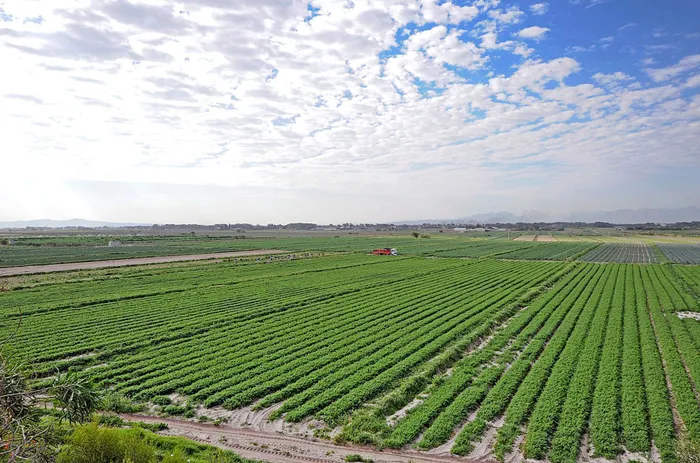
If we consider that the mining sector was just 6% of GDP in 2024, this gives us pause for thought around the role that agriculture will play in the coming years.
Image: Leon Lestrade/Independent newspapers
As South Africa works to strengthen its long-term economic resilience, it’s essential to recognise the critical role played by agriculture and agro-processing, sectors that underpin jobs, regional development and sustainable growth.
On paper, the agricultural sector is a small contributor to Gross Domestic Product (GDP) – coming in at just under 3%, which means that it contributes around R200bn to the economy each year. However, if we consider that the mining sector was just 6% of GDP in 2024, this gives us pause for thought around the role that agriculture will play in the coming years.
Our business gives us quite a unique perspective on the sector. If we look at our forestry business, we have first-hand operational insights into the challenges and opportunities that the agro-processing sector provides. Downstream, as part of our packaging operations, we are able to draw first-hand insights from primary agriculture – this year, our results were boosted by a record performance in the Citrus sector. This is a space we understand.
Two recently released research reports highlight the strategic importance of these sectors.
The first is a report from the Public Investment Corporation (PIC) entitled: “Re-industrialising South Africa: Can institutional capital spark South Africa’s next industrial boom?”
In this report, the PIC researchers identify agro-processing as a key sector for South Africa’s future. They note:
“Agro-processing and high value agriculture has some of the strongest multiplier effects in the economy, linking farms to factories, logistics, and retail. It is also more job-intensive than capital-heavy industries like mining, with particular benefits for rural development. Crucially, the sector is also central to climate resilience and sustainable growth, since value-added processing reduces waste, shortens supply chains, and enables adoption of greener technologies in food systems.”
Similarly, investment banking group RMB released its annual “Where to Invest in Africa” report which looks at Africa more broadly. The report highlights that the African continent is faced with a changing dynamic – aid funding is being sharply reduced, meaning that the continent must shift toward a greater focus on trade activities. Agriculture will play a key role in this shift from a variety of perspectives including food security, export market opportunities and enhancing the social contract with citizens.
A robust bioeconomy provides a natural dividend for both Africa and South Africa. Sectors which rely on natural renewable crops including agriculture and forestry, are the cornerstones of the future of the bioeconomy and investments here will provide long-term, sustainable returns.
Jobs for the future, jobs for now
We run a business which has manufacturing operations across 3 continents and clients in 150 different countries. This gives us an interesting perspective when it comes to many of the drivers around agriculture, forestry and agro-processing operations.
When outsiders think of these sectors, they often default to the perception that job opportunities will be limited to entry-level, informal or seasonal work. To a degree, this is true, but if you are looking for an interesting data point, have a look at the most recent Quarterly Labour Force Survey (QLFS) which presented employment statistics to the end of September 2025.
If we look at Employment by Occupation, there are only 2 sectors which reported double-digit year-on-year growth. The first sector was the “Professional services” (+10.1%) and the second was “Skilled Agriculture” (+41.9%).
With so many sectors being disrupted by technology and the rise of Artificial Intelligence, it is crucial that we drive home the message that the agriculture value chain offers some really exciting opportunities for employment and the ability to work both locally and abroad.
Agriculture, sustainability and the social contract with communities
As a South African business, we are very proud of our heritage, our contributions to local communities, and the country as a whole.
Much like the mining sector, our business is cyclical, and we go through both good and challenging times. With many of our operations outside of metro’s, we must develop strong relationships with the communities in which we operate.
This goes beyond simply creating jobs and investing in some local infrastructure – we have to think deeply about the concept of sustainability and our social contract with our stakeholders.
One of the major challenges facing South Africa now is that we have a deficit of affordable and stable energy, and this has set industrial businesses back – many of them have simply not been able to continue and this has had devastating impacts on communities who depend on these key employers.
We recognised this challenge very early on and invested heavily in clean energy solutions for our operations. These investments have not only given us business continuity but enhanced our relationships with our community stakeholders and workforce.
Water and logistics are other key challenges, and if we don’t address them, we will lose our license to operate. We haven’t simply spoken about being part of the “Green” economy, we have made significant investments, reflected in the fact that we were able to raise EUR300m in March this year as part of a sustainability-linked bond.
South Africa has a proud agriculture and agro-processing history and while it may not get the airtime that financial services, mining or tourism receive, there is a very positive story here and these sectors deserve some recognition for their contributions in 2025.
As global leaders concluded the B20 South Africa Summit, the final recommendations strongly echoed many of the themes impacting our own operating environment.
The outcomes reinforces that sustainable industrial growth cannot be achieved without strengthening the bioeconomy, scaling climate-resilient value chains, and prioritising inclusive rural development, areas where agriculture, forestry and agro-processing play an impactful role.
This confirms the validation of what our sector has long understood: that South Africa’s natural-resource industries are not legacy sectors, but strategic growth engines that must be protected, modernised and expanded.
Graeme Wild, CEO Sappi South Africa.

Graeme Wild, CEO Sappi South Africa.
Image: Supplied.
BUSINESS REPORT