Criminal justice expert blasts SAPS after viral video of ‘drunk’ NC cop
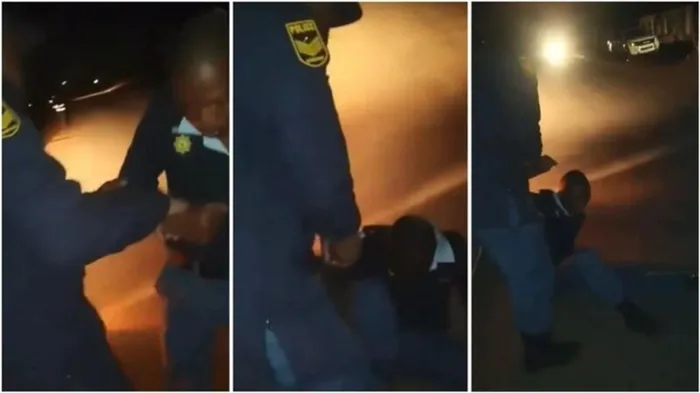
Policing and criminal justice expert Professor Jean Steyn has voiced his disappointment in an allegedly drunk on-duty Northern Cape police constable. Picture: X/@Abrambjee
By Simon Majadibodu
A POLICING and criminal justice expert, Professor Jean Steyn, has voiced disappointment regarding a Northern Cape police constable who was arrested for drunk driving while on duty.
The incident came to light after a video did the rounds on social media showing the constable staggering and collapsing on the roadside, seemingly drunk.
ALSO READ: Northern Cape cop arrested for drunk driving
ALSO READ: Video of ‘drunk’ Northern Cape cop goes viral
The officer, stationed at Mothibistad police station, faces charges related to driving under the influence of alcohol, reckless driving and unauthorised use of a state vehicle.
Northern Cape police spokesperson Brigadier Mashay Gamieldien said earlier this week that the constable had appeared in the Mothibistad Magistrate’s Court and was released on bail.
Reacting to the incident, Professor Steyn, head of the Department of Criminal Justice at the University of Zululand, expressed disappointment regarding the behaviour of a police officer in uniform.
He emphasised that police officers serve as role models for the public and should uphold the law and societal well-being.
He called for a thorough investigation by the Independent Police Investigative Directorate (Ipid) and clear communication from the South African Police Service (SAPS).
“Police officials are measured on a higher order of morality and ethics than the average member of the public. Such behaviour, if factual, cannot be tolerated and must be addressed promptly,” said Steyn
When asked about the implications of a drunken police officer’s arrest amidst increasing crime rates, Steyn remarked that it revealed that they were resorting to ineffective coping mechanisms.
“Some of our police officials are using inappropriate coping strategies, more often than not, while on or off duty, reflective of broader society, and not enough is being done to prevent, deter, and control for such by all and sundry.”
“The ‘cowboys and cowgirls don’t cry’ public police subculture, characteristic in South Africa and elsewhere, is well researched,” Steyn said.
He said that Ipid should thoroughly investigate unauthorised use of state vehicles, drunk driving and reckless driving, and then submit the findings to the National Prosecuting Authority (NPA) for informed prosecution decisions.
“The SAPS should also substantively implement (evidence-led best practices from all over the world) and review its own disciplinary and support (for staff) policies and procedures, with the purpose of preventing, deterring and controlling. The South African Police Service’s public relations response must be clear and expeditious.”
He said that the real and perceived dangers, the unique authority, critical oversight and unclear roles in policing all contribute to cognitive dissonance.
“Police officials naturally protect themselves from the resulting pressure and angst by making use of police subculture coping strategies that are not always appropriate and healthy.”
Steyn added that the SAPS is progressing very slowly towards realising the National Development Plan’s vision of professionalising the police department and establishing a professional board by 2030.
“Much more attention should be given to the latter,” he said.
The National Development Plan aims for a well-resourced, professional police service by 2030, with skilled officers dedicated to serving the community, protecting lives and property impartially, and upholding equality and justice.